Rajasthan HC rejects Mahesh Joshi's arrest plea in JJM scam case

Synopsis
The Rajasthan High Court has shut the door on ex-PHED Minister Mahesh Joshi's bid for release, dismissing a habeas corpus petition that alleged procedural violations in his ACB arrest. With ₹960 crore in allegedly fraudulent JJM contracts at the centre of the case — and a parallel ED money-laundering probe running — the Congress leader's legal exposure is widening, not narrowing.
Key Takeaways
The Rajasthan High Court on 12 June dismissed a habeas corpus petition seeking the release of former PHED Minister Mahesh Joshi .
The petition, filed by his son Rohit Joshi , alleged the ACB violated BNSS provisions during the arrest on 7 May .
The court accepted the state's submission that family members were present and informed during the arrest.
The case involves alleged irregularities in JJM contracts worth nearly ₹960 crore , with private firms accused of submitting forged IRCON certificates.
Joshi faces a dual probe — ACB for corruption and the Enforcement Directorate (ED) for money laundering under PMLA .
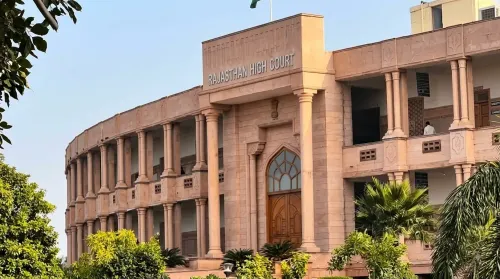
The Rajasthan High Court on Friday, 12 June dismissed a habeas corpus petition challenging the legality of the arrest of former Public Health Engineering Department (PHED) Minister and senior Indian National Congress (INC) leader Mahesh Joshi in the alleged Jal Jeevan Mission (JJM) corruption case. The court's refusal to grant relief ensures that Joshi remains in judicial custody, deepening his legal troubles in one of Rajasthan's most closely watched graft investigations.
What the Court Decided
A division bench comprising Justice Umashankar Vyas and Justice Ashok Kumar Jain rejected the petition filed by Joshi's son, Rohit Joshi, which had questioned the Anti-Corruption Bureau's (ACB) conduct during the arrest. The bench endorsed the findings of the lower special court, which had earlier upheld the validity of the arrest. No relief of any kind was granted to the former minister.
The Petitioner's Arguments
Advocates Aman Agarwal and Neha Goyal, representing the petitioner, argued that the ACB had violated provisions of the Bharatiya Nagarik Suraksha Sanhita (BNSS) when arresting Mahesh Joshi from his Jaipur residence on 7 May. They specifically contended that family members were not provided timely written information regarding the grounds of arrest — a mandatory requirement under the new criminal procedure law. On this basis, the petition sought Joshi's immediate release, claiming procedural lapses rendered the arrest illegal.
The State's Rebuttal
Advocate General Rajendra Prasad and Additional Advocate General Rajesh Chaudhary countered that the arrest was carried out lawfully and transparently. The state submitted that Mahesh Joshi's family members were present at the time of arrest and were fully aware of the reasons for his detention. According to the state, investigating officers also kept Rohit Joshi informed through telephone updates as the former minister was transported to ACB headquarters and subsequently produced before the special court. The High Court accepted these submissions.
The JJM Scam: What Investigators Allege
The case centres on alleged irregularities in the implementation of the Jal Jeevan Mission during the Ashok Gehlot government in 2021. Investigators allege that private firms — including Shri Shyam Tubewell and Shri Ganpati Tubewell — secured PHED contracts worth nearly ₹960 crore by submitting forged experience certificates purportedly issued by public sector undertaking IRCON. The ACB claims these companies, allegedly in collusion with senior PHED officials and other accused persons, obtained the contracts on the basis of fraudulent documents. Investigations have also reportedly pointed to alleged payment of bribes and commissions for clearing tenders and overlooking procedural violations.
Parallel ED Probe and What Comes Next
Mahesh Joshi is facing scrutiny from both the ACB and the Enforcement Directorate (ED). While the ACB is probing alleged corruption in the awarding of JJM contracts, the ED is conducting a parallel money-laundering investigation under the Prevention of Money Laundering Act (PMLA). The High Court's refusal to interfere marks a significant legal setback for the former minister. With both investigations active, the case is expected to move to the next stage of judicial proceedings in the weeks ahead.
Point of View
Contested aggressively by the defence, holds up to scrutiny. What makes this case structurally significant is the dual-agency pressure: the ACB anchors the corruption charge while the ED's PMLA probe opens a separate front that is notoriously harder to get bail in. For the Congress, a senior leader in custody through a state BJP government's ACB is a political liability that will not resolve quickly. The ₹960 crore figure and the IRCON certificate forgery angle, if proven, would represent a systematic subversion of a flagship Centre-funded rural water scheme — the accountability question here extends well beyond one minister.
NationPress
13 Sept 2026
Frequently Asked Questions
Why was Mahesh Joshi arrested in the JJM scam case?
Mahesh Joshi, former PHED Minister in Rajasthan, was arrested by the ACB on 7 May from his Jaipur residence in connection with alleged irregularities in Jal Jeevan Mission contracts. Investigators allege that private firms obtained PHED contracts worth nearly ₹960 crore using forged experience certificates purportedly issued by IRCON, reportedly in collusion with senior officials.
What did the Rajasthan High Court rule on 12 June?
The Rajasthan High Court dismissed a habeas corpus petition filed by Rohit Joshi, son of Mahesh Joshi, challenging the legality of the ACB arrest. A division bench of Justice Umashankar Vyas and Justice Ashok Kumar Jain upheld the arrest as lawful, keeping the former minister in judicial custody.
What were the procedural violations alleged by the petitioner?
The petitioner's advocates argued that the ACB violated provisions of the Bharatiya Nagarik Suraksha Sanhita (BNSS) by not providing family members timely written information about the grounds of arrest — a mandatory requirement under the new criminal procedure law. The state government denied this, and the court accepted the state's version.
What is the Jal Jeevan Mission scam about?
The alleged scam relates to the implementation of the Jal Jeevan Mission in Rajasthan during 2021, when Mahesh Joshi was PHED Minister under the Ashok Gehlot government. Private firms are accused of securing contracts worth nearly ₹960 crore by submitting forged experience certificates, with allegations of bribery and commission payments to clear tenders.
Is the Enforcement Directorate also investigating Mahesh Joshi?
Yes. The Enforcement Directorate is conducting a parallel money-laundering investigation under the Prevention of Money Laundering Act (PMLA), separate from the ACB's corruption probe. The dual-agency scrutiny significantly increases Joshi's legal exposure.