Bangladesh's BRICS snub a costly diplomatic blunder, says report
Synopsis
Bangladesh's no-show at the 18th BRICS Summit — where Xi, Putin, and Modi were all present — is being called a self-inflicted diplomatic wound. A Bangladeshi newspaper's blunt analysis argues Dhaka let protocol pride override national interest, passing up a rare chance to advance trade, the Rohingya issue, and BIMSTEC's standing on the world stage.
Key Takeaways
Bangladesh skipped the 18th BRICS Summit in New Delhi on 12–13 September 2026 , forgoing engagement with major global powers.
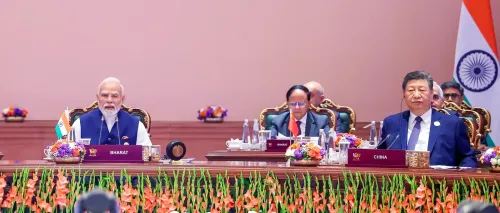
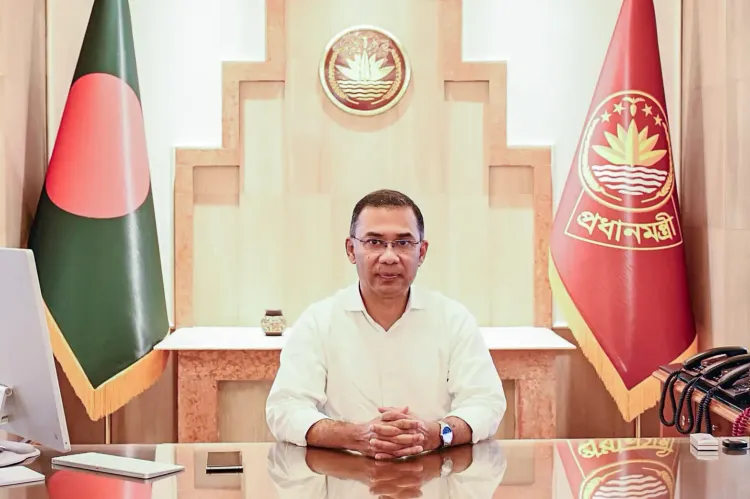
State Minister Humayun Kobir justified the absence citing that PM Tarique Rahman was invited as BIMSTEC chair , not as Prime Minister — a distinction the Daily Sun called 'unfortunate.' The summit brought together Xi Jinping , Vladimir Putin , and Narendra Modi , offering rare multi-power diplomatic access that Bangladesh reportedly passed up.
The report criticised Bangladesh's Foreign Ministry for prioritising protocol over outcomes, warning it reflects a reactive rather than strategic diplomatic culture.
Issues including the Rohingya crisis , regional connectivity, energy security, and climate finance could have been advanced at the summit, according to the report.
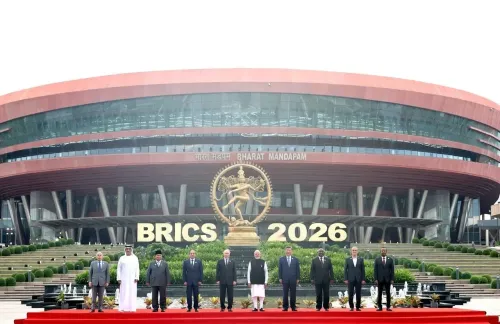
Bangladesh's decision to skip the 18th BRICS Summit held in New Delhi on 12–13 September 2026 has drawn sharp criticism, with a report in Bangladeshi newspaper Daily Sun calling the move a costly diplomatic misstep that is difficult to reconcile with the country's national interests. The absence left Dhaka on the sidelines of one of the most consequential multilateral gatherings of the year.
The Invitation Controversy
State Minister for Foreign Affairs Humayun Kobir had justified the absence by stating that Prime Minister Tarique Rahman was not invited to the summit in his capacity as Prime Minister, but rather as chair of BIMSTEC. The Daily Sun report described these remarks as 'particularly unfortunate,' arguing that the procedural distinction was treated as grounds for non-participation when it should have been seen as an additional reason to attend.
'Bangladesh's position as BIMSTEC chair should have made the invitation more valuable, not less,' the report stated. Instead, critics argue, the BIMSTEC dimension was reduced to a technicality.
Missed Opportunities at the Summit Table
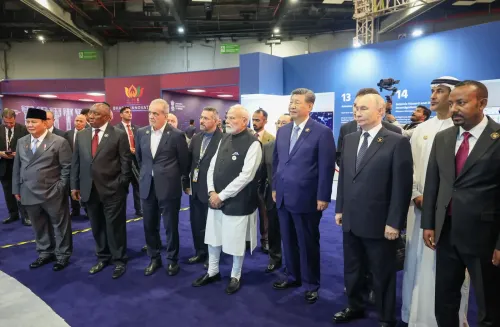
The 18th BRICS Summit brought together Chinese President Xi Jinping, Russian President Vladimir Putin, Prime Minister Narendra Modi, and other major global leaders — a concentration of diplomatic firepower that, according to the report, cannot easily be replicated through formal bilateral channels or diplomatic notes exchanged months later.
According to the report, Dhaka could have used the occasion to advance discussions on trade, investment, energy security, infrastructure financing, technology, climate finance, and supply-chain diversification. The Rohingya crisis — one of Bangladesh's most pressing foreign policy challenges — was another issue that could have been raised with multiple stakeholders simultaneously.
'Dhaka could have used the occasion to project itself as an important voice for the Bay of Bengal region. It could have placed BIMSTEC more prominently on the international agenda,' the report noted, adding that the opportunity to engage simultaneously with India, China, Russia, Indonesia, Brazil, Gulf states, and African economies was squandered.
Protocol Over Outcomes: A Critique of Foreign Ministry Thinking
The Daily Sun report directed pointed criticism at what it described as a transactional, protocol-driven approach to diplomacy within Bangladesh's Foreign Ministry. 'This is the mentality of a foreign ministry measuring diplomatic importance by protocol rather than by outcomes,' the report stated.
It further warned that publicly emphasising the precise capacity in which an invitation was extended risks making Bangladesh appear 'unnecessarily thin-skinned' on the international stage. Critics argue the episode reflects a reactive posture — responding to perceived diplomatic slights — rather than a proactive, outcome-focused foreign policy.
What This Episode Reveals
The report argued that the real concern is not one missed summit, but what the absence reveals about the quality of strategic thinking guiding Dhaka's foreign policy. 'Foreign policy cannot be conducted as a series of reactions to perceived diplomatic slights, protocol disputes or narrowly interpreted invitations. It requires anticipation, imagination and the ability to see several moves ahead,' it stated.
The report concluded that Bangladesh's foreign policy should be governed by a single overriding question: whether a given engagement advances national interests. In the case of the BRICS Summit, it asserted, the answer was 'plainly yes.' With Bangladesh navigating a complex neighbourhood and pressing economic challenges, analysts say Dhaka's strategic calculus will face continued scrutiny in the months ahead.
Point of View
Chinese investment critical, and India as a dominant neighbour, Bangladesh can ill afford the luxury of sitting out summits over technicalities. What's striking is that Dhaka's BIMSTEC chairmanship — the very thing cited as cause for hesitation — was actually its strongest card at that table. That it was played as an excuse rather than leverage says something important about where Bangladesh's foreign policy instincts currently sit.
NationPress
13 Sept 2026
Frequently Asked Questions
Why did Bangladesh skip the 18th BRICS Summit in New Delhi?
Bangladesh's State Minister for Foreign Affairs Humayun Kobir said Prime Minister Tarique Rahman was invited in his capacity as BIMSTEC chair, not as Prime Minister, which was cited as the reason for non-participation. Critics, including a report in Bangladesh's Daily Sun, have dismissed this reasoning as a protocol-driven excuse that prioritised procedural distinctions over national interest.
What opportunities did Bangladesh miss at the BRICS Summit?
According to the Daily Sun report, Bangladesh could have engaged with Chinese President Xi Jinping, Russian President Vladimir Putin, and Prime Minister Narendra Modi simultaneously — advancing discussions on trade, investment, energy security, climate finance, and the Rohingya crisis. It also missed a chance to elevate BIMSTEC's profile on the international stage.
What is the significance of Bangladesh's BIMSTEC chairmanship at BRICS?
Bangladesh currently holds the chair of BIMSTEC, the Bay of Bengal regional grouping. Critics argue this position should have made the BRICS invitation more valuable — not less — as Dhaka could have projected itself as a leading voice for the region and placed Bay of Bengal issues on a major multilateral agenda.
What does the Daily Sun report say about Bangladesh's Foreign Ministry?
The report accuses Bangladesh's Foreign Ministry of measuring diplomatic importance by protocol rather than by outcomes. It warns that reacting to perceived diplomatic slights and narrowly interpreting invitations reflects a lack of the 'anticipation and imagination' that effective foreign policy requires.
What broader concerns does Bangladesh's BRICS absence raise?
The report argues the real issue is not a single missed summit but what it reveals about the quality of strategic thinking in Dhaka's foreign policy establishment. With complex relations with India, China, and the West, and the unresolved Rohingya crisis, Bangladesh is seen as needing more proactive, outcome-driven diplomacy than the episode demonstrated.