BRICS Summit 2025: Bangladesh media weighs options as PM Rahman skips New Delhi meet
Synopsis
Bangladesh's PM Tarique Rahman skipped the 18th BRICS Summit in New Delhi despite a BIMSTEC-chair invitation — and Dhaka's media is divided. With $450 million already flowing through the BRICS-backed NDB and two of its top economic partners (India, China) at the table, the absence raises questions about whether domestic politics is overriding strategic diplomacy.
Key Takeaways
PM Tarique Rahman skipped the 18th BRICS Summit in New Delhi ; he was invited as current BIMSTEC chairperson.
BRICS now comprises 11 member states and 10 Partner Countries added in 2025 , representing over 40% of global population.
Bangladesh has been a member of the New Development Bank since 2021 , with approved financing reaching approximately $450 million by end-2025.
Bangladeshi analysts are split — some see a missed networking opportunity, others say bilateral meetings with Xi Jinping and Anwar Ibrahim reduce the loss.
The decision comes amid domestic pressure including the Awami League ban push and former PM Sheikh Hasina's death sentence.
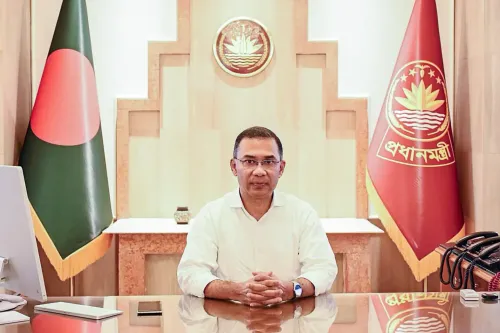
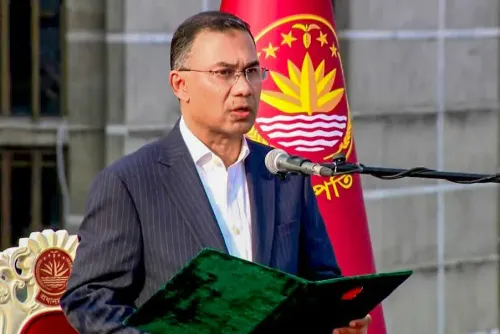
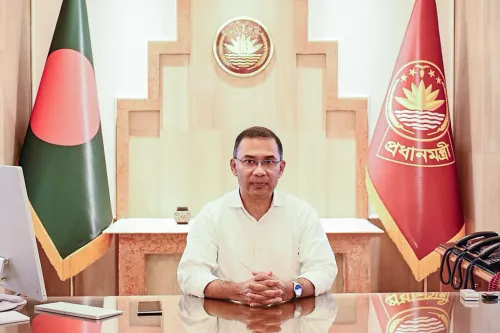
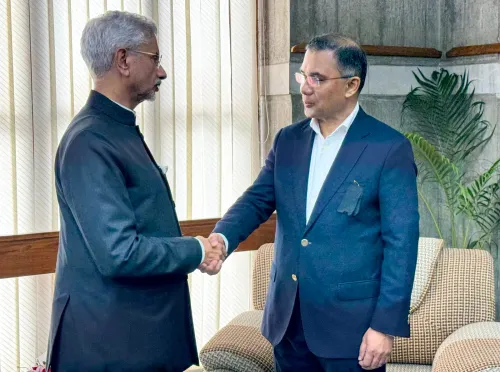
The 18th BRICS Leaders' Summit in New Delhi has generated significant discussion in Bangladesh, with the country's leading publications dissecting the grouping's relevance for the Global South and offering a notably mixed assessment of Prime Minister Tarique Rahman's decision not to attend. Rahman had been invited in his capacity as the current chairperson of the Bay of Bengal Initiative for Multi-Sectoral Technical and Economic Cooperation (BIMSTEC), rather than as Bangladesh's head of government — a distinction Dhaka has underscored publicly.
What BRICS Represents Today
BRICS — originally comprising Brazil, Russia, India, and China, with South Africa joining later — now includes 11 member states after the addition of Egypt, Ethiopia, Indonesia, Iran, Saudi Arabia, and the United Arab Emirates. In 2025, 10 more nations — including Belarus, Bolivia, Cuba, Kazakhstan, Malaysia, Nigeria, Thailand, Uganda, Uzbekistan, and Vietnam — joined as Partner Countries. Together, the bloc accounts for over 40 per cent of the world's population and nearly a quarter of global GDP.
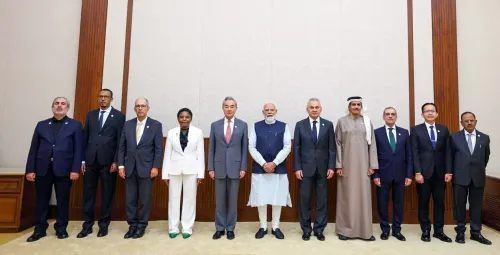
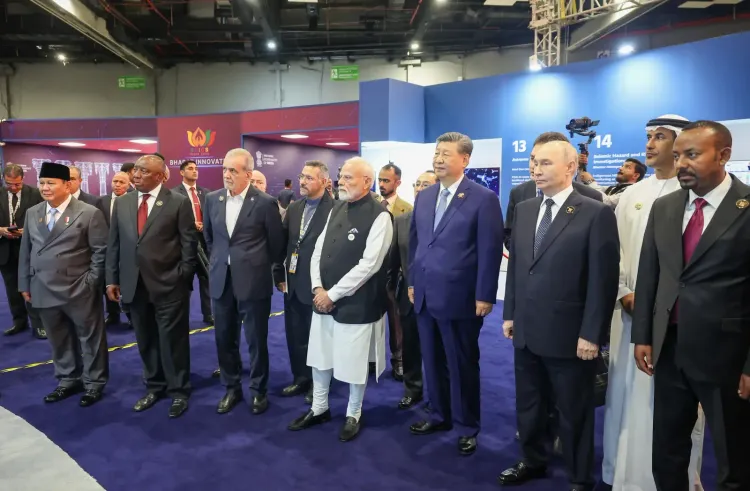
Notably, several non-member leaders are attending the New Delhi summit. ASEAN chairperson and Philippine President Ferdinand Marcos Jr, African Union President Evariste Ndayishimiye of Burundi, Uruguay's Mario Lubetkin representing the Latin American bloc, and Kazakhstan President Kassym-Jomart Tokayev are among participants. UN Secretary-General António Guterres, WHO chief Tedros Adhanom Ghebreyesus, and WTO Director-General Ngozi Okonjo-Iweala are also present.
How Bangladesh Media Reacted
The Bangladesh Pratidin, quoting former Ambassador to the United States M. Humayun Kabir, reported on Saturday that the BRICS Summit is an important international event and it would have been 'good' if the Prime Minister could attend. Kabir reportedly opined that attending would have provided an opportunity to personally connect with world leaders, and that even though Bangladesh would have remained on the sidelines, Dhaka could still have engaged them on topics relevant to its interests.
At the same time, the report emphasised that many international relations analysts believe Bangladesh is not diplomatically or economically harmed by skipping the event. Commentators told the newspaper that PM Rahman has already held bilateral meetings with China's President Xi Jinping and Malaysia's Prime Minister Anwar Ibrahim, and that sideline meetings at BRICS would not constitute a major diplomatic achievement given Rahman's upcoming bilateral visits to other important countries.
The Bangladesh Business Standard noted on Saturday that Rahman 'was invited as the current chairman of BIMSTEC… but did not attend,' concluding that the 'New Delhi summit will therefore test whether the expanded group can translate its growing economic weight into practical cooperation while managing those differences.'
BRICS as a Financial Lever for Dhaka
Popular Bengali daily Prothom Alo offered perhaps the most expansive perspective, stressing that BRICS's importance for Bangladesh is 'multi-dimensional.' The newspaper highlighted that Bangladesh's development requires massive infrastructure financing and noted that the country has been a member of the New Development Bank (NDB) since 2021 — identified as 'one of the most important institutional achievements of BRICS.'
According to the report, by the end of 2025, the NDB's approved financing for Bangladesh has reached approximately $450 million. 'A viable financial base has already been laid for this,' the daily observed, arguing that Dhaka's relationship with BRICS extends well beyond political interest. The article also elaborated on scope for economic diplomacy, given that China and India are two of Bangladesh's most important economic partners, alongside potential trade expansion with Brazil, South Africa, and Indonesia.
However, Prothom Alo also cautioned that internal diversities within BRICS mean it remains unclear how much of an integrated political force the grouping will become, stressing that 'membership itself is not a guarantee of economic success.'
The Domestic Political Backdrop
Rahman's absence from the summit comes amid considerable domestic political pressure. Dhaka has framed the decision by emphasising that the invitation was extended to the BIMSTEC chairperson, not to Bangladesh's Prime Minister specifically. However, there were also statements criticising former Prime Minister Sheikh Hasina's media interactions while in exile.
The government has sought Hasina's immediate extradition, despite the former premier reportedly announcing her intent to return in December. Hasina faces a death sentence, with reports indicating she will face execution upon return with no chance to appeal. Meanwhile, her party, the Awami League, faces a ban. Notably, in October 2016, Hasina had participated in the BRICS-BIMSTEC Outreach Summit in Goa — underscoring how sharply Bangladesh's political landscape has shifted since.
Whether Dhaka eventually gravitates closer to BRICS — either through formal engagement or the NDB channel — will likely depend on how the Rahman government navigates its current domestic crises and recalibrates its foreign policy alignments in the months ahead.
Point of View
Burundi, Uruguay, Kazakhstan — is hard to read as anything other than a political decision dressed in procedural language. The BIMSTEC-chair framing is technically defensible but strategically thin: Hasina attended the same format in 2016 in Goa without such parsing. With $450 million already locked in via the NDB and both India and China at the table, Dhaka's real cost is not transactional but perceptual — it signals a government still defining its foreign policy identity under the weight of domestic instability. The deeper question is whether Bangladesh's BRICS engagement will remain limited to the NDB cheque book, or evolve into a substantive diplomatic channel.
NationPress
28 Oct 2026
Frequently Asked Questions
Why did Bangladesh PM Tarique Rahman skip the BRICS Summit 2025?
Dhaka has stated that the invitation was extended to Rahman in his capacity as BIMSTEC chairperson, not as Bangladesh's Prime Minister. The decision also comes amid domestic political pressures, including the government's push to extradite former PM Sheikh Hasina and a potential ban on the Awami League.
Is Bangladesh a member of BRICS?
No, Bangladesh is not a BRICS member state. However, it has been a member of the BRICS-backed New Development Bank (NDB) since 2021, with approved financing reaching approximately $450 million by end-2025.
What did Bangladesh media say about the BRICS Summit?
Reactions were mixed. Bangladesh Pratidin quoted a former diplomat saying it would have been 'good' for the PM to attend, while analysts told the same paper that skipping it caused no real diplomatic harm. Prothom Alo stressed BRICS's 'multi-dimensional' importance for Bangladesh's infrastructure financing needs.
How many countries are now part of BRICS?
BRICS currently has 11 full member states — Brazil, Russia, India, China, South Africa, Egypt, Ethiopia, Indonesia, Iran, Saudi Arabia, and the UAE. In 2025, 10 additional nations joined as Partner Countries.
What is the New Development Bank's role for Bangladesh?
The NDB, often called the BRICS bank, has approved approximately $450 million in financing for Bangladesh by end-2025. Bangladesh joined the bank in 2021, and Prothom Alo identified it as 'one of the most important institutional achievements of BRICS' for Dhaka's infrastructure needs.