BIMSTEC Home Ministers' meet: India hosts historic first in New Delhi today
Synopsis
For the first time in its history, BIMSTEC is holding a Home Ministers' Meeting — chaired by Amit Shah in New Delhi — to forge a unified front against terrorism, trafficking, cybercrime, and transnational organised crime across seven Bay of Bengal nations. It signals India's push to transform BIMSTEC from an economic forum into an operational security architecture.
Key Takeaways
India is hosting the first-ever BIMSTEC Home Ministers' Meeting in New Delhi on 13 October 2026 .
Union Home Minister Amit Shah is chairing the meeting, which covers terrorism, cybercrime, narcotics, trafficking, and illicit financial flows.
The meeting brings together officials from all seven BIMSTEC member nations : Bangladesh, Bhutan, India, Myanmar, Nepal, Sri Lanka, and Thailand.
It follows the 5th BIMSTEC National Security Chiefs' Meeting held in New Delhi in July 2026 , which adopted maritime disaster relief guidelines.
India increasingly sees BIMSTEC as a strategic multilateral alternative amid the stalled SAARC process.
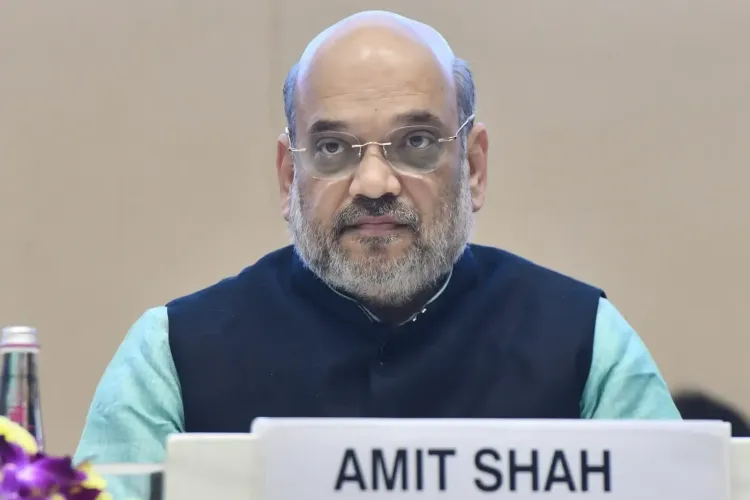
India is hosting the first-ever BIMSTEC Home Ministers' Meeting in New Delhi on Tuesday, 13 October 2026, marking a landmark moment in the regional bloc's push to deepen security cooperation among its seven member nations. Union Home Minister Amit Shah is chairing the gathering, which brings together senior officials from Bangladesh, Bhutan, India, Myanmar, Nepal, Sri Lanka, and Thailand.
A Historic First for BIMSTEC
The meeting is the first of its kind since BIMSTEC — the Bay of Bengal Initiative for Multi-Sectoral Technical and Economic Cooperation — was established. While the bloc has held summits at the level of heads of state and national security chiefs, a dedicated ministerial-level forum on internal security is a new frontier. The format signals that member states are moving beyond broad-based economic cooperation into operationally sensitive domains.
Describing the occasion as historic, Home Minister Shah on Monday said the meeting underscores 'our shared resolve to combat terrorism, transnational organised crime, narcotics radicalisation, trafficking, illicit financial flows, and cyber threats.' He added: 'Through decisive coordination, we remain committed to building a safer, stronger, and more secure BIMSTEC.'
Key Issues on the Agenda
The meeting is expected to provide a platform for member nations to discuss shared security threats and explore frameworks for cross-border cooperation. Core agenda items reportedly include counter-terrorism, dismantling organised criminal networks, drug trafficking, human trafficking, and cybercrime — challenges that, by their nature, cannot be addressed by any single country acting alone.
Notably, the gathering also comes amid heightened regional concerns over the nexus between illicit financial flows and extremist financing, an area where coordinated intelligence-sharing can yield early-warning advantages that bilateral channels alone cannot replicate.
Building on the July Security Chiefs' Meeting
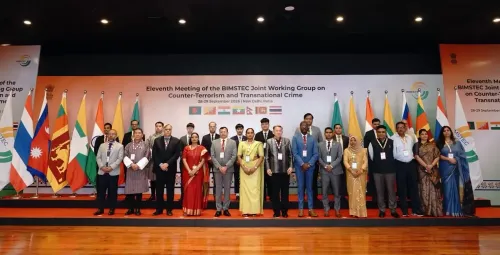
The New Delhi meeting builds on groundwork laid in July 2026, when the 5th Meeting of BIMSTEC National Security Chiefs was held in the capital. That gathering saw National Security Advisers and delegation heads exchange views on terrorism, organised crime, maritime security, cyber threats, and disaster management.
Crucially, it adopted the BIMSTEC Guidelines for the Maritime Component of Humanitarian Assistance and Disaster Relief — a framework designed to enable member states to mount expeditious relief operations across the Bay of Bengal. Delegates also endorsed Guiding Principles on the Conduct of Maritime Law Enforcement Agencies during Interactions at Sea, aimed at improving predictability and safety during maritime engagements among member states.
What BIMSTEC Does — and Why It Matters
BIMSTEC spans seven countries with a combined population exceeding 1.7 billion people and sits at the intersection of South Asia and Southeast Asia. According to the organisation's official website, its mandate covers agriculture and food security, the blue economy, connectivity, disaster management, energy, environment and climate change, health, human resource development, and people-to-people relations, among other sectors.
India has increasingly viewed BIMSTEC as a complement — and in some respects an alternative — to SAARC, the South Asian grouping that has been effectively paralysed by India-Pakistan tensions. The decision to elevate security cooperation to a dedicated ministerial format reflects New Delhi's broader strategic interest in anchoring the Bay of Bengal neighbourhood within an India-led multilateral framework.
What Comes Next
Officials are expected to deliberate on a roadmap for formalising cooperation mechanisms, potentially including joint working groups on counter-terrorism and cyber threats. Any agreed outcomes from today's meeting are likely to feed into the broader BIMSTEC summit process. The institutionalisation of a Home Ministers' track, if continued, would represent a durable upgrade to the bloc's security architecture.
Point of View
New Delhi has methodically built up BIMSTEC as the region's functional multilateral architecture, and adding a security track gives it teeth that an economic forum alone never had. The real question is whether the meeting produces binding frameworks or remains aspirational — BIMSTEC has a history of well-worded declarations that outpace implementation. For the bloc's security agenda to gain traction, member states with divergent threat perceptions — particularly Myanmar amid its internal conflict — will need to reconcile on definitions of terrorism and enforcement cooperation, which is far harder than agreeing on maritime guidelines.
NationPress
13 Oct 2026
Frequently Asked Questions
What is the first BIMSTEC Home Ministers' Meeting?
It is a first-of-its-kind ministerial-level security summit among the seven BIMSTEC member nations — Bangladesh, Bhutan, India, Myanmar, Nepal, Sri Lanka, and Thailand — held in New Delhi on 13 October 2026. The meeting is chaired by Union Home Minister Amit Shah and focuses on counter-terrorism, cybercrime, drug trafficking, and transnational organised crime.
Why is this BIMSTEC meeting significant?
It is the first time BIMSTEC has convened at the Home Ministers' level, signalling a shift from broad-based economic cooperation toward operational security coordination. It also reflects India's strategic effort to build BIMSTEC into a functional multilateral framework at a time when SAARC remains paralysed by India-Pakistan tensions.
What issues will be discussed at the BIMSTEC Home Ministers' Meeting?
The agenda reportedly covers terrorism, transnational organised crime, narcotics and radicalisation, human trafficking, illicit financial flows, and cyber threats. Officials are also expected to discuss frameworks for formalising joint working groups and cross-border intelligence-sharing mechanisms.
What happened at the last major BIMSTEC security meeting?
The 5th BIMSTEC National Security Chiefs' Meeting was held in New Delhi in July 2026, where NSAs and delegation heads discussed terrorism, organised crime, maritime security, and disaster management. It adopted guidelines for the maritime component of humanitarian assistance and disaster relief, and endorsed principles on maritime law enforcement interactions at sea.
What is BIMSTEC and which countries are members?
BIMSTEC stands for the Bay of Bengal Initiative for Multi-Sectoral Technical and Economic Cooperation. Its seven member nations are Bangladesh, Bhutan, India, Myanmar, Nepal, Sri Lanka, and Thailand. The bloc covers cooperation across sectors including security, connectivity, energy, health, and disaster management.