Jaishankar Greets BIMSTEC Day, Reaffirms India's Commitment

Synopsis
On BIMSTEC Day, June 6 2026, External Affairs Minister Dr. S. Jaishankar reaffirmed India's commitment to deepening collaboration with all seven member states of BIMSTEC, calling the grouping a driver of shared prosperity, connectivity, and resilience across the Bay of Bengal region.
Key Takeaways
Jaishankar extended greetings on BIMSTEC Day, June 6, 2026 , reaffirming India's solidarity with all member states.
BIMSTEC comprises seven nations : Bangladesh, India, Myanmar, Sri Lanka, Thailand, Nepal, and Bhutan.
The grouping was established in 1997 and adopted a formal Charter at its Fifth Summit in 2022 .
India has championed BIMSTEC as an active sub-regional alternative under its Act East Policy and Neighbourhood First doctrine.
The BIMSTEC Master Plan for Transport Connectivity remains a key deliverable for the grouping's member states.
India's renewed commitment signals continued diplomatic investment in Bay of Bengal regional integration.
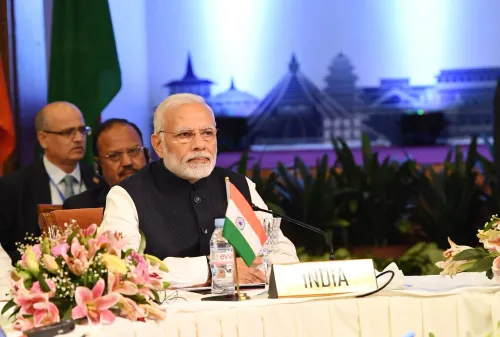
Union External Affairs Minister Dr. S. Jaishankar on Saturday, June 6, 2026, extended warm greetings on the occasion of BIMSTEC Day, reaffirming India's commitment to deepening collaboration with fellow member states of the Bay of Bengal Initiative for Multi-Sectoral Technical and Economic Cooperation (BIMSTEC).
Context
In his post, Dr. Jaishankar stated that BIMSTEC is 'advancing shared prosperity, connectivity, and resilience across the Bay of Bengal region,' and that India reaffirms its commitment 'in the spirit of solidarity and mutual cooperation.' The message marks the annual observance of BIMSTEC Day, which commemorates the founding of the grouping and serves as an occasion for member states to renew their regional compact.
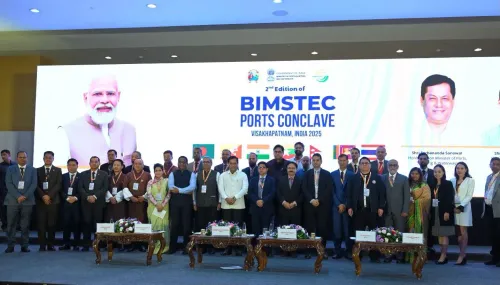
BIMSTEC brings together seven nations — Bangladesh, India, Myanmar, Sri Lanka, Thailand, Nepal, and Bhutan — linked by the Bay of Bengal, a maritime corridor that bridges South Asia and Southeast Asia.
Policy Backdrop
BIMSTEC was originally established in 1997 as a smaller economic grouping and has since evolved into a broader platform for technical and economic cooperation. A landmark moment came at the Fifth BIMSTEC Summit in 2022, when member states adopted a formal Charter — giving the organisation a stronger institutional foundation — and approved a Master Plan for Transport Connectivity to improve physical links across the region.
India has been a driving force behind these institutional reforms, consistently positioning BIMSTEC as a functional and agile sub-regional mechanism. New Delhi has long favoured the grouping as a vehicle for its Act East Policy and Neighbourhood First doctrine, particularly given the stalled momentum in the larger South Asian Association for Regional Cooperation (SAARC).
The grouping's agenda spans physical and digital connectivity, trade facilitation, energy cooperation, disaster resilience, and counter-terrorism — making it one of the more substantively active regional formats in India's diplomatic portfolio.
Stakeholders and Impact
The Bay of Bengal littoral economies stand to gain significantly from deeper BIMSTEC integration. Improved transport corridors and trade facilitation can reduce logistics costs for landlocked members such as Nepal and Bhutan, while maritime nations including Sri Lanka, Bangladesh, and Thailand benefit from enhanced port connectivity and supply-chain linkages.
For India, a more cohesive BIMSTEC framework strengthens its strategic footprint in the Indo-Pacific and offers a multilateral channel to advance infrastructure investment, people-to-people ties, and disaster-response cooperation with neighbours. Dr. Jaishankar's message signals that New Delhi remains actively invested in the grouping's institutional progress.
What's Next
Diplomatic attention will now focus on progress under the BIMSTEC Master Plan for Transport Connectivity and whether a new leaders' summit or high-level sectoral ministerial meeting is convened in the near term. India's renewed pledge on BIMSTEC Day could serve as a prompt for renewed engagement on pending cooperation frameworks across energy, trade, and digital infrastructure. As the grouping moves beyond its foundational 2022 Charter, the pressure on member states to translate institutional commitments into concrete project delivery will only intensify.
Point of View
Reinforcing India's role as the grouping's institutional anchor at a time when the 2022 Charter demands tangible follow-through. By invoking 'solidarity and mutual cooperation,' New Delhi is subtly reminding partner capitals that India remains the most consequential driver of the grouping's agenda. The message fits a consistent pattern in Indian foreign policy: using multilateral anniversaries to restate commitment to smaller, functional formats that bypass the gridlock of larger South Asian mechanisms. The real test will be whether this rhetorical renewal is matched by concrete progress on connectivity infrastructure and the scheduling of the next leaders' summit.
NationPress
23 Oct 2026
Frequently Asked Questions
What is BIMSTEC Day and why is it celebrated?
BIMSTEC Day marks the founding anniversary of the Bay of Bengal Initiative for Multi-Sectoral Technical and Economic Cooperation, observed annually by member states to renew their commitment to regional cooperation across South and Southeast Asia.
Which countries are members of BIMSTEC?
BIMSTEC has seven member states: Bangladesh, India, Myanmar, Sri Lanka, Thailand, Nepal, and Bhutan, all connected by the Bay of Bengal region.
What did Jaishankar say on BIMSTEC Day 2026?
Dr. S. Jaishankar posted greetings on BIMSTEC Day 2026, stating that BIMSTEC is 'advancing shared prosperity, connectivity, and resilience' and that India reaffirms its commitment to deepening collaboration 'in the spirit of solidarity and mutual cooperation.'
What is India's role in BIMSTEC?
India is a founding member and the largest economy in BIMSTEC, playing a leading role in pushing institutional reforms including the adoption of the grouping's formal Charter in 2022 and advancing the Master Plan for Transport Connectivity.
How does BIMSTEC relate to India's Act East Policy?
India uses BIMSTEC as a key multilateral vehicle for its Act East Policy and Neighbourhood First doctrine, favouring the grouping as a functional sub-regional platform that links South Asia and Southeast Asia through the Bay of Bengal.