BIMSTEC counter-terrorism meet: India hosts 11th JWG-CTTC session in New Delhi
Synopsis
India chaired the 11th BIMSTEC counter-terrorism working group in New Delhi, with all seven member states present to tackle terrorism, drug trafficking, human trafficking, and money laundering. Coming just two months after NSA Ajit Doval's NSA-level BIMSTEC security summit, the back-to-back high-tempo meetings signal that India is actively accelerating the bloc's security architecture at a moment of regional flux.
Key Takeaways
India hosted the 11th BIMSTEC JWG-CTTC meeting in New Delhi on 28–29 September 2026 .
All seven member states — Bangladesh, Bhutan, India, Myanmar, Nepal, Sri Lanka, and Thailand — attended.
The session was chaired by Suhel Ajaz Khan , Additional Secretary (Counter Terrorism), MEA.
Five sub-groups reported progress on human trafficking, narcotics, anti-money laundering, law enforcement, and counter-radicalisation.
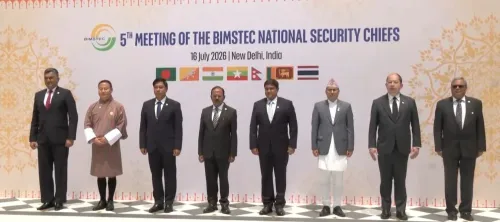
The meeting follows a July 2026 BIMSTEC National Security Chiefs session chaired by NSA Ajit Doval .
Recommendations are expected to shape the next BIMSTEC summit-level security agenda.
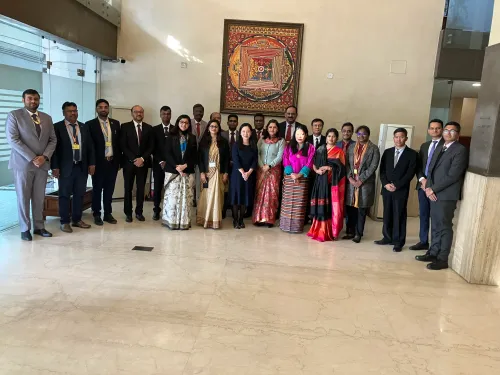
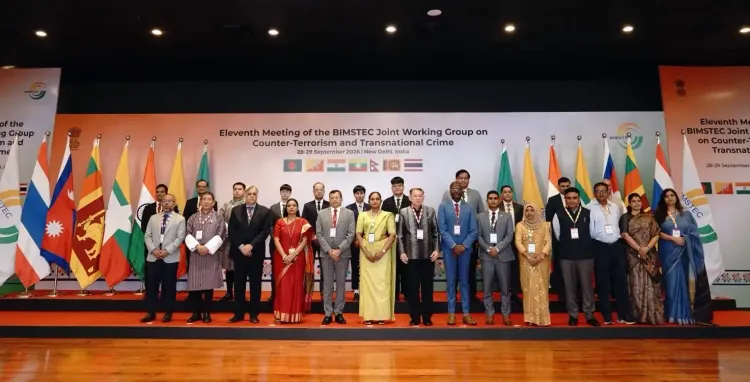
India hosted the 11th meeting of the BIMSTEC Joint Working Group on Counter Terrorism and Transnational Crime (JWG-CTTC) in New Delhi on 28–29 September 2026, with delegations from all seven member states in attendance, the Ministry of External Affairs (MEA) confirmed on Tuesday. The two-day session brought together representatives from Bangladesh, Bhutan, India, Myanmar, Nepal, Sri Lanka, and Thailand to deliberate on shared security challenges across the Bay of Bengal region.
Key Developments at the Meeting
The meeting was chaired by Suhel Ajaz Khan, Additional Secretary (Counter Terrorism) in the Ministry of External Affairs. According to the MEA statement, delegates discussed both 'traditional and emerging non-traditional security threats' in the BIMSTEC region and made recommendations to strengthen cooperation in countering terrorism and transnational crime.
Crucially, the session reviewed progress reports from five specialised sub-groups operating under the JWG-CTTC framework: the sub-group on human trafficking; the sub-group on prevention of illicit trafficking in narcotic drugs, psychotropic substances and precursor chemicals; the sub-group on anti-money laundering and combating the financing of terrorism; the sub-group on legal and law enforcement issues; and the sub-group on countering radicalisation and terrorism.
Agenda: From Narcotics to Radicalisation
The breadth of the agenda reflects the multidimensional security environment that BIMSTEC member states face collectively. Human trafficking networks, cross-border drug flows, and terrorism financing have all intensified as concerns in the Indian Ocean littoral over the past decade. By addressing these under a single working group, the bloc is attempting to build a coordinated architecture rather than a patchwork of bilateral arrangements.
Notably, the inclusion of a dedicated sub-group on radicalisation signals awareness of the ideological dimension of the terrorism threat — an area where intelligence-sharing frameworks remain underdeveloped across South and Southeast Asia.
Context: Building on the July NSA-Level Meeting
The JWG-CTTC session follows a high-level meeting in July 2026, when National Security Chiefs of all BIMSTEC member states convened in New Delhi for the fifth BIMSTEC National Security Chiefs meeting, chaired by National Security Advisor (NSA) Ajit Doval. That meeting focused on practical, result-oriented solutions to combat terrorism and organised crime, and also addressed cyber security, maritime security, energy security, connectivity, and disaster management.
Together, the two meetings — at the NSA level in July and the working-group level in September — indicate an accelerated operational tempo within BIMSTEC's security pillar. This comes amid India's broader strategic emphasis on its 'Neighbourhood First' and 'Act East' policies, which use BIMSTEC as a key multilateral bridge.
Why BIMSTEC Matters for Regional Security
BIMSTEC uniquely bridges South Asia and Southeast Asia, encompassing some of the most active maritime trade lanes and migration corridors of the Indian Ocean. The grouping has over the years deepened cooperation in regional security, disaster management, transport, trade connectivity, and people-to-people ties. With terrorism financing and drug trafficking increasingly cross-border in nature, multilateral working groups like the JWG-CTTC provide a forum for intelligence coordination that bilateral channels cannot fully replicate.
The outcome recommendations from the 11th JWG-CTTC are expected to feed into the next BIMSTEC summit-level agenda, reinforcing the group's security architecture at a time of heightened regional uncertainty.
Point of View
Not just convening for optics. What is less clear is whether the sub-group recommendations translate into binding commitments or remain advisory, as BIMSTEC has historically struggled to move from deliberation to implementation. With Myanmar's political instability and shifting Bangladesh-India relations both creating border-security stress, the JWG-CTTC has real-world urgency — but the test will be in the intelligence-sharing protocols and extradition frameworks that rarely make it into official press releases.
NationPress
29 Sept 2026
Frequently Asked Questions
What is the BIMSTEC JWG-CTTC and what does it do?
The BIMSTEC Joint Working Group on Counter Terrorism and Transnational Crime (JWG-CTTC) is a multilateral forum of the seven BIMSTEC member states — Bangladesh, Bhutan, India, Myanmar, Nepal, Sri Lanka, and Thailand — that coordinates efforts to counter terrorism, drug trafficking, human trafficking, money laundering, and radicalisation across the Bay of Bengal region. It operates through five specialised sub-groups and reports to the BIMSTEC National Security Chiefs.
Where and when was the 11th BIMSTEC JWG-CTTC meeting held?
The 11th meeting was held in New Delhi on 28 and 29 September 2026, hosted by the Government of India. The Ministry of External Affairs confirmed attendance of delegations from all seven member states.
Who chaired the 11th BIMSTEC counter-terrorism meeting?
The meeting was chaired by Suhel Ajaz Khan, Additional Secretary (Counter Terrorism) in India's Ministry of External Affairs.
What issues did the 11th JWG-CTTC meeting address?
The meeting addressed traditional and emerging non-traditional security threats, and reviewed reports from five sub-groups covering human trafficking, illicit narcotics trafficking, anti-money laundering and terrorism financing, legal and law enforcement cooperation, and countering radicalisation and terrorism.
How does this meeting connect to the July 2026 BIMSTEC National Security Chiefs session?
In July 2026, National Security Advisor Ajit Doval chaired the fifth BIMSTEC National Security Chiefs meeting in New Delhi, which focused on practical solutions to terrorism, organised crime, cyber threats, maritime security, and disaster management. The September JWG-CTTC meeting is a follow-on at the working-group level, translating those high-level directives into operational recommendations.