BIMSTEC Home Ministers' meet: Shah urges zero-tolerance on terrorism, regional security pact
Synopsis
For the first time, BIMSTEC Home Ministers sat down together — and India used the moment to push its security agenda hard. Amit Shah's call for real-time intelligence sharing, mutual extradition support, and a region-wide crackdown on drug trafficking and terror financing signals a deliberate shift: BIMSTEC is no longer just an economic dialogue, it is becoming a collective security architecture.
Key Takeaways
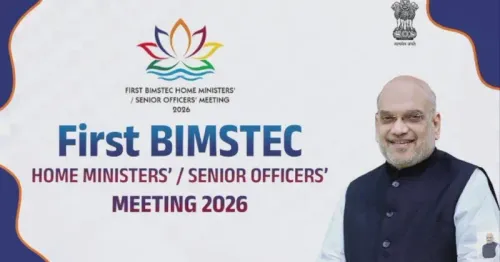
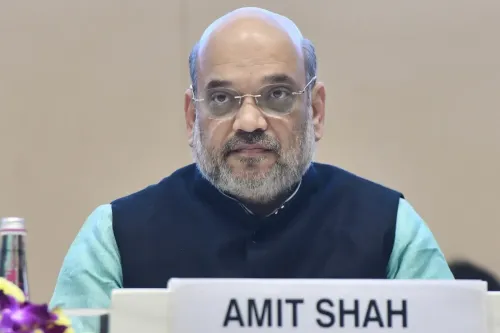
Amit Shah addressed the first-ever BIMSTEC Home Ministers' Meeting in New Delhi on 13 October 2026 .
India reiterated its zero-tolerance policy on terrorism and called for real-time coordination among intelligence, law enforcement, and border agencies of all seven member states.
Shah called for a region-wide approach to drug trafficking, warning that illicit proceeds fuel both organised crime and terrorism, with the dark web and precursor chemicals cited as emerging challenges.
Human trafficking was highlighted as a shared security and human rights concern, with calls for joint victim rescue and repatriation mechanisms.
The meeting builds on PM Modi's vision at the 6th BIMSTEC Summit in Bangkok , which described the bloc as a 'model of inclusive development and security.' BIMSTEC comprises seven nations — Bangladesh, Bhutan, India, Myanmar, Nepal, Sri Lanka, and Thailand — representing over 1.7 billion people .
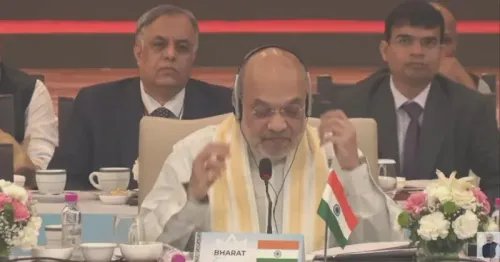
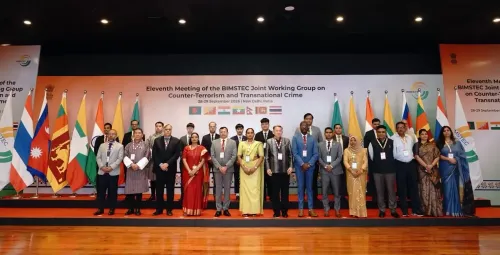
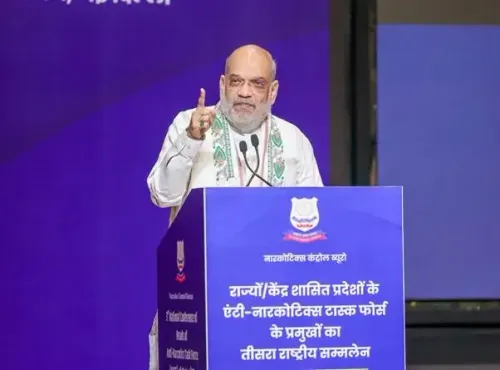
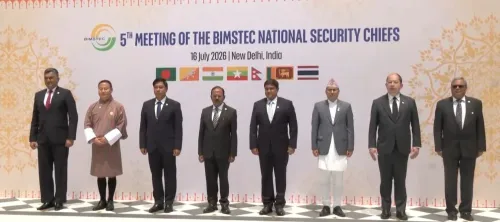
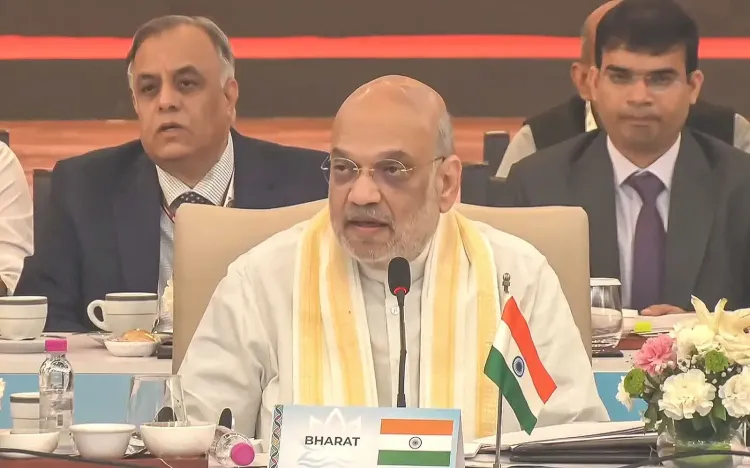
Union Home Minister Amit Shah on Tuesday, 13 October 2026, called on BIMSTEC member states to deepen security cooperation against terrorism, organised crime, and drug trafficking, reiterating India's zero-tolerance position at the first-ever BIMSTEC Home Ministers' Meeting hosted in New Delhi. The gathering brought together ministerial representatives from Bangladesh, Bhutan, India, Myanmar, Nepal, Sri Lanka, and Thailand.
Shah's Opening Address
In his remarks, Home Minister Shah called the meeting a moment of 'great pride and honour' for India, describing BIMSTEC as 'an important platform for regional integration, economic cooperation, and collective security.' He invoked the Sanskrit principle of 'Vasudhaiva Kutumbakam' — meaning 'the world is one family' — to frame India's approach to regional engagement, underscoring the country's commitment to 'peace, co-existence, and human welfare.'
Shah stated that India 'has never believed in attacking or dominating any country' and has consistently 'believed in respecting the sovereignty and territorial integrity of all countries and resolving differences through peaceful means.'
Terrorism and Organised Crime: A Shared Responsibility
The Home Minister stressed that member states must ensure terrorist networks find 'no opportunity or space to seek refuge, recruit and train personnel, raise funds, or carry out activities against neighbouring countries in any part of the region.' He called for real-time coordination between intelligence agencies, law enforcement agencies, financial monitoring agencies, and border management agencies to address interconnected threats effectively.
Shah also urged nations to support each other on mutual legal assistance and extradition, in accordance with national laws and applicable treaties — a pointed signal given longstanding concerns over cross-border terrorism in South Asia. Notably, this is the first time Home Ministers from all seven BIMSTEC nations have convened, elevating what has historically been a foreign-affairs-led dialogue to an internal security footing.
Drug Trafficking and the 'Dark Web' Threat
Recalling his address during the BIMSTEC Conference on Combating Drug Trafficking in 2020, Shah warned that illicit drug proceeds 'provide financial strength to organised crime and are also used to fuel terrorism.' He flagged the misuse of precursor chemicals and transactions conducted through the dark web as compounding factors that no single country can tackle alone, calling for a 'region-wide approach.'
'It is an attack on our youth, our society, our culture, and the lives of future generations,' Shah said of drug trafficking.
Human Trafficking on the Agenda
Home Minister Shah identified human trafficking as posing a 'serious challenge to our shared security and human rights,' calling for joint efforts in 'identifying, rescuing, assisting, rehabilitating, and safely repatriating victims.' This focus reflects a broader trend of multilateral bodies increasingly treating human trafficking as a security — not just humanitarian — issue.
Context: BIMSTEC's Expanding Security Role
The meeting follows the 6th BIMSTEC Summit held in Bangkok in April of last year, where Prime Minister Narendra Modi had described the grouping as 'not just a regional organisation' but 'a model of inclusive development and security.' Tuesday's Home Ministers' meeting operationalises that vision at the enforcement level.
BIMSTEC, which stands for the Bay of Bengal Initiative for Multi-Sectoral Technical and Economic Cooperation, covers a combined population of over 1.7 billion people and spans cooperation across agriculture, connectivity, energy, disaster management, and climate change, among other domains. With this security-focused ministerial now established, the bloc's institutional architecture is expected to deepen further ahead of the next summit.
Point of View
With little operational follow-through. Shah's specific emphasis on mutual legal assistance and extradition — not just rhetoric — is where the real signal lies. Given that at least one BIMSTEC member hosts groups India designates as terrorist organisations, the call for 'no refuge, no recruitment' is pointed and politically loaded. Whether this framework produces binding protocols or remains aspirational will depend on whether member states with competing domestic pressures can align at the enforcement level — something SAARC conspicuously failed to do.
NationPress
13 Oct 2026
Frequently Asked Questions
What is the BIMSTEC Home Ministers' Meeting?
It is the first-ever gathering of Home Ministers from all seven BIMSTEC member states — Bangladesh, Bhutan, India, Myanmar, Nepal, Sri Lanka, and Thailand — hosted in New Delhi on 13 October 2026. The meeting focuses on security cooperation, including counter-terrorism, drug trafficking, and human trafficking.
What did Amit Shah say about terrorism at the BIMSTEC meeting?
Home Minister Amit Shah reaffirmed India's zero-tolerance policy on terrorism and urged member states to ensure terrorist networks find no space to recruit, raise funds, or operate in the region. He also called for mutual legal assistance and extradition cooperation among member countries.
Why is the drug trafficking issue significant at this BIMSTEC summit?
Shah warned that illicit drug proceeds financially empower organised crime groups and are also used to fund terrorism. He identified the dark web and misuse of precursor chemicals as growing challenges that require a coordinated, region-wide response beyond the capacity of any single country.
What is BIMSTEC and which countries are members?
BIMSTEC — the Bay of Bengal Initiative for Multi-Sectoral Technical and Economic Cooperation — is a regional organisation comprising Bangladesh, Bhutan, India, Myanmar, Nepal, Sri Lanka, and Thailand. It covers cooperation across security, trade, connectivity, energy, and disaster management, among other sectors.
How does this meeting connect to the 6th BIMSTEC Summit?
The 6th BIMSTEC Summit was held in Bangkok last year, where Prime Minister Narendra Modi described the grouping as a 'model of inclusive development and security.' The Home Ministers' meeting is designed to translate that vision into practical enforcement-level arrangements among member states.