Amit Shah: Drug-free India by 2029 key to Viksit Bharat@2047 vision
Synopsis
Home Minister Amit Shah has put a date on India's anti-drug ambition — 31 December 2029 — and tied it directly to the Viksit Bharat@2047 project. With a 35-department Vision Document, new NCB infrastructure in Lucknow and Dehradun, and all 36 state ANTFs in the room, this third ANTF conference marks the sharpest institutional escalation of India's war on drugs to date.
Key Takeaways
Home Minister Amit Shah set a deadline of 31 December 2029 to uproot the drug trade from India.
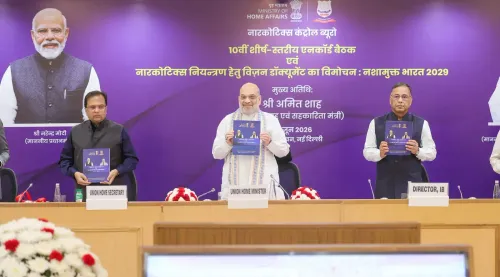
The third National ANTF Conference was held in New Delhi on 22 September 2026 , attended by ANTF heads from all 36 states and UTs .
The 'Vision Document 2026–2029' , prepared after consultations with more than 35 departments , sets definite targets and timelines for anti-narcotics action.
Shah laid foundation stones for new NCB zone complexes in Lucknow and Dehradun and launched the NCB's redesigned website.
The campaign is framed as essential to achieving Viksit Bharat@2047 , with narcotics described as among 'the most serious threats' to the country.
The MHA has linked the drug fight to earlier security successes in Kashmir , the Northeast , and against Naxalism .
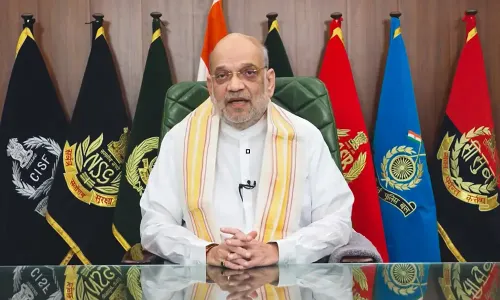
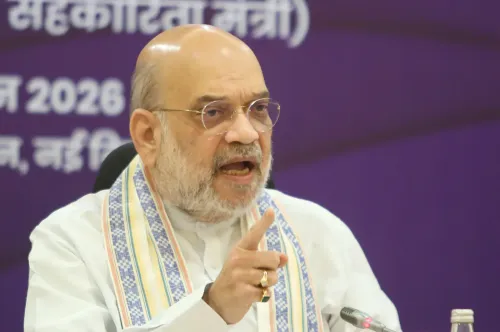
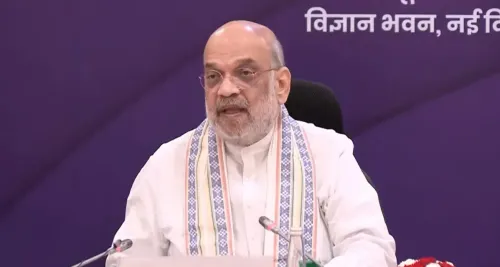
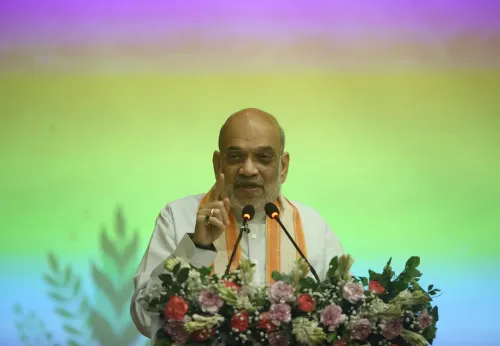
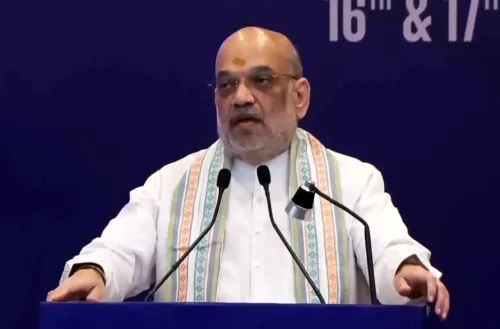
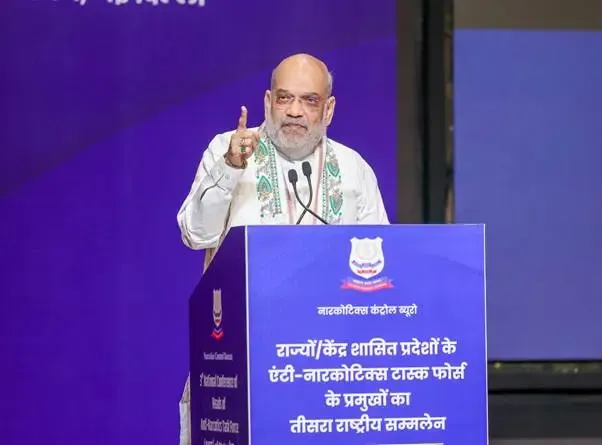
Union Home Minister Amit Shah on Tuesday, 22 September 2026, declared that Prime Minister Narendra Modi's vision of a 'Viksit Bharat@2047' cannot be realised if the country's youth and future generations are hollowed out by narcotics addiction. Addressing the third National Conference of Anti-Narcotics Task Force (ANTF) heads in New Delhi, Shah set a firm target: India will collectively uproot the drug trade by 31 December 2029.
Conference and Its Mandate
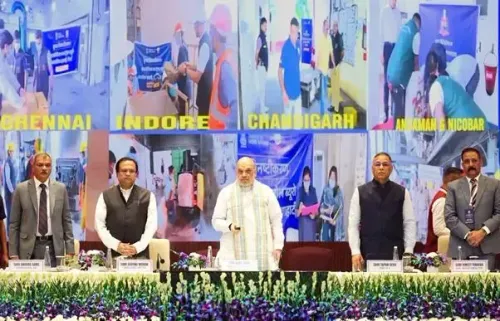
The two-day conference, organised by the Narcotics Control Bureau (NCB) under the theme 'United Resolve, Shared Responsibility', brought together heads of ANTFs from all 36 states and Union Territories, along with representatives from concerned government departments and stakeholders. The conclave is focused on narcotics control, dismantling drug cartels, tackling synthetic drugs, and investigating darknet and cryptocurrency-linked trafficking networks.
Shah framed the gathering as a progression from earlier editions: the first ANTF conference created an institutional mechanism, the second focused on converting that mechanism into action, and the third is designed to 'convert this roadmap into a decisive battle,' he said.
Vision Document and Roadmap
A central highlight was Shah's release and endorsement of the 'Vision Document 2026–2029', which he described as 'like the holy Gita for all those involved in this fight.' The document was developed after consultations with more than 35 departments and incorporates suggestions from all stakeholders, with definite targets and timelines assigned at both national and state levels. Shah confirmed the document will be reviewed periodically to track progress.
He emphasised that the roadmap aligns intelligence, investigation, financial action, and prosecution into a unified strategy — and that neither the Ministry of Home Affairs (MHA) nor the NCB can succeed without the full participation of every state government.
Amit Shah Cites Security Track Record
Drawing a parallel with past security successes, Shah argued that the Union government, working in cooperation with states, has already addressed several long-standing threats — including terrorism in Kashmir, insurgency in the Northeast, and the problem of Naxalism — over the past five years. He positioned the anti-narcotics campaign as the next frontier of that security agenda, calling the drug trade 'the most difficult of all battles' but one that cannot be abandoned.
'We will have to fight this problem unitedly and with passion, and we must achieve victory,' Shah said.
Key Launches and Recognitions
On the occasion, Shah released an informational video aimed at spreading awareness against drug abuse. He also laid the foundation stones for new NCB zone complexes in Lucknow and Dehradun, and launched the newly-designed official website of the Narcotics Control Bureau. The best-performing ANTFs from states and UTs were felicitated during the event.
What Comes Next
With fixed targets, a cross-departmental roadmap, and renewed political commitment from the Home Ministry, the pressure now shifts to state-level ANTF units to translate the Vision Document into measurable action on the ground. The next review cycle will test whether the institutional architecture built over three conferences can deliver tangible reductions in drug supply and addiction before the 2029 deadline.
Point of View
But the history of such declarations demands scrutiny. India's anti-narcotics architecture has grown — three ANTF conferences, a cross-departmental Vision Document, fresh NCB infrastructure — yet drug seizure data and addiction prevalence figures suggest the supply chain remains resilient, particularly for synthetic drugs and darknet-mediated distribution. The comparison to successes in Kashmir, the Northeast, and against Naxalism is rhetorically effective but imprecise: those were geographically bounded insurgencies, while the drug trade is diffuse, demand-driven, and increasingly financialised through crypto. The real test of the Vision Document will be its review mechanism — whether targets are independently audited or remain internal benchmarks that can be quietly revised.
NationPress
22 Sept 2026
Frequently Asked Questions
What did Amit Shah announce at the ANTF conference on 22 September 2026?
Home Minister Amit Shah announced a target to make India drug-free by 31 December 2029, releasing the 'Vision Document 2026–2029' at the third National ANTF Conference in New Delhi. He also laid foundation stones for new NCB zone complexes in Lucknow and Dehradun and launched the NCB's redesigned website.
What is the ANTF National Conference?
The National Conference of Anti-Narcotics Task Force (ANTF) is a periodic gathering organised by the Narcotics Control Bureau (NCB), bringing together ANTF heads from all 36 states and Union Territories to coordinate anti-drug strategy. The third edition, held in New Delhi on 22 September 2026, focused on dismantling drug cartels, tackling synthetic drugs, and darknet and cryptocurrency investigations.
What is the 'Vision Document 2026–2029' on narcotics?
The Vision Document 2026–2029 is a national anti-narcotics roadmap prepared after consultations with more than 35 government departments, incorporating suggestions from all stakeholders. It sets definite targets and timelines for intelligence, investigation, financial action, and prosecution against the drug trade, and is to be reviewed periodically.
How does narcotic control connect to Viksit Bharat@2047?
Home Minister Amit Shah argued that PM Modi's vision of a developed India by 2047 cannot be achieved if the country's youth are afflicted by drug addiction. He positioned a drug-free India as a prerequisite for harnessing India's youth power and connecting the next generation to the country's development trajectory.
Which new NCB infrastructure was announced at the conference?
Shah laid the foundation stones for new NCB zone complexes in Lucknow (Uttar Pradesh) and Dehradun (Uttarakhand), expanding the bureau's physical presence in northern India. The newly redesigned NCB website was also launched at the event.