BIMSTEC Home Ministers' Meet adopts Delhi Declaration on security cooperation
Synopsis
For the first time, Home Ministers from all seven BIMSTEC nations sat around one table in New Delhi — and left with a signed declaration. The Delhi Declaration commits Bangladesh, Bhutan, India, Myanmar, Nepal, Sri Lanka, and Thailand to joint action on terrorism, narcotics, and money laundering, marking a structural pivot for a bloc previously known mainly for economic cooperation.
Key Takeaways
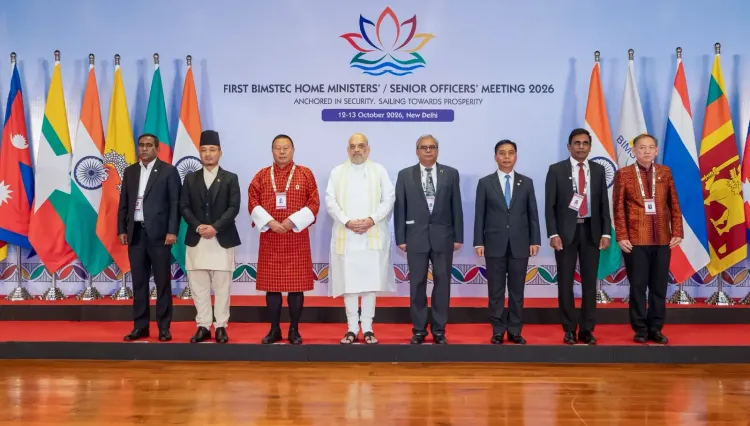
The inaugural BIMSTEC Home Ministers' Meeting was hosted by India in New Delhi on 13 October 2026 .
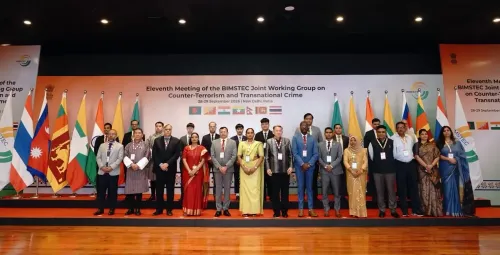
All 7 member nations — Bangladesh, Bhutan, India, Myanmar, Nepal, Sri Lanka, and Thailand — participated and adopted the Delhi Declaration .
Key commitments include cooperation on counter-terrorism , counter-narcotics , and anti-money laundering .
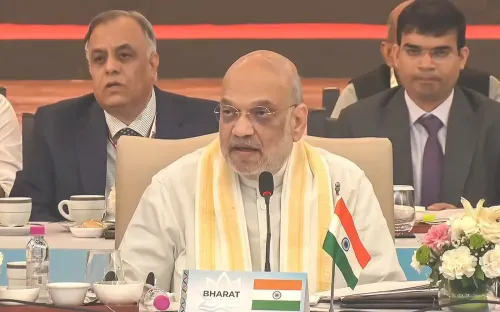
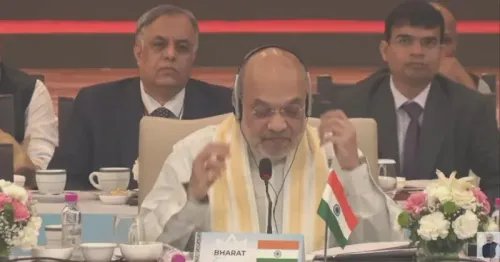
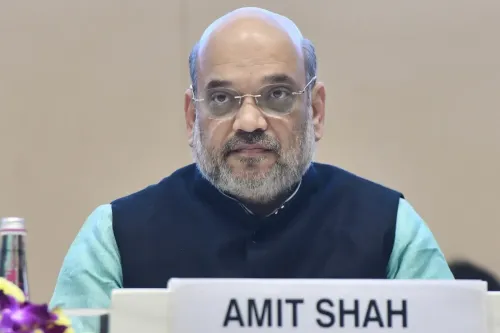
Union Home Minister Amit Shah reiterated India's zero-tolerance stance on terrorism and invoked 'Vasudhaiva Kutumbakam' as the guiding philosophy.
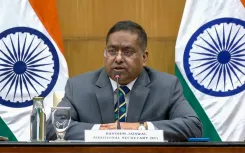
MEA spokesperson Randhir Jaiswal said India expects the inaugural dialogue to result in stronger security cooperation across the region.
The Ministry of External Affairs (MEA) on Wednesday, 14 October 2026, highlighted the outcomes of the inaugural BIMSTEC Home Ministers' Meeting held in New Delhi, confirming that all member nations have committed to deeper cooperation in counter-terrorism, counter-narcotics, and anti-money laundering. The meeting, hosted by India, concluded with the adoption of the Delhi Declaration — a landmark joint document formalising the grouping's security agenda.
What the MEA Said
MEA spokesperson Randhir Jaiswal, addressing his bi-weekly media briefing in New Delhi, described the dialogue as a foundational step for regional security architecture. 'It was the inaugural Home Ministers' Dialogue of the BIMSTEC platform, hosted by the Honourable Home Minister of India. We had participation from all BIMSTEC countries,' Jaiswal said.
He added that the Delhi Declaration encapsulates the commitment of all member states to strengthen cooperation across a range of areas — from fighting terrorism to curbing narcotics trafficking and money laundering. Jaiswal specifically noted that Bangladesh was among the participants, alongside all other BIMSTEC members, signalling broad regional engagement.
Amit Shah's Address: Zero Tolerance on Terror
Union Home Minister Amit Shah, who hosted the meeting on Tuesday, 13 October 2026, used the platform to reiterate India's firm stance. 'India has never believed in attacking or dominating any country. India has always believed in respecting the sovereignty and territorial integrity of all countries and resolving differences through peaceful means,' Shah stated.
Shah framed India's engagement within the philosophical doctrine of 'Vasudhaiva Kutumbakam' — the world is one family — describing the country as being committed to peace, co-existence, and human welfare. He also stressed that mutual trust among BIMSTEC member states is foundational to any credible collective response to terrorism and organised crime in the region.
Key Commitments Under the Delhi Declaration
The Delhi Declaration identifies several priority areas for inter-governmental collaboration, including the fight against terrorism and violent extremism, counter-narcotics measures, and anti-money laundering frameworks. While the full text of the declaration was not released at the briefing, officials indicated that specific areas of collaboration have been mapped out for follow-up action.
This is the first time that Home Ministers from across the BIMSTEC grouping — comprising Bangladesh, Bhutan, India, Myanmar, Nepal, Sri Lanka, and Thailand — have convened under a single institutional framework dedicated to security. The move elevates the grouping beyond its traditional economic and technical cooperation mandate into a more strategic register.
BIMSTEC's Expanding Role in the Region
The Bay of Bengal Initiative for Multi-Sectoral Technical and Economic Cooperation (BIMSTEC) was established to foster collaboration across agriculture, blue economy, connectivity, energy, disaster management, and people-to-people ties, among other domains. The addition of a dedicated Home Ministers' dialogue marks a structural deepening of the bloc's security dimension — a shift that analysts note aligns with India's broader 'Neighbourhood First' policy and its growing emphasis on regional security integration.
Notably, the meeting comes at a time when cross-border narcotics flows and terror financing remain persistent concerns across South and Southeast Asia, lending immediate operational relevance to the commitments made in New Delhi.
With the Delhi Declaration now in place, the focus will shift to whether member states can translate political pledges into concrete institutional mechanisms — including intelligence sharing protocols and coordinated law enforcement operations — in the months ahead.
Point of View
Not merely a trade and connectivity forum. The Delhi Declaration's focus on counter-terrorism and narcotics is directly relevant to flash points from Myanmar's Arakan corridor to the India-Bangladesh border. What the declaration does not yet contain is a binding enforcement mechanism or a common intelligence-sharing protocol, which will determine whether New Delhi's ambition translates into operational outcomes. India's ability to hold this coalition together — particularly with Bangladesh navigating its own domestic political flux — will be the real test of whether BIMSTEC can graduate from declarations to deterrence.
NationPress
14 Oct 2026
Frequently Asked Questions
What is the BIMSTEC Home Ministers' Meeting and why is it significant?
It is the first-ever meeting of Home Ministers from all seven BIMSTEC member nations — Bangladesh, Bhutan, India, Myanmar, Nepal, Sri Lanka, and Thailand — held in New Delhi on 13 October 2026. Its significance lies in institutionalising a security dialogue within a grouping that has historically focused on economic and technical cooperation.
What is the Delhi Declaration adopted at the BIMSTEC meeting?
The Delhi Declaration is a joint document adopted at the conclusion of the inaugural BIMSTEC Home Ministers' Meeting, committing all member states to strengthen cooperation in counter-terrorism, counter-narcotics, and anti-money laundering. It represents the first formal security compact agreed upon under the BIMSTEC framework.
What did Home Minister Amit Shah say at the BIMSTEC meeting?
Amit Shah reiterated India's zero-tolerance stance on terrorism and stressed the importance of mutual trust among BIMSTEC nations. He invoked the philosophy of 'Vasudhaiva Kutumbakam' — the world is one family — and stated that India has always believed in resolving differences through peaceful means while respecting the sovereignty of all countries.
Which countries are members of BIMSTEC?
BIMSTEC comprises seven member nations: Bangladesh, Bhutan, India, Myanmar, Nepal, Sri Lanka, and Thailand. The grouping focuses on multi-sectoral cooperation across the Bay of Bengal region, spanning areas from agriculture and energy to, now, security and counter-terrorism.
What happens next after the Delhi Declaration is adopted?
According to the MEA, several areas of collaboration have been identified and the expectation is that the inaugural dialogue will catalyse stronger, ongoing security cooperation among all members. The focus will now be on translating the political commitments of the Delhi Declaration into concrete institutional mechanisms such as intelligence-sharing and coordinated law enforcement frameworks.