Pilot Questions AAP's 'Chitta Mukta Punjab' After Cop-Drug Link
Synopsis
Congress general secretary Sachin Pilot challenged CM Bhagwant Mann's AAP government on October 14, 2026, arguing that a Punjab police constable's alleged drug-network links expose a systemic failure to deliver on AAP's signature 'Chitta Mukta Punjab' election promise.
Key Takeaways
Congress leader Sachin Pilot posted on X on October 14, 2026 questioning public trust in Punjab's law enforcement after a constable was allegedly linked to drug trafficking.
Pilot accused CM Bhagwant Mann's AAP government of failing to contain Punjab's drug crisis despite its 'Chitta Mukta Punjab' campaign pledge.
AAP swept to power in Punjab in 2022 with a historic majority, partly on the promise of eliminating the state's heroin and synthetic drug epidemic.
Punjab's drug trafficking problem has persisted across multiple administrations, with periodic allegations of police complicity undermining enforcement credibility.
Pilot's post was tagged to both @INCIndia and @INCPunjab , signalling a coordinated Congress opposition push on the issue.
The incident raises questions about departmental accountability within the Punjab Police and the structural resilience of drug networks in the state.
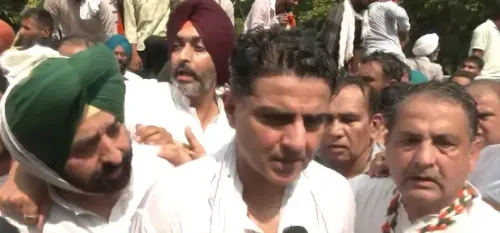
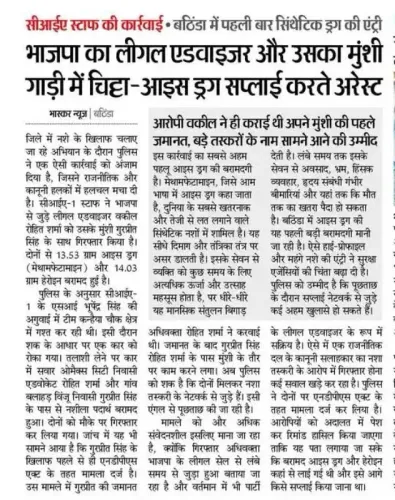
When the very officers sworn to uphold the law stand accused of links to drug trafficking, Congress leader Sachin Pilot is asking Punjab a pointed question: who is the public supposed to trust? Posting on X on Wednesday, October 14, 2026, the Congress general secretary and party's Chhattisgarh in-charge turned the heat on Chief Minister Bhagwant Mann's AAP government, citing an alleged police-drug nexus as evidence that the ruling party has lost its grip on the state's most defining crisis.
Pilot's post, written in Hindi, cuts directly to the contradiction at the heart of Punjab politics: 'जब कानून के रखवालों पर ही नशा तस्करी में संलिप्तता के आरोप लगें, तो जनता भरोसा किस पर करे?' — 'When the guardians of the law themselves face accusations of involvement in drug trafficking, who is the public to trust?' He notes that even as Punjab's citizens are taking to the streets against chitta (a street name for heroin and synthetic opioids), Mann's government is failing to contain the crisis.
AAP's Signature Drug Pledge Under Scrutiny
The 'Chitta Mukta Punjab' — a drug-free Punjab — was one of the most emotionally charged promises Aam Aadmi Party made during its landmark 2022 Punjab assembly election campaign, a campaign that swept it to power with a historic majority. The pledge resonated deeply because Punjab's drug epidemic had already consumed a generation of young men, and because rival parties, including Congress, had themselves been blamed for failing to stem the tide during their own tenures.
Now, four years into AAP's rule, Pilot is using those same words — 'Chitta Mukta Punjab' — as an indictment rather than a slogan. His argument is blunt: if a police constable's alleged links to a drug network can surface under the watch of a government that ran on this very issue, the failure is not incidental. It is systemic.
Punjab's Drug Crisis: A Governance Problem That Outlasts Every Promise
Punjab has battled heroin and synthetic drug trafficking for more than a decade — a crisis that has crossed political cycles, damaging the credibility of Congress administrations before it began testing AAP's. Allegations of police complicity are not new; they have periodically undermined enforcement across administrations, feeding a cycle in which anti-drug drives yield arrests but structural networks remain intact.
What makes this moment sharper is the accountability gap. AAP's 2022 mandate was built, in significant part, on the promise that it would be different — that it would clean up both the drug supply chain and the institutional corruption that enables it. A constable allegedly caught with links to that same supply chain is precisely the kind of story that turns a governing party's strongest promise into its sharpest vulnerability.
Congress Tightens the Political Vise
Pilot's post, tagged to both @INCIndia and @INCPunjab, is clearly calibrated for maximum reach within the Congress ecosystem. The Congress remains the principal opposition in Punjab, and the drug issue has historically been its most potent line of attack — even as it must navigate its own complicated record on the question from earlier years in power.
The political logic here is straightforward: every fresh allegation of police-drug complicity under AAP governance chips away at the party's core identity in the state. For Congress, keeping that pressure visible — and tying it to the CM by name — is both an opposition duty and an electoral investment ahead of the next assembly cycle.
The harder question, for Punjab's families who have watched the crisis outlast every promise from every party, is whether accountability will follow the outrage — or whether the cycle will simply continue with a different set of slogans.
Point of View
Congress is attempting to neutralise AAP's strongest moral advantage in Punjab — its outsider-reformer identity — and recast the ruling party as just another administration captured by the structures it promised to dismantle. The constable arrest, whether or not it proves systemic, gives Congress a specific, human-scale hook to hang a much larger governance critique on. For AAP, the political danger is not one incident but the accumulating narrative that the drug crisis has proved impervious to its tenure, eroding the party's foundational Punjab story ahead of the next electoral cycle.
NationPress
14 Oct 2026
Frequently Asked Questions
What did Sachin Pilot say about Punjab's drug problem?
On October 14, 2026, Pilot posted on X questioning public trust in Punjab's law enforcement after a police constable was allegedly linked to drug trafficking, and accused CM Bhagwant Mann's AAP government of failing to honour its 'Chitta Mukta Punjab' pledge.
What is 'Chitta Mukta Punjab'?
'Chitta Mukta Punjab' — meaning a Punjab free of chitta (a local term for heroin and synthetic opioids) — was a central election promise made by the Aam Aadmi Party during its successful 2022 Punjab assembly election campaign.
Why is the Punjab drug crisis still a political issue in 2026?
Punjab's heroin and synthetic drug trafficking problem has persisted for more than a decade across multiple administrations. Periodic allegations of police complicity have repeatedly undermined enforcement credibility, making the issue a durable flashpoint in state politics.
What is Sachin Pilot's current political role?
Sachin Pilot is a general secretary of the Indian National Congress and the party's Chhattisgarh in-charge. He is also a former Deputy Chief Minister of Rajasthan.
How has AAP responded to criticism of its Punjab drug record?
No official response from CM Bhagwant Mann or the AAP government to Pilot's October 14 post has been reported. The research does not confirm any specific official rebuttal.