Kejriwal Accuses BJP of Drug Links, Credits Mann for Punjab Crackdown
Synopsis
AAP convenor Arvind Kejriwal on June 15 accused the BJP of links to Punjab's drug trade, alleging chitta was distributed house-to-house under official protection during the previous alliance government, while crediting CM Bhagwant Mann with reversing the crisis.
Key Takeaways
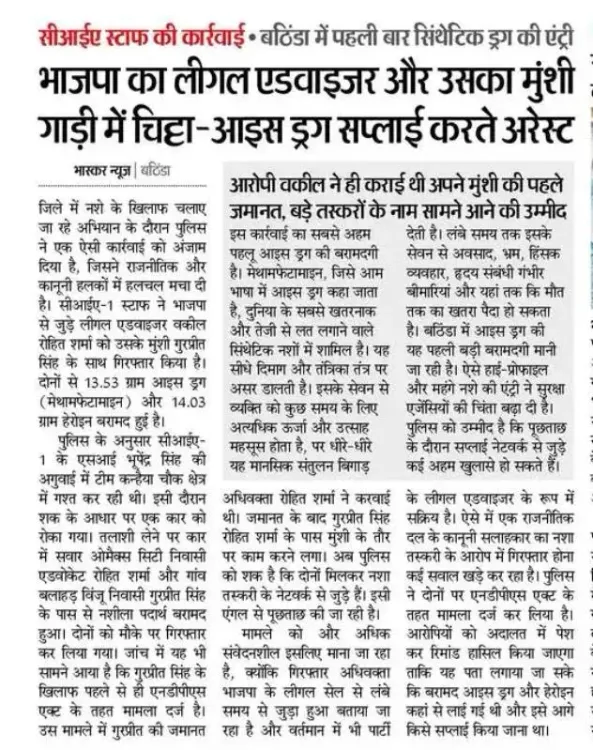
Kejriwal alleged that BJP functionaries were caught selling drugs in Punjab , questioning the party's links to the drug trade.
He claimed 70 per cent of drugs entering Punjab currently pass through Gujarat .
The post alleges that during the previous alliance government, chitta was distributed door-to-door in government vehicles with official protection.
Chief Minister Bhagwant Mann was credited with cracking down on chitta and giving Punjab's youth 'hope for a golden future.' AAP has made anti-drug enforcement a signature governance priority since winning the 2022 Punjab assembly elections.
The BJP and previous Congress and SAD-BJP governments have historically faced allegations of inadequate action against drug networks in Punjab.
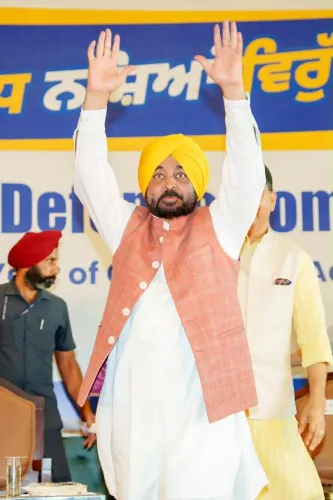
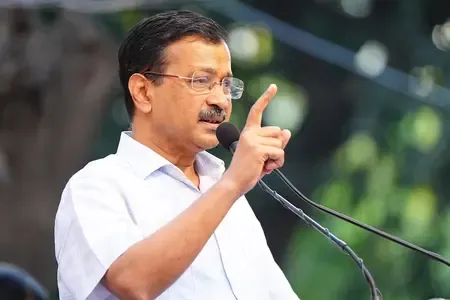
AAP convenor Arvind Kejriwal on Monday, June 15, 2026, launched a sharp attack on the Bharatiya Janata Party, alleging that party functionaries were caught selling drugs in Punjab and that the previous alliance government facilitated house-to-house distribution of the hard drug chitta (heroin-based synthetic narcotic) under official protection. Kejriwal credited incumbent Chief Minister Bhagwant Mann with reversing this trend and restoring hope for Punjab's youth.
Context
Posting in Hindi on June 15, Kejriwal referred to the BJP as the 'ED Party' — a political epithet AAP has long used to link the party to Enforcement Directorate actions against opposition leaders. He alleged that BJP functionaries were 'caught selling drugs themselves in Punjab,' asking pointedly: 'Are there links between the ED Party and the drug trade?'
He further claimed that 70 per cent of drugs currently entering Punjab pass through Gujarat, a BJP-governed state. He also alleged that during the previous alliance government's tenure, chitta was distributed door-to-door in government vehicles with official backing — charges he directed at what he called the 'ED Party' and the 'chitta party.'
Policy Backdrop
Punjab has battled a severe drug crisis for over a decade, with opioid and synthetic narcotic addiction devastating large sections of its youth. The issue became a defining theme in the 2022 Punjab assembly elections, which the Aam Aadmi Party won with a historic mandate, partly on the promise of eradicating the drug menace.
Successive state governments — including Congress and the Shiromani Akali Dal–BJP alliance — have faced persistent allegations of inadequate enforcement and, at times, political complicity in drug networks. The AAP administration under Chief Minister Bhagwant Mann has positioned anti-narcotics enforcement as a signature governance priority since assuming power in March 2022.
Stakeholders and Impact
Kejriwal's post frames the drug issue as a direct contest between AAP's governance record and the BJP's alleged culpability. By naming Gujarat as a transit corridor, the post draws a line connecting central-government-aligned politics to Punjab's street-level drug supply — a politically charged claim ahead of any future electoral cycle in the state.
Punjab's youth remain the central stakeholder: addiction rates in the state have historically been among the highest in India, affecting both rural and urban households. Any credible shift in enforcement outcomes would carry significant social and political weight.
What's Next
The Punjab government is expected to continue publishing drug-seizure data and enforcement reports as evidence of progress under the Mann administration. Formal responses from the BJP or central agencies to Kejriwal's specific allegations — including the Gujarat transit route claim — will be closely watched.
If opposition parties or investigative bodies respond to the claims about past government complicity, the exchange could intensify political scrutiny of Punjab's drug enforcement record across multiple administrations and widen the debate into a national conversation about inter-state narcotics trafficking routes.
Point of View
And tying the BJP to a social crisis that has defined the state's politics for a decade. By invoking the 'ED Party' label and naming Gujarat as a transit corridor, he escalates the drug debate from a state-level governance issue to a national political fault line. The claim about government vehicles distributing chitta — though unverified in public records — echoes a long-running opposition charge that successive pre-AAP governments were complicit rather than negligent. Whether the BJP mounts a factual rebuttal or counter-charges will determine if this exchange shapes the broader Punjab political narrative.
NationPress
20 Sept 2026
Frequently Asked Questions
What did Kejriwal say about BJP and drugs in Punjab?
Kejriwal alleged that BJP functionaries were caught selling drugs in Punjab and that during the previous BJP-alliance government, chitta was distributed house-to-house in government vehicles with official protection.
What is 'chitta' and why is it a big issue in Punjab?
Chitta is a white-powder synthetic narcotic, typically heroin-based, that has fuelled a severe addiction crisis among Punjab's youth for over a decade, making it a central issue in state politics.
Why does Kejriwal call BJP the 'ED Party'?
AAP has long used the term 'ED Party' to link the BJP to Enforcement Directorate actions that the party claims have been selectively used against opposition politicians.
What has Bhagwant Mann done about drugs in Punjab?
Since taking office in March 2022, Chief Minister Bhagwant Mann has made anti-narcotics enforcement a priority, with the AAP government conducting seizure drives and positioning the crackdown as a signature governance achievement.
Is Gujarat really a drug transit route into Punjab?
Kejriwal claimed that 70 per cent of drugs entering Punjab come through Gujarat, but this specific figure is unverified in established public records and has not been independently confirmed.