Kejriwal Accuses Amit Shah of Allying With ₹736 Cr Drug Racket Operator in Punjab

Synopsis
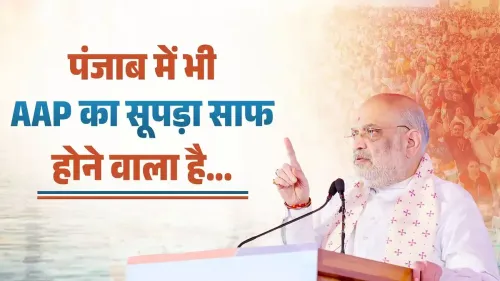
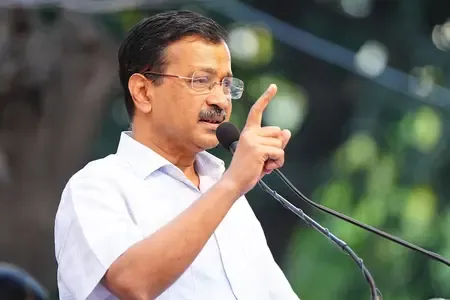
AAP convenor Arvind Kejriwal has accused Union Home Minister Amit Shah of forging an electoral alliance in Punjab with a figure allegedly linked to a ₹736 crore drug trade, warning that Punjabis will not allow the state to be 'drowned in drugs again' — a sharp pre-election salvo ahead of the next Punjab assembly elections.
Key Takeaways
Arvind Kejriwal accused Amit Shah on 28 October 2026 of allying with a person who allegedly sold ₹736 crore worth of drugs in Punjab and deposited the proceeds in personal bank accounts.
Kejriwal alleged the BJP alliance could revive Punjab's drug crisis and questioned whether narcotics would now be routed through Gujarat into Punjab.
He invoked Punjabi identity directly, stating 'Punjabis will simply not allow this to happen' — framing the issue as a collective public duty rather than a party matter.
AAP won the 2022 Punjab assembly elections on a heavy anti-drug platform, making the issue central to its governance mandate and political identity in the state.
The ₹736 crore figure and the unnamed individual are claims made by Kejriwal; they remain unverified by independent sources.
The BJP had not publicly responded to the specific allegations as of the time of posting.
A drug trade figure who allegedly moved ₹736 crore in narcotics money through personal bank accounts is now at the centre of a political firestorm — because AAP national convenor Arvind Kejriwal is accusing Union Home Minister Amit Shah of forging an electoral alliance with precisely that individual to recapture Punjab.
Posting on Wednesday, October 28, 2026, Kejriwal wrote in Hindi: 'Jisne Punjab mein 736 crore rupaye ka nasha bechkar woh paise apne bankon mein jama karvaye, Amit Shah ji uske saath gathbandhan karke Punjab ko phir se nashe mein duboane ki taiyari kar rahe hain.' ('The person who sold drugs worth ₹736 crore in Punjab and deposited that money in his own banks — Amit Shah is now allying with him, preparing to drown Punjab in drugs once again.')
Kejriwal then sharpened the barb with a pointed question: 'Will drugs now be brought via Gujarat and sold in Punjab?' He closed with a direct appeal to Punjabi pride — 'Punjabis will simply not allow this to happen.'
The Drug Issue That Has Defined Punjab Politics Since 2022
Drug trafficking has been the single most combustible issue in Punjab's political landscape for over a decade. When AAP swept the 2022 Punjab assembly elections, the party ran its entire campaign around a promise to eradicate the drug menace — a vow that resonated with a state that had watched a generation of its youth consumed by addiction.
That mandate gave AAP the moral licence to turn the drug issue into its sharpest political weapon. Every subsequent alliance announcement, police posting, or cross-border seizure gets processed through this lens by both AAP and its opponents. Kejriwal's post fits neatly into that ongoing pattern — an accusation designed to pre-emptively taint any BJP alliance strategy before it can consolidate.
The Gujarat Route Jab — and What It Signals
The reference to Gujarat is not incidental. It invokes a line of attack that AAP has periodically deployed against the BJP's home state — alleging that drug consignments have moved through Gujarat's ports and highways. By connecting that accusation to Punjab's next electoral cycle, Kejriwal is attempting to build a narrative arc: a Gujarat-origin alliance partner, a Gujarat-origin drug corridor, one ruling party threading them together.
The BJP has not yet responded to the specific allegations in this post. The unnamed individual referenced by Kejriwal — and the ₹736 crore figure — remain unverified by independent sources. The figure itself, however precise it sounds, is drawn from Kejriwal's own assertion and should be treated as a political claim until corroborated.
Why Punjab's Voters Are the Real Audience
With the next Punjab assembly elections on the horizon, both AAP and BJP are already manoeuvring for position. For AAP, holding Punjab requires keeping its 2022 anti-drugs mandate credible. For the BJP, any alliance in the state must navigate the toxicity of the drug issue. Kejriwal's post is a calculated strike at exactly that vulnerability — making the alliance cost visible before it is even formalised.
The appeal to 'Punjabi' identity in the closing line is deliberate: it frames resistance not as an AAP partisan position but as a collective duty of the people of Punjab. It is the language of a party that wants to own a state-defining issue, not merely contest an election.
If the BJP formalises the alliance Kejriwal is describing, it will face a well-prepared counter-narrative. If it does not, the accusation still shapes the political weather — and that, in Punjab's charged electoral climate, may be exactly the point.
Point of View
AAP forces its rival into a defensive posture on the very issue that delivered AAP its historic 2022 Punjab mandate. The Gujarat reference adds a second layer — importing a national-level attack line into a state-level contest. For BJP, the challenge is now not just forming a viable Punjab coalition but doing so without the drug accusation becoming the defining story of the alliance. Watch for whether AAP follows this social-media salvo with ground-level campaigns or formal complaints — the escalation trajectory will reveal how seriously the party treats this as an electoral liability for BJP versus a short-term news cycle play.
NationPress
28 Oct 2026
Frequently Asked Questions
What did Kejriwal accuse Amit Shah of in Punjab?
Kejriwal accused Amit Shah of forming an electoral alliance with a person who allegedly sold drugs worth ₹736 crore in Punjab and deposited the money in personal bank accounts, warning this would 'drown Punjab in drugs again.'
What is the ₹736 crore drug claim Kejriwal made?
Kejriwal alleged that an unnamed individual sold narcotics worth ₹736 crore in Punjab and deposited the proceeds in his own banks; this figure is Kejriwal's own assertion and has not been independently verified.
Why did Kejriwal mention Gujarat in connection with Punjab drugs?
Kejriwal questioned whether drugs would now be brought through Gujarat and sold in Punjab, invoking a recurring AAP line of attack that links BJP's home state to alleged inter-state drug corridors — an accusation denied by BJP.
When are the next Punjab assembly elections?
The next Punjab assembly elections are due after AAP's current term, which began following the party's landslide victory in early 2022. The exact election date in 2027 is yet to be officially announced.
How has AAP used the drug issue in Punjab politics?
AAP built its entire 2022 Punjab election campaign around eradicating the drug menace and won a historic majority. Since then, the party has consistently used allegations of drug links to challenge BJP's credibility in the state ahead of future elections.