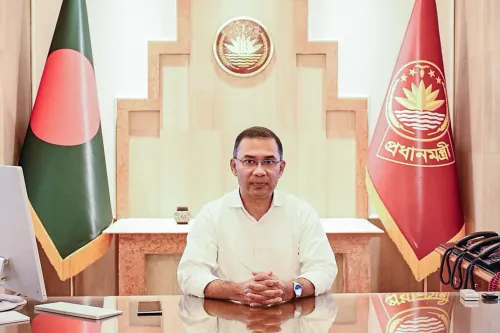
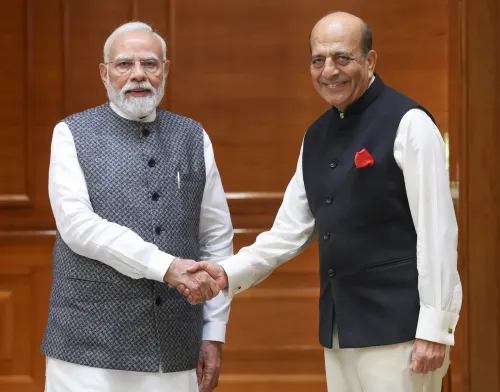
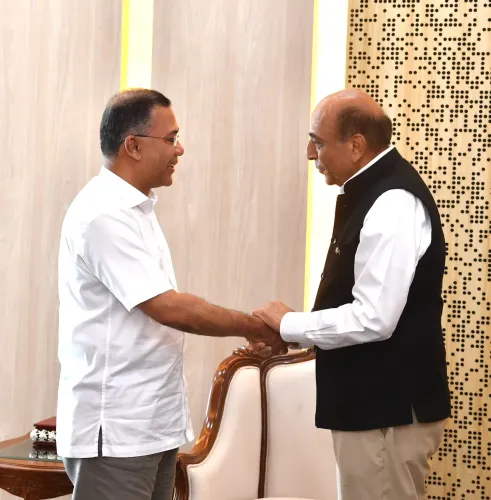
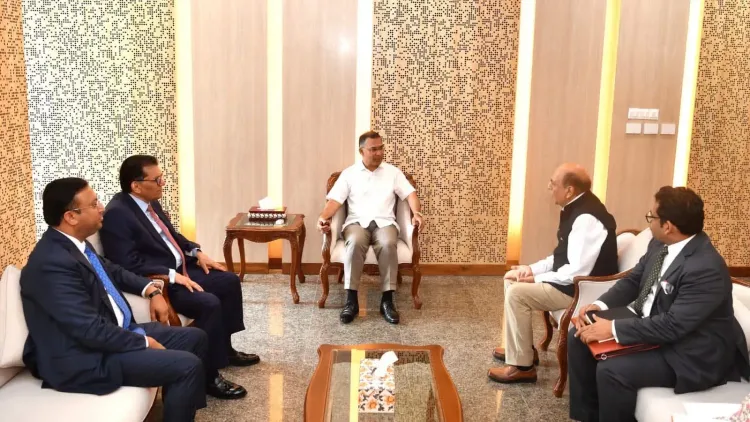
Bangladesh PM Tarique Rahman meets Indian envoy, signalling diplomatic thaw
Synopsis
A meeting between Bangladesh PM Tarique Rahman and Indian High Commissioner Dinesh Trivedi is being read as a diplomatic thaw — the first constructive signal after months of bilateral strain. With a potential BRICS Summit visit on the table, both Dhaka and Delhi appear to be choosing de-escalation over drift.
Key Takeaways
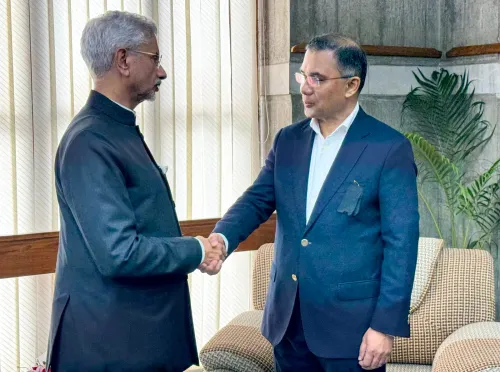
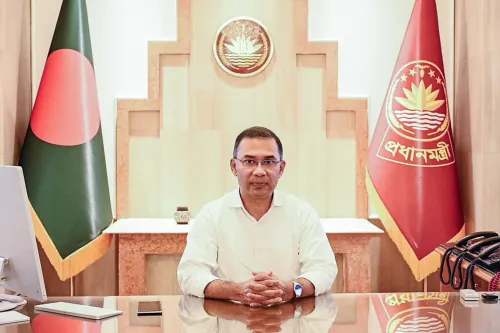
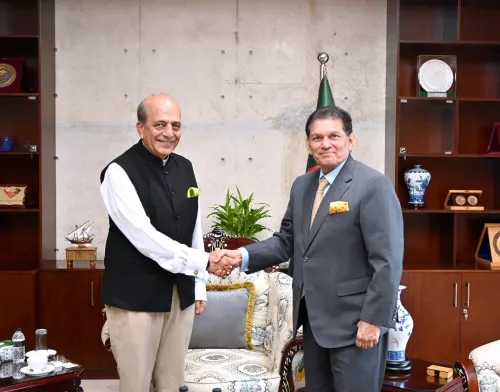
Bangladesh PM Tarique Rahman met Indian High Commissioner Dinesh Trivedi in Dhaka , signalling a positive shift in bilateral ties.
The meeting follows friction triggered partly by former PM Sheikh Hasina 's virtual address to journalists in New Delhi , which drew sharp reactions in Dhaka.
India's MEA clarified it had no involvement in Hasina's media interaction and does not endorse remarks targeting the Dhaka government.
High Commissioner Trivedi has adopted a conciliatory approach since assuming office, stressing mutual understanding.
PM Rahman has reportedly been invited to attend the BRICS Summit in New Delhi in September , offering a potential avenue for high-level engagement.
Analysts urge both governments to make bilateral engagement 'more regular and predictable' rather than crisis-driven.
Bangladesh Prime Minister Tarique Rahman and Indian High Commissioner Dinesh Trivedi held a meeting in Dhaka that observers say signals a positive shift in bilateral ties following a period of notable diplomatic strain. According to a report in Bangladesh's Daily Sun, the cordial engagement reflects a willingness on both sides to look past recent irritants and reaffirm the broader India-Bangladesh relationship.
Context: What Triggered the Strain
The latest friction in ties was partly sparked by former Bangladesh Prime Minister Sheikh Hasina's virtual address to journalists in New Delhi, which drew strong reactions in Dhaka. India's Ministry of External Affairs (MEA) subsequently clarified that the Indian government had no involvement in the media interaction and does not endorse remarks made at the event, particularly those directed at the constituted government in Dhaka. While that clarification may not have fully addressed Dhaka's concerns, the Daily Sun report noted that diplomacy requires governments to acknowledge and build upon constructive signals when they emerge.
Trivedi's Conciliatory Approach
High Commissioner Trivedi has, since assuming office, adopted a notably conciliatory posture. He has reportedly stressed the importance of addressing bilateral challenges through mutual understanding and expressed optimism about advancing India-Bangladesh relations. The Daily Sun report described the Rahman-Trivedi meeting as meriting serious attention — not as routine protocol, but as a potential launchpad for more constructive bilateral momentum.
Historical Precedent for Resolution
The report drew on the two countries' shared diplomatic history, noting that difficult disputes have been resolved before when both sides showed patience, negotiation, and political will. 'A problem that had resisted successive governments was resolved because both countries eventually decided that an unsatisfactory status quo was not sustainable,' the Daily Sun observed. The lesson, it argued, is that allowing difficult issues to fester rarely leads to resolution.
The Road Ahead: Engagement and High-Level Visits
The report called for bilateral engagement to become 'more regular and predictable', with foreign ministers and senior officials meeting routinely rather than only under pressure. Existing mechanisms covering political and legal matters, border management, trade, connectivity, security, energy, and water resources should be strengthened, it recommended. Notably, Prime Minister Rahman has reportedly received an invitation to visit India, including to attend the BRICS Summit in New Delhi in September. Whether and when such a visit materialises will be Dhaka's decision, but the report emphasised that 'opportunities for direct political contact should be used when they can advance national interests.'
How both governments translate this diplomatic opening into durable institutional engagement will determine whether the current thaw marks a genuine reset or remains a fleeting moment of goodwill.
Point of View
Not a settlement — and the distinction matters. The underlying irritants, from Hasina's New Delhi media appearance to unresolved water-sharing and border management disputes, have not disappeared. What has changed is the register: both sides appear to have chosen managed engagement over escalation. The real test will be whether the BRICS Summit invitation translates into a substantive visit, and whether that visit produces institutional commitments rather than photo-op diplomacy. India-Bangladesh ties have a long history of warm summits followed by slow implementation; breaking that pattern requires more than goodwill — it requires working-level mechanisms that function between crises, not just during them.
NationPress
26 Sept 2026
Frequently Asked Questions
What was the significance of the meeting between Bangladesh PM Tarique Rahman and Indian High Commissioner Dinesh Trivedi?
The meeting is being read as a positive diplomatic signal after a period of bilateral strain between India and Bangladesh. Analysts say it reflects a willingness on both sides to prioritise the broader relationship over recent irritants, rather than allowing tensions to escalate into a full-blown crisis.
What triggered the recent strain in India-Bangladesh relations?
The strain was partly triggered by former Bangladesh PM Sheikh Hasina's virtual address to journalists in New Delhi, which drew strong reactions from Dhaka. India's Ministry of External Affairs clarified it had no involvement in the media interaction and does not endorse remarks made at the event concerning the Dhaka government.
Is Bangladesh PM Tarique Rahman expected to visit India?
Rahman has reportedly received an invitation to visit India, including to attend the BRICS Summit in New Delhi in September. Whether and when the visit takes place will be Dhaka's decision, but observers see it as a meaningful opportunity for direct high-level engagement.
What approach has Indian High Commissioner Dinesh Trivedi taken since assuming office?
Trivedi has adopted a conciliatory approach, reportedly stressing the need to address bilateral challenges through mutual understanding and expressing optimism about advancing India-Bangladesh ties. His tone has been noted as a constructive departure from the recent period of diplomatic friction.
What do analysts recommend to stabilise India-Bangladesh relations going forward?
Analysts recommend making bilateral engagement more regular and predictable, with foreign ministers and senior officials meeting routinely rather than only when relations come under pressure. They also call for strengthening existing mechanisms covering trade, border management, connectivity, security, energy, and water resources.