BRICS Summit: Modi warns against weaponising tech and critical minerals
Synopsis
Sitting beside Xi Jinping at the 18th BRICS Summit in New Delhi, PM Modi issued one of the bluntest warnings of the gathering: stop weaponising technology and critical minerals or risk dismantling the foundations of global shared growth. He backed the rhetoric with substance — proposing a BRICS Startup Innovation Fund, an early warning system for infectious diseases, and a Digital Agriculture Network — framing India's BRICS presidency as a pivot from declarations to deliverables.
Key Takeaways
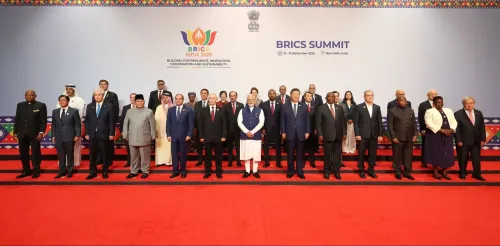
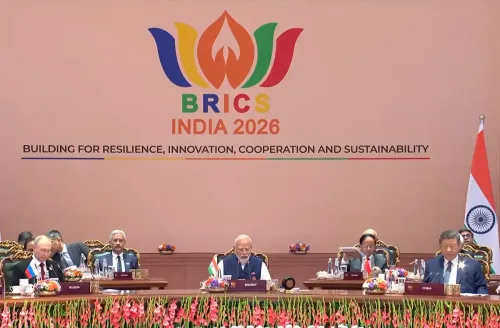
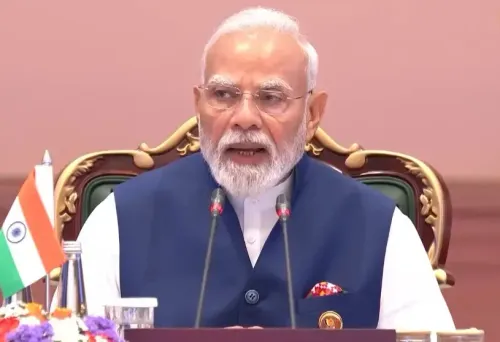
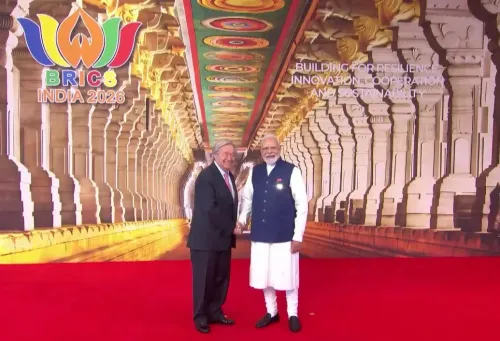
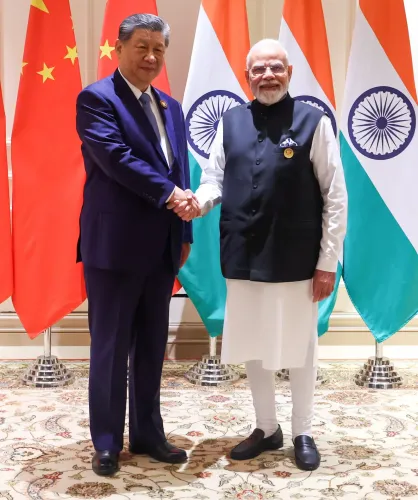
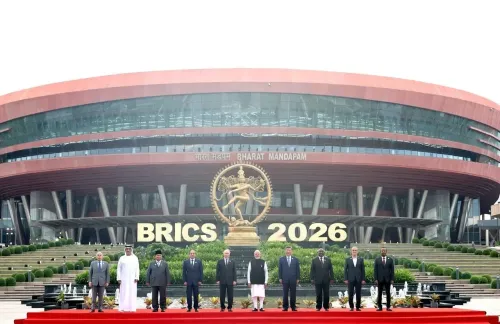
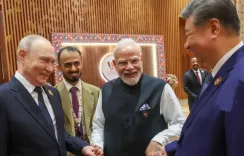
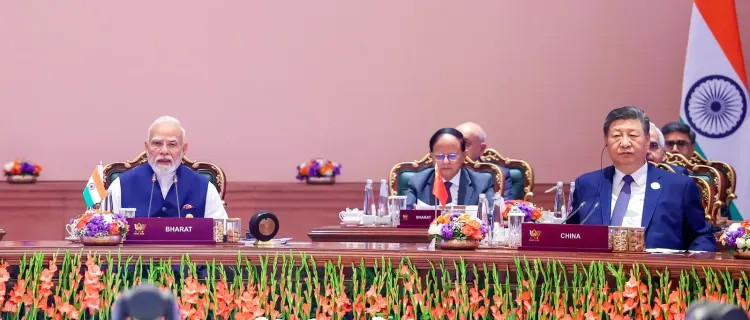
PM Narendra Modi addressed the 18th BRICS Summit at Bharat Mandapam, New Delhi on 13 September , delivering closing remarks alongside Chinese President Xi Jinping .
Modi warned that the 'weaponisation of technology and critical minerals' could undermine global inclusive growth and shared progress.
A BRICS Integrated Early Warning System for infectious diseases and Early Warning Data Integration Guidelines for disaster management were adopted by consensus.
India proposed a BRICS Startup Innovation Fund and a BRICS Incubator Network to connect startups across member states.
A BRICS Network on Digital Agriculture was announced to deploy AI, geospatial technology, and digital public infrastructure for farmers.
Modi invoked the Covid-19 pandemic — which spread from Wuhan and claimed crores of lives — to stress that no crisis stays confined to a single region.
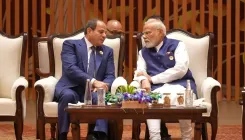
Prime Minister Narendra Modi on Sunday, 13 September issued a pointed warning to global leaders at the 18th BRICS Summit in New Delhi, cautioning that the 'weaponisation of technology and critical minerals' risks reversing the world's hard-won progress toward shared prosperity and inclusive development. The remarks came during his closing address at Bharat Mandapam, where Modi sat alongside Chinese President Xi Jinping on the summit's second day.
Key Developments at the Summit
Addressing member-state leaders gathered under the summit theme — 'Resilience, Innovation, Cooperation and Sustainability: Shaping the Future for Inclusive Global Growth' — Modi said he was pleased that India had helped translate the group's shared vision into 'win-win collaboration' with the support of all BRICS members. He described the bloc as a force 'uniting different continents, cultures, and development journeys', calling it a testament to BRICS's growing strength and confidence.
On the increasingly turbulent global order, Modi said: 'Today, the global tensions are increasing, which is negatively affecting the common man. Pandemics, climate change disasters and supply chain disruptions have shown that in the current interconnected world, no crisis remains confined to a single region.' He invoked the lessons of the Covid-19 pandemic — which spread from Wuhan, China and claimed crores of lives worldwide — as a case study in cross-border vulnerability.
What India Proposed
Modi unveiled several India-led initiatives at the summit. He announced that BRICS nations had reached consensus on a BRICS Integrated Early Warning System for the prevention of and response to infectious diseases, along with Early Warning Data Integration Guidelines for disaster management. He also proposed a BRICS Startup Innovation Fund to promote scalable, innovative solutions, and said the BRICS Incubator Network would link startups and incubators across member states.
Additionally, Modi highlighted a BRICS Logistics Supply Chain Cooperation Framework aimed at making global supply chains 'more reliable and resilient'. A dedicated BRICS Network on Digital Agriculture was also announced, designed to harness AI, geospatial technology, and digital public infrastructure to address the real-world needs of farmers.
The Warning on Technology and Critical Minerals
Modi's most geopolitically charged remarks centred on the growing trend of nations restricting access to advanced technologies and key raw materials as instruments of strategic pressure. 'The weaponisation of technology and critical minerals can create hurdles for common growth. Therefore, we have emphasised inclusivity in the adoption of technology,' he said. The statement is widely read as a reference to escalating US-China tech restrictions — and their cascading effects on emerging economies — though Modi did not name any country directly.
Notably, the warning was delivered with Xi Jinping seated beside him, a detail that underscores the diplomatic tightrope India continues to walk: aligning with BRICS rhetoric on multipolarity while managing a complex bilateral relationship with Beijing.
What This Means for BRICS Going Forward
Modi stressed that BRICS cooperation must extend beyond governments to include 'entrepreneurs, farmers, researchers, women, youth, and ordinary citizens'. This people-first framing signals India's intent to position BRICS as a platform for development diplomacy rather than a purely state-centric geopolitical bloc. With the group having expanded its membership in recent years, the challenge of maintaining consensus across divergent interests remains significant. The early warning system and startup fund proposals, if operationalised, would mark the most substantive India-led institutional additions to BRICS since its founding. Whether these frameworks move from declaration to implementation will be the real measure of this summit's legacy.
Point of View
Vague enough to avoid directly naming the US or China. But the subtext is unmistakable: supply chain coercion and semiconductor export controls hit emerging economies hardest, and India has skin in both games. The more consequential question is implementation: BRICS has a long history of declaratory summitry followed by institutional inertia. The early warning system and startup fund are credible ideas, but BRICS's expansion has made consensus harder, not easier, to translate into action. If Modi's India-led proposals remain on paper a year from now, this summit will be remembered for the optics of sitting beside Xi — not for any structural shift in how BRICS delivers for its citizens.
NationPress
13 Sept 2026
Frequently Asked Questions
What did PM Modi say at the BRICS Summit about technology and critical minerals?
PM Modi warned at the 18th BRICS Summit in New Delhi that the weaponisation of technology and critical minerals could create 'hurdles for common growth', undermining the world's progress toward inclusive development. He called for inclusivity in technology adoption across BRICS member states.
What new initiatives did India announce at the BRICS Summit 2026?
India proposed a BRICS Startup Innovation Fund to support scalable innovation, a BRICS Incubator Network linking startups across member states, and a BRICS Network on Digital Agriculture. A consensus was also reached on a BRICS Integrated Early Warning System for infectious diseases and disaster management guidelines.
Why did PM Modi reference the Covid-19 pandemic at the BRICS Summit?
Modi cited the Covid-19 pandemic, which spread from Wuhan, China, to illustrate how crises in an interconnected world cannot remain confined to a single region. He used it to justify BRICS's new focus on health preparedness, including the adoption of an integrated early warning system for infectious diseases.
What is the BRICS Integrated Early Warning System?
It is a newly agreed framework among BRICS member states for the early detection, prevention of, and response to infectious disease outbreaks. Alongside it, Early Warning Data Integration Guidelines for disaster management were also formulated at the New Delhi summit.
What was the theme of the 18th BRICS Summit in New Delhi?
The 18th BRICS Summit was held under the theme 'Resilience, Innovation, Cooperation and Sustainability: Shaping the Future for Inclusive Global Growth', with India emphasising supply chain resilience, technology inclusivity, and people-centric cooperation.