CM Sai Highlights Mitanins as Backbone of Rural Healthcare

Synopsis
The Chhattisgarh CMO on 16 October 2026 celebrated Mitanins — local women health volunteers operating since 2002 — as the cornerstone of rural and maternal healthcare under Chief Minister Vishnu Deo Sai's 'Viksit Chhattisgarh' agenda.
Key Takeaways
The Chief Minister's Office of Chhattisgarh posted on 16 October 2026 celebrating the state's Mitanin community health worker programme.
The Mitanin programme was launched in 2002 by the Chhattisgarh government, predating the national ASHA cadre under the National Rural Health Mission.
Mitanins are local women volunteers who deliver preventive and promotive primary care in rural and tribal areas of Chhattisgarh.
Chief Minister Vishnu Deo Sai , in office since December 2023 , has framed the programme within his 'Viksit Chhattisgarh' and women's dignity narratives.
The programme has survived successive state governments across party lines, reflecting rare policy continuity in the state.
Key indicators to watch include the state's maternal mortality ratio, immunisation coverage, and any upcoming budget provisions for Mitanin incentives.
Deep in Chhattisgarh's forested hinterlands, where the nearest clinic can be hours away, a woman in a sari carrying a health kit is often the first — and sometimes only — line of care. The Chief Minister's Office of Chhattisgarh spotlighted these frontline workers on Friday, 16 October 2026, reaffirming the state government's commitment to community-driven healthcare under Chief Minister Vishnu Deo Sai.
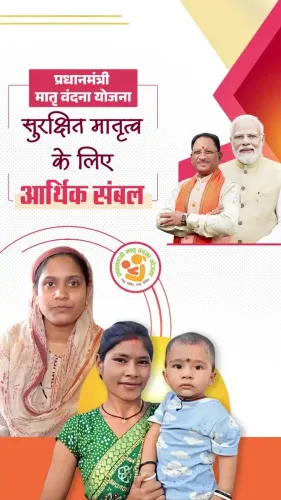
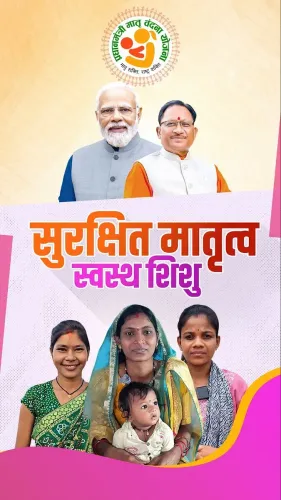
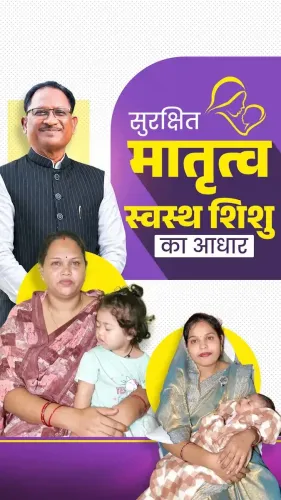
The post celebrated Mitanins — Chhattisgarh's network of local women health volunteers — as the 'heartbeat of rural healthcare,' crediting them with 'bringing essential healthcare closer to every family' and 'strengthening maternal and child health through dedication and compassion.'
A Two-Decade Programme That Became a National Template
The Mitanin programme is older than many of India's flagship health schemes. Launched by the Chhattisgarh government in 2002, it deployed local women as community health volunteers in rural and tribal areas to deliver basic preventive and promotive care — before the national ASHA (Accredited Social Health Activist) cadre under the National Rural Health Mission was even conceived. When the central government designed the ASHA framework, the Mitanin model was already demonstrating what task-shifting primary care to trusted community members could achieve in high-burden, low-access districts. Over two decades and across successive state governments, the programme has survived political transitions intact — a rare marker of policy durability in Indian states. Both Congress and BJP administrations have retained and expanded it, integrating Mitanins with central schemes targeting maternal mortality and child immunisation.Sai Government's Framing and the 'Viksit Chhattisgarh' Push
For Chief Minister Vishnu Deo Sai, who took office in December 2023, amplifying the Mitanin programme aligns with the broader 'Viksit Chhattisgarh' (Developed Chhattisgarh) narrative his government has been building. The hashtag cluster accompanying Friday's post — including #महतारी_का_सम्मान ('respect for the mother') and #महतारी_के_मान ('honour for the mother') — signals a deliberate attempt to frame community healthcare within a larger cultural vocabulary centred on women's dignity. The programme's strength lies in its local embeddedness: Mitanins are women from the very villages they serve, which translates into trust that an outside health worker rarely commands in Chhattisgarh's tribal districts.What the Next Milestones Will Reveal
The state health department's upcoming figures on maternal mortality ratio and immunisation coverage will be the real test of whether political messaging translates to measurable outcomes. Advocates and health planners are watching closely for any budget announcements on Mitanin incentive structures or training upgrades in forthcoming assembly sessions — investments that would signal seriousness beyond the celebratory post. For now, the Mitanin remains what she has been for more than twenty years: a woman walking the last mile so no family faces illness alone.Point of View
But converting that legacy into verifiable outcome improvements — on maternal mortality and immunisation — will determine whether the framing holds. The invocation of maternal honour hashtags in Hindi signals that the BJP-led state government is consciously pitching the healthcare agenda to rural women voters, a constituency that proved decisive in the December 2023 assembly elections. Health-equity advocates will rightly look past the celebration toward the concrete resourcing decisions that follow.
NationPress
16 Oct 2026
Frequently Asked Questions
What is the Mitanin programme in Chhattisgarh?
The Mitanin programme is Chhattisgarh's community health volunteer initiative launched in 2002, deploying local women from villages to deliver basic preventive and promotive healthcare in rural and tribal areas. It predates and served as an early model for the national ASHA cadre.
How is a Mitanin different from an ASHA worker?
Mitanins are specific to Chhattisgarh and were created in 2002, while ASHA (Accredited Social Health Activist) workers were introduced nationally under the National Rural Health Mission after 2005. The Mitanin programme is widely regarded as one of the templates that informed the ASHA design.
Who is Vishnu Deo Sai and when did he become Chief Minister?
Vishnu Deo Sai is a BJP leader who became Chief Minister of Chhattisgarh in December 2023 following his party's victory in the state assembly elections.
What does 'Mitanin' mean and who can become one?
The term 'Mitanin' means a friendly helper or companion in the local cultural context. Mitanins are women selected from the communities they serve, giving them a trust advantage over outside health workers, particularly in Chhattisgarh's tribal districts.
What health outcomes does the Mitanin programme target?
Mitanins focus primarily on maternal and child health, including antenatal care support, immunisation outreach, nutrition counselling, and connecting families to government health schemes — areas critical to reducing Chhattisgarh's maternal and infant mortality rates.