India-Canada ties: Building durable bonds after 2024 diplomatic rupture
Synopsis
India and Canada are no longer just patching up — they are trying to build a structurally different relationship. A report by former Indian High Commissioner Sanjay Kumar Verma argues that economic diversification, a CEPA roadmap, and a shared acknowledgement that Khalistan extremism threatens Canada too could form the durable foundation both sides have lacked since the 2024 rupture.
Key Takeaways
India and Canada are rebuilding bilateral ties after the 2024 diplomatic rupture, focusing on economic complementarities and security cooperation.
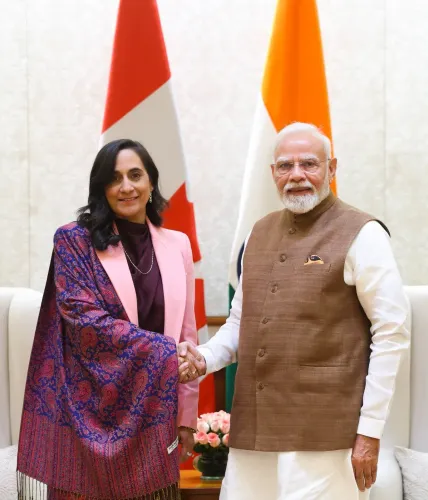
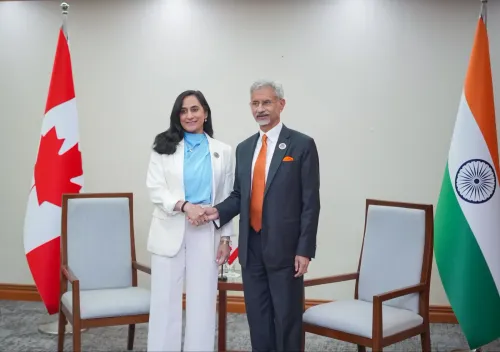
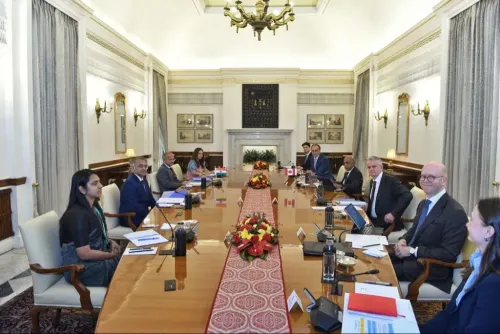
Canadian Foreign Minister Anita Anand and Trade Minister Maninder Sidhu visited India; security consultations were held between David Morrison and NSA Ajit Doval .
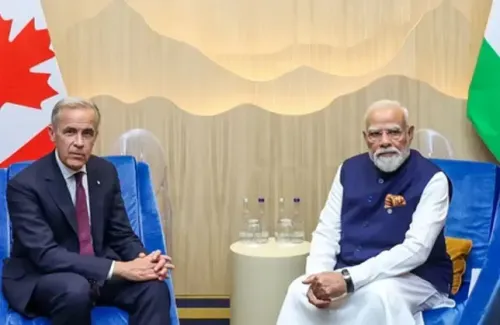
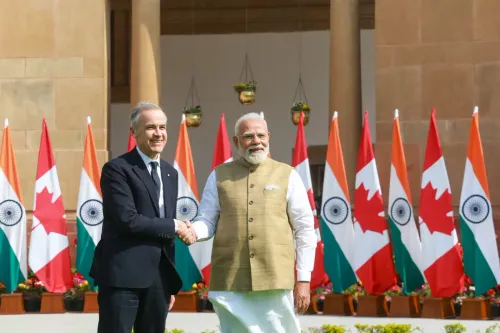
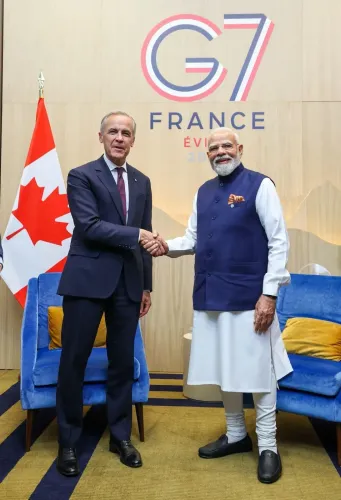
The political reset was anchored by PM Mark Carney's visit to India from 27 February to 2 March 2026 and a Modi-Carney phone call on 13 October reaffirming CEPA talks.
PM Modi's anticipated visit to Canada in December could provide the next milestone for the diplomatic reset.
The Canadian Security Intelligence Service (CSIS) has identified Canada-based Khalistani extremists as a national security threat to Canada itself, in its 2025 Public Report .
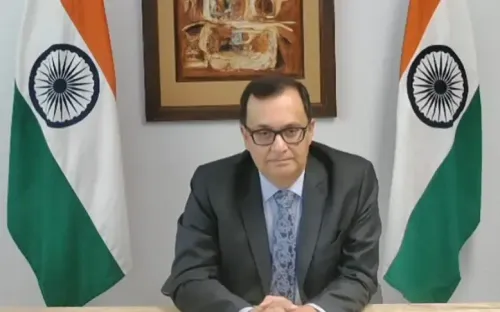
The report, authored by former Indian High Commissioner Sanjay Kumar Verma , calls for a structured early-warning mechanism to prevent future diplomatic crises.
After a prolonged period of severely strained relations, India and Canada are now pivoting toward rebuilding their bilateral partnership, with a focus on economic complementarities and shared strategic interests, according to a new analysis by India's former High Commissioner to Canada, Sanjay Kumar Verma, published in India Narrative.
Diplomatic Signals of a Reset
The visits of Canadian Foreign Minister Anita Anand and International Trade Minister Maninder Sidhu to India — preceded by security consultations between David Morrison and National Security Adviser (NSA) Ajit Doval — signal a determined effort to rebuild bilateral confidence. Notably, the report underscores that the objective should not be to simply restore the pre-rupture relationship, but to construct a more resilient partnership with structural safeguards against a repeat of the 2024 diplomatic crisis.
Economic Foundations: What Each Side Brings
The report identifies compelling economic incentives on both sides. India offers a large and expanding market, growing industrial capacity, and a maturing technology ecosystem — presenting Ottawa an opportunity to diversify its trade and investment base beyond its near-total dependence on the United States. Canada, in turn, brings strengths in energy, critical minerals, agriculture, aerospace, advanced technologies, education, and institutional investment. Both nations, the report argues, have strong reasons to diversify supply chains and strengthen economic resilience.
Political Framework: From G7 to CEPA
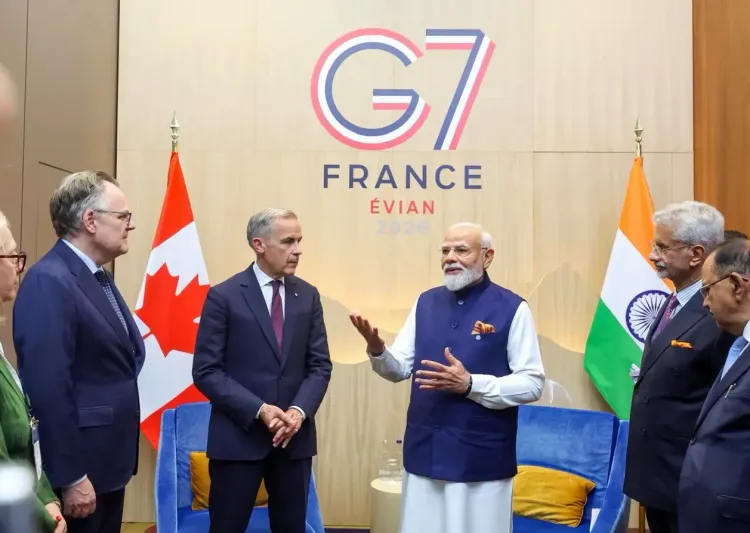
The political foundation for the current phase was laid during Prime Minister Mark Carney's visit to India from 27 February to 2 March 2026, following renewed engagement between Carney and Prime Minister Narendra Modi at the G7 summit in 2025. The two leaders supported the reconstitution of the India-Canada CEO Forum, a Finance Ministers' Economic and Financial Dialogue, deeper security cooperation, and regular trade and investment engagement — mechanisms designed to sustain cooperation even during periods of political disagreement.
In a telephone conversation on 13 October, Modi and Carney reaffirmed their commitment to concluding the Comprehensive Economic Partnership Agreement (CEPA) at the earliest opportunity. Modi's anticipated visit to Canada in December could provide a further opportunity to demonstrate that the reset is producing tangible results. According to the report, the political framework is now in place; implementation will ultimately determine its credibility.
Early-Warning Mechanism: Lesson from 2024
Drawing on the experience of the 2024 diplomatic fallout, the report highlights the need for a structured early-warning mechanism. Designated senior officials should be empowered to communicate emerging concerns promptly, assess implications, and escalate unresolved issues to national security advisers or foreign ministers. Regular reviews and agreed procedures for information-sharing, the report argues, could prevent misunderstandings from spiralling into wider crises — without eliminating disagreements entirely.
Khalistan Extremism: A Shared Security Concern
For India, the activities of pro-Khalistan extremist organisations operating from Canadian territory have long been a core concern. The report stresses that the legitimate question is whether Canadian territory is being used to facilitate intimidation, violence, or other unlawful activities directed against India's sovereignty and territorial integrity. Significantly, the report cites the Canadian Security Intelligence Service (CSIS) in its '2025 Public Report', which identified the continuing involvement of Canada-based Khalistani extremists in violent extremist activities as a national security threat to Canada itself — not merely to India. This framing repositions the Khalistan issue as a shared security challenge rather than a bilateral grievance.
As both capitals move toward institutionalising the reset, the depth and durability of the renewed partnership will hinge on whether economic commitments translate into signed deals and security cooperation becomes reciprocal and verifiable.
Point of View
And the 2024 rupture was simply the most public iteration of a recurring pattern. What makes the current moment potentially different is the CSIS framing: if Canada now officially treats Khalistani extremism as a domestic security threat rather than a bilateral irritant, the political calculus in Ottawa shifts. The real test is whether CEPA negotiations — stalled for years — can be concluded before domestic political cycles in either country reopen the fault lines. A Modi visit in December would be symbolically significant; actual deliverables would be strategically significant.
NationPress
16 Oct 2026
Frequently Asked Questions
Why did India-Canada relations deteriorate in 2024?
The bilateral relationship suffered a severe rupture in 2024, primarily over India's concerns about Khalistan extremist activities on Canadian soil and the diplomatic fallout that followed. The crisis led to a sharp downgrade in diplomatic engagement between the two countries.
What is the current status of the India-Canada CEPA negotiations?
India and Canada have reaffirmed their commitment to concluding the Comprehensive Economic Partnership Agreement (CEPA) at the earliest opportunity, as reiterated in a phone call between PM Modi and PM Carney on 13 October. PM Modi's anticipated visit to Canada in December could provide a further push toward finalising the deal.
What role did PM Mark Carney's India visit play in the diplomatic reset?
PM Carney's visit to India from 27 February to 2 March 2026 laid the political foundation for the current phase of engagement, following earlier renewed contact between Carney and PM Modi at the G7 summit in 2025. The visit led to agreements on reconstituting the India-Canada CEO Forum, a Finance Ministers' Dialogue, and stronger security ties.
How does the Khalistan issue factor into India-Canada relations?
India has long raised concerns about pro-Khalistan extremist organisations operating from Canadian territory and their alleged facilitation of activities targeting India's sovereignty. Notably, Canada's own intelligence agency, CSIS, identified Canada-based Khalistani extremists as a national security threat to Canada in its 2025 Public Report, reframing the issue as a shared concern.
What is the early-warning mechanism proposed in the report?
The report by former Indian High Commissioner Sanjay Kumar Verma calls for designated senior officials on both sides to communicate emerging concerns promptly and refer unresolved issues to national security advisers or foreign ministers. The aim is to prevent misunderstandings from escalating into full diplomatic crises, as occurred in 2024.