India-Canada ties reviewed at G7 Summit: Modi, Carney hold bilateral in Evian
Synopsis
Four meetings in under a year — Modi and Carney's bilateral at the Evian G7 Summit was no courtesy call. With CEPA talks targeting a 2026 close, GSOIA defence negotiations launched, and a Modi visit to Canada in the pipeline, India-Canada ties are moving faster and deeper than at any point in recent memory.
Key Takeaways
PM Modi and Canadian PM Mark Carney met on 16 June 2026 on the sidelines of the G7 Summit in Evian, France — their fourth bilateral meeting in under a year .
Both sides reaffirmed the goal of concluding Comprehensive Economic Partnership Agreement (CEPA) negotiations in 2026 .
The two leaders agreed to launch negotiations on a General Security of Information Agreement (GSOIA) for defence information sharing.
Commercial discussions covered LNG , LPG , and metallurgical coal arrangements.
India expressed support for Canada joining IORA as a Dialogue Partner; Raisina Americas was announced as a new bilateral dialogue platform.
PM Modi accepted an invitation to visit Canada in 2026 , with dates to be finalised through diplomatic channels.
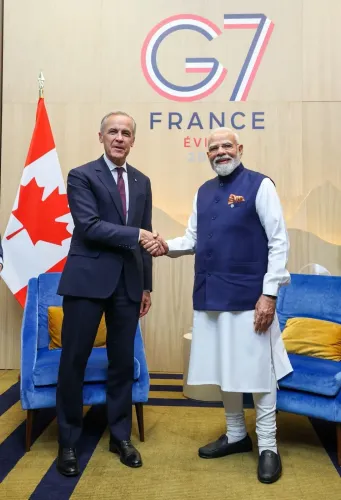
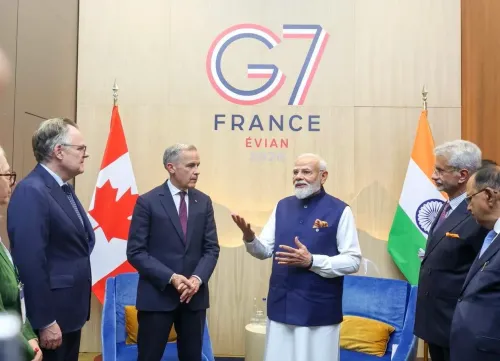
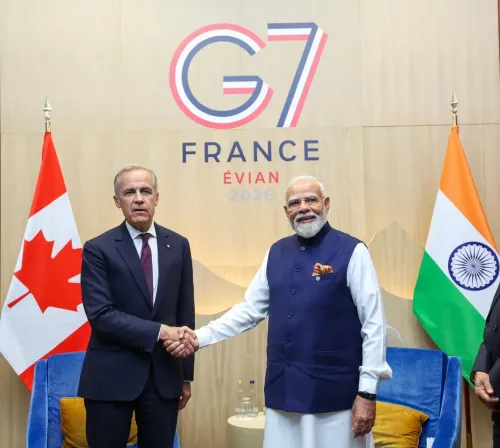
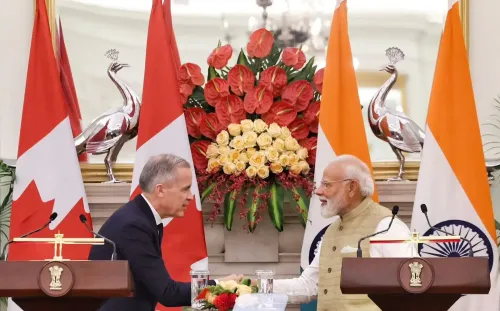
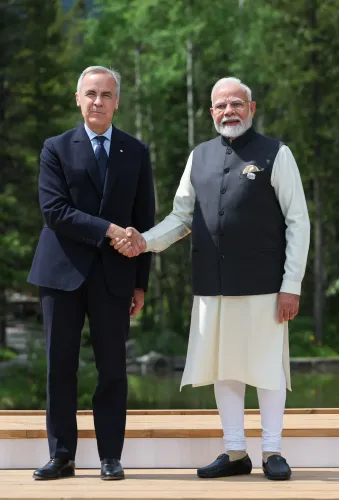
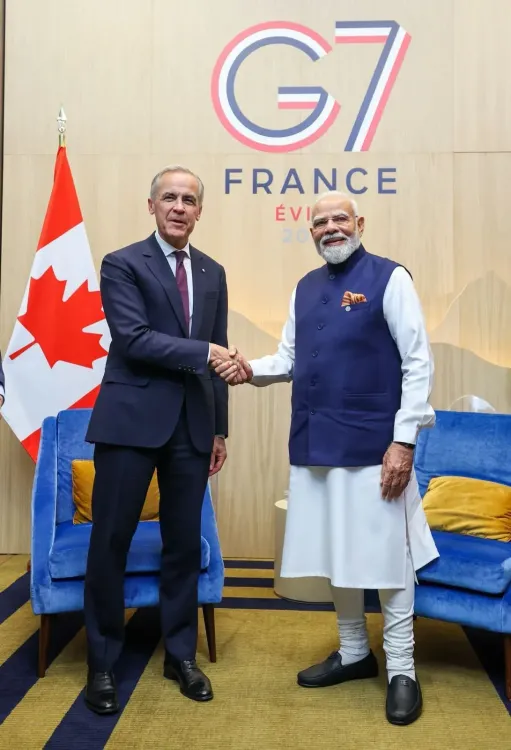
Prime Minister Narendra Modi and Canadian Prime Minister Mark Carney on Tuesday, 16 June 2026 held a bilateral meeting on the sidelines of the G7 Summit in Evian, France, conducting a comprehensive review of India-Canada relations spanning trade, energy, technology, and people-to-people ties. The meeting marked their fourth bilateral engagement in under a year, signalling a sustained diplomatic reset between the two countries.
What the Leaders Discussed
In a post on X, Prime Minister Modi described the meeting as covering cooperation across four key pillars: trade and economy, energy, technology, and people-to-people ties. 'It was a delight to meet Prime Minister Carney on the sidelines of the Evian G7 Summit. In less than a year, it is our fourth meeting, indicating our commitment to strong India-Canada ties,' Modi wrote.
The Ministry of External Affairs (MEA) said both leaders welcomed the positive momentum in bilateral relations and noted progress since Prime Minister Carney's visit to India in March 2026. The two sides reaffirmed their commitment to building a 'forward-looking strategic partnership' and underscored the complementarities between their economies.
Trade, Energy and the CEPA Push
A significant focus of the bilateral was economic cooperation, including commercial arrangements relating to LNG, LPG, and metallurgical coal. Both governments expressed satisfaction with progress in negotiations toward a Comprehensive Economic Partnership Agreement (CEPA) and reaffirmed a shared objective of concluding those negotiations in 2026.
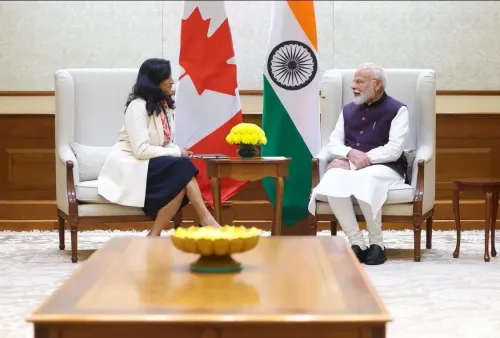
The Prime Ministers welcomed the recent visit of Indian Minister of Commerce and Industry Piyush Goyal to Canada and looked forward to a forthcoming Canadian trade mission to India, to be led by Maninder Sidhu, Canada's Minister of International Trade, later in 2026. Notably, this sequence of high-level trade visits represents one of the most active bilateral commercial engagement cycles between the two countries in recent years.
Defence, Security and New Institutional Frameworks
In a significant security-related development, the two Prime Ministers agreed to launch negotiations on a General Security of Information Agreement (GSOIA) — a framework that governs the sharing of classified defence information. The MEA noted that both sides also welcomed recent exchanges between defence institutions, including the visit of the National Defence College of India to Canada.
Both governments looked forward to forthcoming dialogues in the areas of defence, finance, and migration, alongside strengthened institutional engagement through the Joint Science and Technology Committee and the Consular Dialogue.
New Platforms and Regional Outreach
The leaders announced the establishment of Raisina Americas as a new platform to strengthen dialogue and cooperation. Prime Minister Modi also expressed India's support for Canada becoming a Dialogue Partner of the Indian Ocean Rim Association (IORA) — a move that would extend Canada's formal engagement with the Indo-Pacific institutional architecture.
Prime Minister Modi accepted Prime Minister Carney's invitation to visit Canada in 2026, with both sides agreeing to work through diplomatic channels to finalise a mutually convenient date. The two leaders also noted ongoing collaboration under the Canada-India Talent and Innovation Strategy, covering skill development, innovation partnerships, and educational cooperation.
What Comes Next
With CEPA negotiations targeting a 2026 conclusion, GSOIA talks set to begin, and a Modi visit to Canada on the horizon, the bilateral relationship appears to be entering its most substantive phase in years. The pace and depth of engagement — four meetings in under twelve months — suggests both governments are investing political capital in a durable reset after a prolonged period of diplomatic strain.
Point of View
If concluded in 2026, would be one of India's most significant trade agreements in the post-WTO era. What mainstream coverage may miss is the IORA dimension — backing Canada as a Dialogue Partner gives New Delhi soft-power leverage in shaping who participates in Indo-Pacific institutional frameworks, and signals that India sees Canada as a strategic partner worth investing in, not merely a diaspora-management relationship.
NationPress
18 Sept 2026
Frequently Asked Questions
What did PM Modi and Mark Carney discuss at the G7 Summit in Evian?
The two leaders reviewed the full range of India-Canada relations, covering trade and economy, energy, technology, and people-to-people ties. Key outcomes included progress on CEPA negotiations, agreement to launch GSOIA defence talks, and discussions on LNG, LPG, and metallurgical coal arrangements.
How many times have Modi and Carney met?
The Evian meeting on 16 June 2026 was their fourth bilateral meeting in under a year, according to Prime Minister Modi's post on X. Both leaders described the frequency as reflecting their commitment to strong India-Canada ties.
What is the GSOIA that India and Canada agreed to negotiate?
The General Security of Information Agreement (GSOIA) is a framework governing the sharing of classified defence information between two countries. India and Canada agreed at the G7 Summit to launch formal negotiations on this agreement, marking a significant step in bilateral defence and security cooperation.
When could the India-Canada CEPA be concluded?
Both governments have reaffirmed a shared objective of concluding Comprehensive Economic Partnership Agreement (CEPA) negotiations in 2026. The negotiations have been progressing alongside a series of high-level trade visits, including Commerce Minister Piyush Goyal's visit to Canada and a forthcoming Canadian trade mission to India.
Will PM Modi visit Canada in 2026?
Prime Minister Modi accepted Canadian PM Mark Carney's invitation to visit Canada in 2026. Both sides agreed to work through diplomatic channels to determine a mutually convenient date for the visit.