Joshi flags 70 hydrogen vehicles, ₹410 cr push under Green H2 Mission
Synopsis
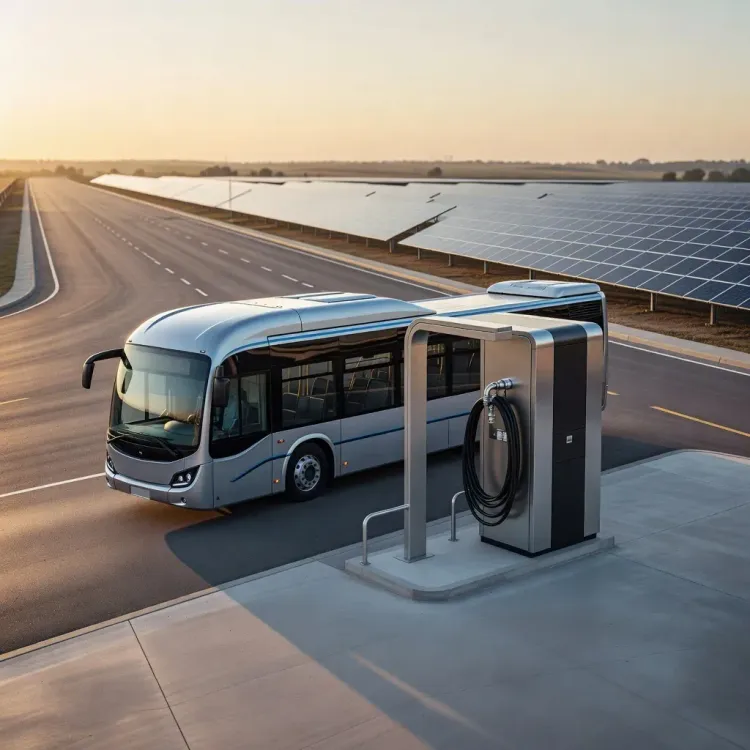
Union Minister Pralhad Joshi announced 12 pilot projects under the National Green Hydrogen Mission awarding deployment of 70 hydrogen-powered vehicles on 21 routes, supported by ₹410.77 crore and 16 refuelling stations, advancing India's clean mobility and energy self-reliance goals.
Key Takeaways
12 pilot projects have been awarded under the National Green Hydrogen Mission for hydrogen mobility.
70 hydrogen-powered vehicles will be deployed across 21 routes nationwide.
16 hydrogen refuelling stations are being developed to support the pilots.
Financial assistance of ₹410.77 crore backs the pilot programme.
The parent mission carries a total outlay of ₹19,744 crore approved by the Union Cabinet in January 2023 through 2029-30.
India targets net-zero emissions by 2070 , with green hydrogen central to decarbonising heavy transport and industry.
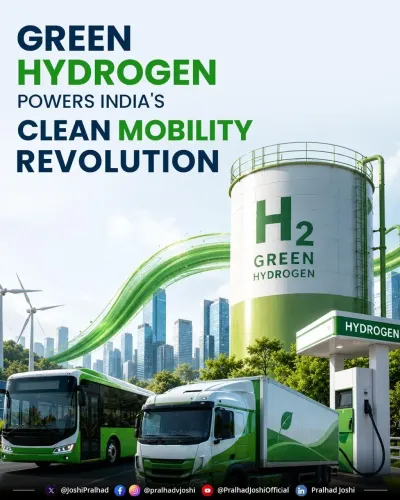
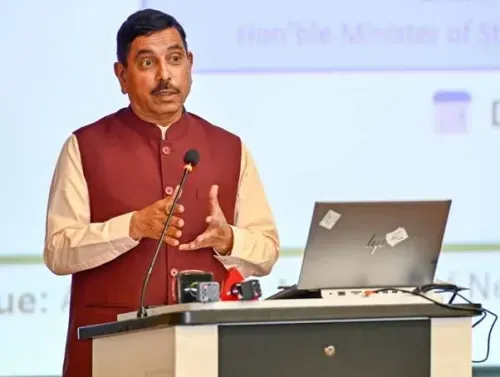
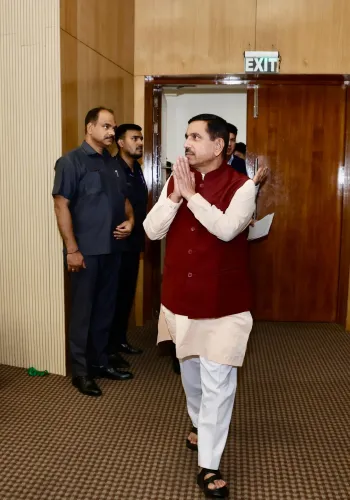
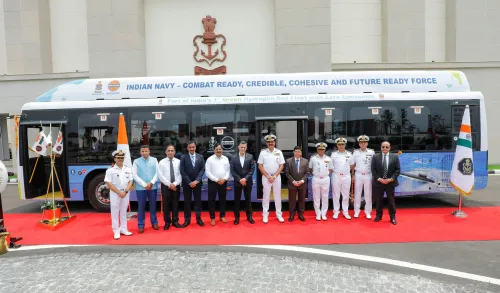
India's clean mobility ambition just got a concrete shape: Union Minister of New and Renewable Energy Pralhad Joshi on Thursday, July 30, 2026, announced that 12 pilot projects have been awarded under the National Green Hydrogen Mission to deploy 70 hydrogen-powered vehicles across 21 routes, backed by ₹410.77 crore in financial assistance and the rollout of 16 hydrogen refuelling stations.
What the 12 pilot projects actually cover
The awarded pilots are designed to test hydrogen mobility on real routes before any larger commercial push. The 16 refuelling stations spanning 21 routes form the backbone of the infrastructure play — because without refuelling points, zero-emission vehicles stay parked. The ₹410.77 crore in government-backed financial assistance is meant to de-risk early movers in a technology that is still proving its economics at scale. Joshi framed the move squarely within Prime Minister Narendra Modi's vision of a 'greener, cleaner and self-reliant Bharat,' invoking the #ViksitBharat (Developed India) framework that has become the government's overarching development narrative.The ₹19,744 crore mission behind the pilots
The pilots do not exist in isolation. The Union Cabinet approved the National Green Hydrogen Mission in January 2023 with a total outlay of ₹19,744 crore through 2029-30, positioning green hydrogen — produced using renewable electricity to split water — as India's answer to decarbonising heavy transport and industry simultaneously. India has committed to reaching net-zero emissions by 2070, and green hydrogen sits at the intersection of two strategic goals: cutting carbon and cutting oil import bills. The mobility pilots are an early, visible proof-of-concept for that larger ambition, testing whether hydrogen buses and trucks can perform reliably on Indian roads before the government scales up investment.Why transport is the proving ground
Heavy vehicles — buses, trucks, freight carriers — are notoriously hard to electrify with batteries alone due to weight and range constraints. Hydrogen fuel cells sidestep both problems, offering longer range and faster refuelling. The 21-route footprint of these pilots is therefore a deliberate choice: if hydrogen vehicles can prove their economics on these corridors, the case for commercial-scale deployment across India's vast road network becomes significantly stronger. The automotive sector and renewable energy developers are the two industries watching these results most closely — the former for product roadmaps, the latter for electrolyser demand that green hydrogen production would unlock. These 12 pilots are the opening move. The data they generate will determine whether India's hydrogen highway becomes a national network or stays a government experiment.Point of View
The true test will be whether pilot data translates into private-sector confidence and follow-on commercial tenders — or whether the ₹410.77 crore remains a contained government experiment. The Atmanirbhar framing also signals that indigenising electrolyser manufacturing, not just deploying imported technology, remains the longer-term ambition.
NationPress
14 Sept 2026
Frequently Asked Questions
What is the National Green Hydrogen Mission in India?
The National Green Hydrogen Mission is India's flagship programme approved by the Union Cabinet in January 2023 with an outlay of ₹19,744 crore through 2029-30, aimed at scaling green hydrogen production and use to decarbonise transport, industry, and reduce oil imports.
How many hydrogen vehicles are being deployed under the mission's pilots?
70 hydrogen-powered vehicles are being deployed across 21 routes under 12 pilot projects awarded through the National Green Hydrogen Mission.
How much money is the government spending on hydrogen vehicle pilots?
The government is providing ₹410.77 crore in financial assistance to support the 12 pilot projects, which include 70 vehicles and 16 hydrogen refuelling stations.
Why is India focusing on hydrogen for transport instead of electric vehicles?
Hydrogen fuel cells offer longer range and faster refuelling compared to batteries, making them better suited for heavy vehicles like buses and trucks that are difficult to electrify with battery technology alone.
What is India's net-zero target and how does hydrogen fit in?
India has committed to achieving net-zero emissions by 2070. Green hydrogen is central to that plan as it can decarbonise heavy industry and transport while also reducing dependence on oil imports, aligning with the Atmanirbhar Bharat energy self-reliance framework.