Is BIS Enhancing Quality and Safety in Ayurveda Through Robust Standardisation?
Synopsis
The Bureau of Indian Standards (BIS) is committed to enhancing the quality and safety of Ayurveda through robust standardisation efforts. A recent national workshop gathered key stakeholders to discuss the future of Ayurveda in the modern world, bridging traditional knowledge with contemporary standards. This initiative aims to position Ayurveda as a globally trusted healthcare system.
Key Takeaways
BIS emphasizes quality and safety in Ayurveda .
Workshop gathered nearly 180 stakeholders from the industry.
Importance of standardisation for global acceptance highlighted.
Interdisciplinary collaboration is essential for future advancements.
MAHE supports the government's national initiative for Ayurveda.
New Delhi, Jan 12 (NationPress) The Bureau of Indian Standards (BIS), operating under the Ministry of Consumer Affairs, Food and Public Distribution, has once again emphasized its dedication to improving quality and safety in Ayurveda via thorough standardisation.
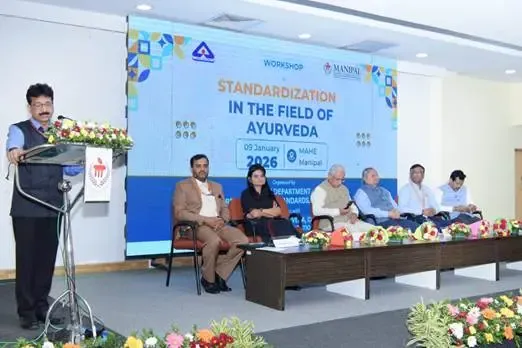
This initiative was highlighted during a national workshop organized in partnership with the Manipal Academy of Higher Education (MAHE) through its Division of Ayurveda, Centre for Integrative Medicine and Research.
The event catered specifically to faculty, researchers, startups, and industry representatives involved in the Ayurveda domain, attracting nearly 180 delegates from all over the country. This event was a landmark moment in the collaborative effort to bolster the quality, safety, and international acceptance of Ayurveda.
“BIS is dedicated to enhancing quality and safety in Ayurveda through comprehensive and inclusive standardisation methods,” stated Shrishti Dixit, Head of the AYUSH Department at BIS. She pointed out that standards are the bedrock of trust, crucial for the global recognition and broader acceptance of Ayurveda.
The workshop's theme, inspired by BIS’s guiding motto “Manakah Patha Pradarshaka,” underscored the vital role of standards in aligning ancient Ayurvedic knowledge with modern scientific and regulatory structures.
“This workshop signifies a crucial stride towards merging traditional wisdom with contemporary needs through organized and impactful standardisation,” noted Jayant Deopujari, Chairperson of the Ayurveda Sectional Committee at BIS.
He stressed the shared responsibility among all stakeholders to elevate Ayurveda as a globally trusted healthcare system.
Dr. Sharath K Rao, Pro Vice-Chancellor - Health Sciences at MAHE, Manipal, highlighted the pressing need for standardization in traditional practices like Ayurveda, assuring full institutional support from MAHE and its various divisions in propelling this national initiative forward.
The discussions emphasized multi-disciplinary collaboration, the role of standards in supporting Ayurveda startups, and the industry's duty in ensuring quality and compliance. Participants actively contributed to open discussions, sharing innovative ideas and practical insights on advancing standardization in Ayurveda.
Raghavendra Naik, Scientist-C at BIS, highlighted the significance of interdisciplinary research, strong academia-industry partnerships, and called for targeted capacity-building initiatives to foster a sustainable and collaborative ecosystem involving academia, industry, and policymakers for Ayurveda standardisation.
Point of View
I believe that the BIS's initiative to standardize Ayurveda is not just timely but essential. The integration of traditional practices into contemporary standards will enhance trust and acceptance of Ayurveda globally. It’s a proactive step that aligns with India's rich heritage and modern healthcare needs.
NationPress
22 Sept 2026
Frequently Asked Questions
What is the role of BIS in Ayurveda?
The Bureau of Indian Standards (BIS) is tasked with enhancing the quality and safety of Ayurveda by developing robust standardisation mechanisms.
Who participated in the recent BIS workshop?
The workshop included faculty members, researchers, startups, and representatives from the Ayurveda industry, totaling nearly 180 delegates from across India.
Why is standardisation important for Ayurveda?
Standardisation is crucial for building trust and ensuring the global acceptance of Ayurveda as a reliable healthcare system.
What was the theme of the workshop?
The workshop was themed around BIS’s motto 'Manakah Patha Pradarshaka,' emphasizing the importance of harmonizing traditional Ayurvedic knowledge with modern standards.
How does MAHE support this initiative?
MAHE has pledged full support for the standardisation initiative, recognizing the urgency of integrating Ayurveda into contemporary healthcare frameworks.