Pralhad Joshi Directs NTH to Expand Testing Sectors Nationwide
Synopsis
Union Consumer Affairs Minister Pralhad Joshi has directed the National Test House to widen its sector coverage and establish world-class testing centres nationwide, framing quality infrastructure as central to India's global competitiveness.
Key Takeaways
Minister Pralhad Joshi met NTH Director General Dr.
Alok Kumar Srivastava on June 12, 2026 .
He described NTH's recent performance as 'praiseworthy' but directed it to expand beyond its current sector coverage.
The directive calls for 'state of the art testing centres' to be established across the country.
The minister linked quality testing infrastructure directly to increasing India's global competitiveness.
The move aligns with the Consumer Protection Act, 2019 and the broader Make in India push to reduce reliance on foreign certification.
Key stakeholders include domestic manufacturers, exporters , and consumers who benefit from stronger product-safety enforcement.
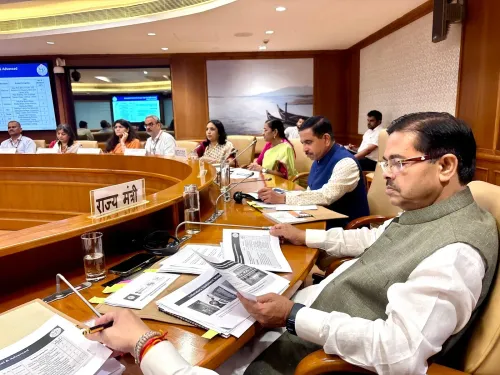
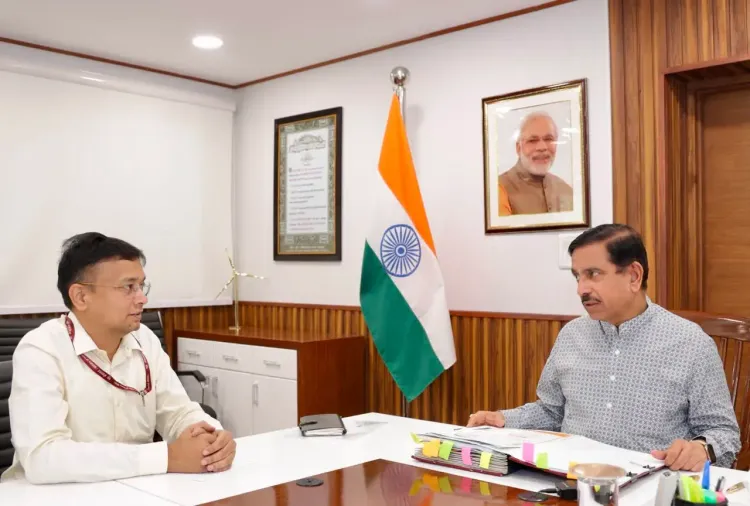
Union Consumer Affairs Minister Pralhad Joshi on Friday, June 12, 2026, met Dr. Alok Kumar Srivastava, Director General of the National Test House (NTH), and directed the body to widen its sector coverage and build world-class testing infrastructure across the country to boost global competitiveness.
Context
Acknowledging NTH's recent performance as 'praiseworthy', Minister Joshi nonetheless stressed that the organisation must go further. He called for the creation of 'state of the art testing centres across the country' and directed NTH to 'expand the ambit to include other sectors', signalling dissatisfaction with the current scope of the body's work.
The minister's core argument was straightforward: 'Testing assures quality, and hence NTH needs to create such world-class quality infrastructure and thereby increase global competitiveness.' The meeting underlines the ministry's intent to treat quality infrastructure as a strategic economic asset, not merely a regulatory checkbox.
Policy Backdrop
The National Test House is a government testing and quality-certification body operating under the Ministry of Consumer Affairs, Food and Public Distribution, with laboratories spread across India. It evaluates materials, products, and equipment for compliance with national and international standards.
The Consumer Protection Act, 2019, broadened the regulatory focus on product quality and standards compliance, giving fresh impetus to bodies like NTH. Successive administrations have incrementally added regional NTH laboratories and aligned testing protocols with international norms, partly to reduce dependence on foreign certification agencies. Joshi's directive continues and sharpens that trajectory.
The push also fits within the broader Make in India framework, under which expanding domestic testing capacity has been positioned as essential to raising the credibility of Indian manufactured goods in export markets.
Stakeholders and Impact
Manufacturers and exporters stand to benefit most directly from an expanded NTH network. Reliable, accredited domestic testing reduces the time and cost of obtaining certifications from foreign laboratories — a persistent friction point for small and medium enterprises seeking to enter global supply chains.
Consumers, too, have a stake: a denser, more sector-diverse testing infrastructure strengthens the enforcement backbone of product-safety regulations. For industries currently outside NTH's testing ambit, the minister's directive signals that sector-specific mandates and dedicated facilities could be on the horizon.
What's Next
The immediate watch-points are formal announcements on new NTH laboratories, the specific sectors identified for expansion, and any related budgetary provisions in the next Union Budget. The ministry is expected to follow the meeting with operational directives to NTH's leadership on timelines and infrastructure targets.
If the expansion proceeds at scale, India could meaningfully reduce its reliance on overseas certification, strengthen the 'Made in India' quality signal globally, and give domestic producers a more competitive footing in international trade.
Point of View
The ministry is positioning NTH's expansion within the same logic that drives export-promotion and manufacturing-upgrade programmes. The emphasis on 'world-class' standards also suggests pressure to align NTH's accreditation with international benchmarks, which would directly address a long-standing grievance of Indian exporters who pay premium fees to foreign testing agencies. Whether this translates into budgetary allocations and a concrete sector roadmap will determine whether the directive has lasting impact or remains aspirational.
NationPress
26 Oct 2026
Frequently Asked Questions
What is the National Test House (NTH) in India?
The National Test House is a government body under the Ministry of Consumer Affairs, Food and Public Distribution that tests and certifies materials, products, and equipment for compliance with national and international quality standards, with laboratories across India.
What did Pralhad Joshi direct the NTH to do?
Minister Pralhad Joshi directed NTH to expand its coverage to include more sectors and to build state-of-the-art testing centres across the country to improve product quality and boost India's global competitiveness.
Why is expanding NTH testing infrastructure important for India?
A wider NTH network allows Indian manufacturers and exporters to obtain quality certifications domestically, reducing dependence on costly foreign testing agencies and strengthening the credibility of Indian goods in global markets.
How does this relate to Make in India?
Expanding domestic testing capacity is a key enabler of Make in India, as credible quality certification helps Indian-made products meet international standards required by overseas buyers and regulators.
What should we watch for next regarding NTH expansion?
Watch for formal announcements on new NTH laboratories, the specific new sectors to be covered, and any related funding provisions in the next Union Budget.