Kharif sowing at 531 lakh hectares, down 16% as monsoon stays deficient
Synopsis
India's kharif sowing is running 16% behind last year's pace, with rice, pulses, and millets all down sharply — a direct consequence of a deficient monsoon. The government's MSP hike for 14 crops offers a price cushion, but acreage shortfalls at this stage of the season raise real questions about kharif output and food price stability.
Key Takeaways
Total kharif sowing stood at 531.25 lakh hectares as on 10 July , down from 632.69 lakh hectares in the same period last year.
Rice acreage fell to 114.69 lakh hectares from 125.53 lakh hectares year-on-year.
Pulses (urad, moong) coverage dropped to 56.63 lakh hectares from 73.85 lakh hectares .
Coarse cereals and millets declined to 98.69 lakh hectares from 127.30 lakh hectares .
Sugarcane bucked the trend, rising marginally to 57.58 lakh hectares from 56.72 lakh hectares .
CCEA approved higher MSP for 14 kharif crops for Marketing Season 2026-27 , with moong farmers set to receive the highest margin at 61% over cost.
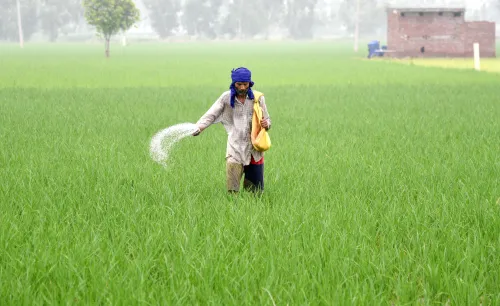
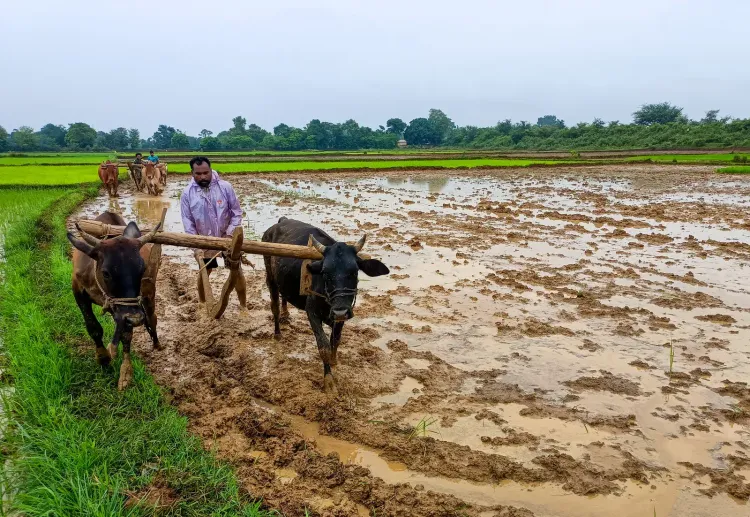
India's kharif sowing area stood at 531.25 lakh hectares as on 10 July this year, sharply lower than the 632.69 lakh hectares recorded during the same period last year, according to data released by the Ministry of Agriculture and Farmers Welfare on Monday. The 16% year-on-year shortfall is primarily attributed to a deficient monsoon so far in the current season.
Crop-wise Sowing Status
The area under rice has fallen to 114.69 lakh hectares from 125.53 lakh hectares in the corresponding period last year. Pulses — including urad and moong — have seen a steeper drop, with coverage at 56.63 lakh hectares against 73.85 lakh hectares a year ago.
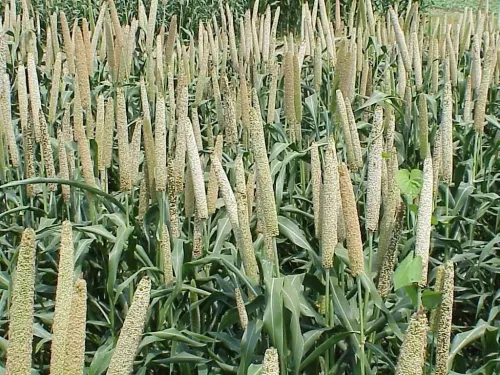
Coarse cereals and millets such as jowar, bajra, and ragi have been sown across 98.69 lakh hectares this season, compared with 127.30 lakh hectares during the same period of the previous year — a decline of nearly 22%.
Sugarcane Bucks the Trend
Not all crops are in retreat. The area under sugarcane — an annual crop sown earlier in the cycle — has edged up to 57.58 lakh hectares from 56.72 lakh hectares during the comparable period last year. As a long-duration crop planted before the monsoon window, sugarcane is less exposed to early-season rainfall deficits.
Government's MSP Response
Against this backdrop, the Cabinet Committee on Economic Affairs (CCEA), chaired by Prime Minister Narendra Modi, has approved higher Minimum Support Prices (MSP) for 14 kharif crops for Marketing Season 2026-27. The revised MSPs are set at a level of at least 1.5 times the all-India weighted average cost of production, consistent with the commitment made in the Union Budget 2018-19.
The expected margin over cost of production is highest for moong at 61%, followed by bajra at 56%, maize at 56%, and tur/arhar at 54%. For the remaining crops in the basket, the margin is estimated at 50%, according to the official statement.
Policy Push on Diversification
The government has in recent years actively steered farmers away from cereal-heavy cropping patterns, offering relatively higher MSPs for pulses, oilseeds, and nutri-cereals. This season's sowing data, however, suggests that monsoon adequacy remains a more immediate determinant of acreage than price signals alone. This comes amid growing concern that a prolonged rainfall deficit could weigh on food inflation, particularly in pulses — a category that has repeatedly driven retail price spikes in recent years.
With the monsoon still evolving, sowing figures for the remainder of the kharif season will be closely tracked by both the government and commodity markets.
Point of View
And a near-23% drop in pulse acreage compounds the risk. The government's MSP revision is a demand-side cushion for farmers, but it does not conjure rainfall. The more important question is whether the monsoon recovers in the coming weeks; if it does not, the Centre will face a familiar bind: defending retail food prices while protecting farm incomes, two objectives that rarely move in the same direction.
NationPress
13 Jul 2026
Frequently Asked Questions
What is the total kharif sowing area in India so far this season?
As on 10 July this year, the total area sown under kharif crops is estimated at 531.25 lakh hectares, compared with 632.69 lakh hectares during the same period last year — a shortfall of roughly 16%. The Ministry of Agriculture and Farmers Welfare released this data on Monday.
Why is kharif sowing lower than last year?
The decline in sowing area is attributed to a deficient monsoon this season. Adequate and timely rainfall is critical for kharif crop establishment, and its absence has delayed or reduced acreage across rice, pulses, and millets.
Which crops have seen the sharpest drop in acreage?
Coarse cereals and millets — including jowar, bajra, and ragi — have seen a near-22% decline, falling from 127.30 lakh hectares to 98.69 lakh hectares. Pulses such as urad and moong dropped from 73.85 lakh hectares to 56.63 lakh hectares.
What MSP has the government set for kharif crops in 2026-27?
The Cabinet Committee on Economic Affairs (CCEA) has approved MSPs for 14 kharif crops for Marketing Season 2026-27 at a minimum of 1.5 times the all-India weighted average cost of production. Moong farmers stand to receive the highest margin at 61% over cost, followed by bajra and maize at 56% each.
Is any kharif crop showing higher sowing than last year?
Sugarcane is the lone exception, with acreage rising marginally to 57.58 lakh hectares from 56.72 lakh hectares a year ago. As an annual crop sown earlier in the cycle, sugarcane is less vulnerable to early-monsoon deficits.