Kharif sowing 2025: India's total area at 84.6 lakh hectares as of June 12
Synopsis
India's kharif sowing has crossed 84.6 lakh hectares — but that headline masks a mixed picture: rice is ahead of last year, pulses have dropped sharply, and the bulk of the season's sowing hasn't even started yet. The real test comes as the monsoon pushes north.
Key Takeaways
Total kharif sowing area stood at 84.6 lakh hectares as of 12 June 2025 , down from 88.04 lakh hectares in the same period last year.
Rice area rose to 4.98 lakh hectares , up 1.09 lakh hectares year-on-year.
Pulses (urad, moong) fell to 1.55 lakh hectares from 2.73 lakh hectares a year ago.
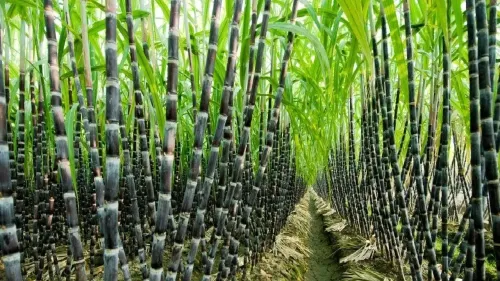
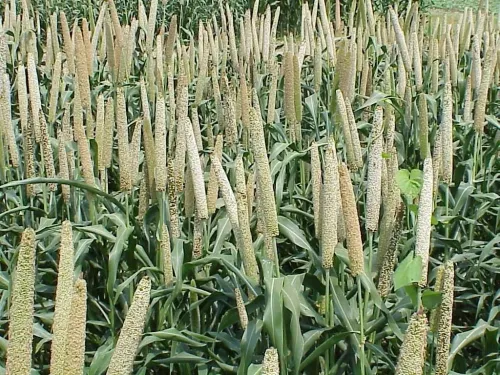
Coarse cereals/millets area edged up to 4.77 lakh hectares ; sugarcane held steady at 54.08 lakh hectares .
The CCEA has approved higher MSP for 14 kharif crops for Marketing Season 2026-27 , with moong farmers set to earn a 61% margin over production cost.
Sowing is expected to accelerate as the southwest monsoon advances to central and north India.
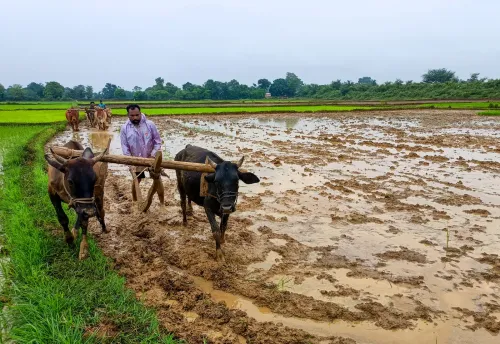
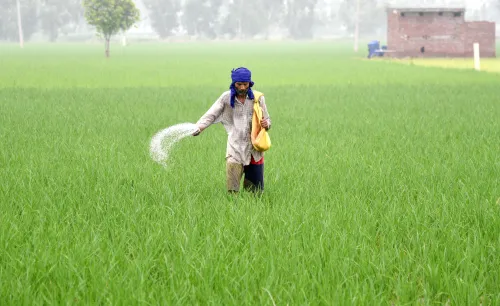
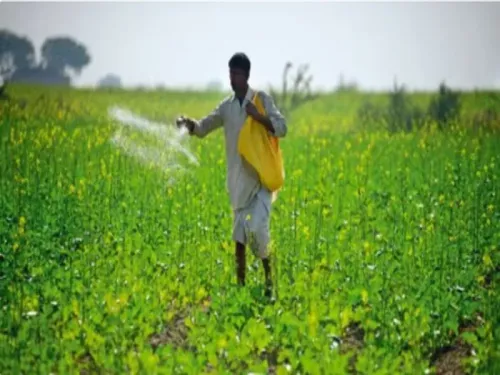
India's kharif sowing area stood at 84.6 lakh hectares as of 12 June 2025, according to data released by the Ministry of Agriculture and Farmers Welfare on Wednesday — a marginal dip from the 88.04 lakh hectares recorded in the corresponding period last year. The figures mark the early stages of the kharif season, which has just begun in southern states with the arrival of the southwest monsoon.
Crop-Wise Sowing Breakdown
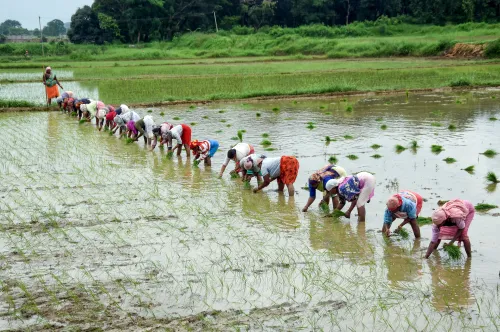
The area under rice has risen to 4.98 lakh hectares this year, up by 1.09 lakh hectares from 3.88 lakh hectares in the same period last year — one of the few crops to register a year-on-year gain at this stage. In contrast, the area under pulses — including urad and moong — has fallen to 1.55 lakh hectares from 2.73 lakh hectares a year ago, a notable decline given the government's push to boost pulse cultivation.
Coarse cereals and millets — including jowar, bajra, and ragi — covered 4.77 lakh hectares, slightly above the 4.32 lakh hectares in the same period last year. Sugarcane area remained broadly stable at 54.08 lakh hectares, compared with 54.29 lakh hectares a year ago, suggesting consistent farmer preference for the cash crop.
Monsoon Progression and What Comes Next
The kharif season's early data reflects sowing activity primarily in southern India, where the monsoon has arrived first. As the monsoon advances toward central and north India in the coming days, sowing figures are expected to accelerate sharply — making the current numbers an early and partial snapshot rather than a definitive trend.
Notably, the overall area is currently 3.44 lakh hectares below last year's corresponding figure, though agriculture officials and analysts typically caution against reading too much into early-season comparisons before the bulk of sowing in major producing states gets underway.
MSP Boost for 14 Kharif Crops
The Cabinet Committee on Economic Affairs (CCEA), chaired by Prime Minister Narendra Modi, had earlier approved an increase in Minimum Support Prices (MSP) for 14 kharif crops for Marketing Season 2026-27, in line with the Union Budget 2018-19 commitment to fix MSP at a minimum of 1.5 times the all-India weighted average cost of production.
According to an official statement, the expected margin to farmers over their cost of production is highest for moong at 61%, followed by bajra and maize at 56% each, and tur/arhar at 54%. For the remaining crops, the margin is estimated at 50%.
Government's Push for Diversified Cropping
In recent years, the Centre has actively promoted cultivation of pulses, oilseeds, and nutri-cereals — marketed under the 'Shree Anna' branding for millets — by offering relatively higher MSPs for these crops compared with traditional cereals. The policy aims to reduce India's dependence on cereal monocultures and improve nutritional diversity in farm output.
With the monsoon set to cover more of the country in the weeks ahead, the agriculture ministry's next update will offer a clearer picture of whether sowing momentum is on track to match or exceed last year's kharif totals.
Point of View
And the bulk of India's farm belt hasn't begun planting yet. What deserves closer attention is the sharp fall in pulse sowing, which cuts against the government's multi-year push to diversify away from cereals. Higher MSPs for moong and tur are the policy lever, but if farmers are still pulling back on pulses this early, it raises questions about whether price incentives alone are sufficient without addressing input costs and irrigation access. The coming fortnight of monsoon advance will be the real inflection point.
NationPress
20 Sept 2026
Frequently Asked Questions
What is India's total kharif sowing area as of June 2025?
India's total kharif sowing area stood at 84.6 lakh hectares as of 12 June 2025, according to data from the Ministry of Agriculture and Farmers Welfare. This compares with 88.04 lakh hectares recorded in the same period last year.
Which kharif crops have seen an increase in sowing area this year?
Rice has seen the most notable increase, with its sowing area rising to 4.98 lakh hectares from 3.88 lakh hectares in the same period last year — a gain of 1.09 lakh hectares. Coarse cereals and millets also edged higher to 4.77 lakh hectares from 4.32 lakh hectares.
Why has pulse sowing fallen sharply in the current kharif season?
The area under pulses — including urad and moong — dropped to 1.55 lakh hectares from 2.73 lakh hectares in the same period last year. The Ministry data does not specify a direct cause, but the decline comes despite the government offering higher MSPs for pulses to encourage diversified cropping.
What MSP has the government fixed for kharif crops in 2026-27?
The Cabinet Committee on Economic Affairs (CCEA) approved higher MSPs for 14 kharif crops for Marketing Season 2026-27, maintaining a minimum of 1.5 times the weighted average cost of production. Moong farmers stand to earn the highest margin at 61% over production cost, followed by bajra and maize at 56% each.
Why is current kharif sowing data considered early and partial?
The kharif season has only just begun in southern states with the arrival of the southwest monsoon. The monsoon is yet to reach central and north India, where a large share of kharif sowing takes place. Sowing figures are expected to rise significantly in the coming weeks as the monsoon advances.