Shekhawat chairs Culture Ministry Hindi Advisory Meet in Delhi
Synopsis
Union Culture and Tourism Minister Gajendra Singh Shekhawat participated in the Ministry of Culture's Hindi Advisory Committee meeting in New Delhi on 10 July 2026, where members discussed effective Rajbhasha implementation, Hindi use in administration, promotion of Hindi in cultural institutions, and preservation of Indian languages.
Key Takeaways
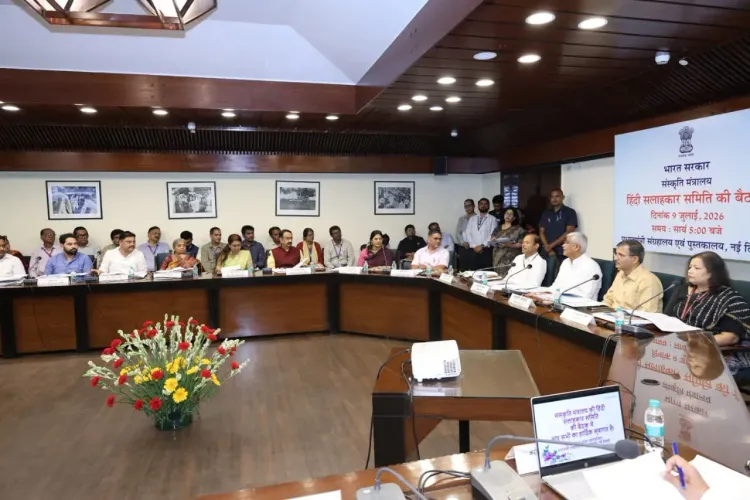
Gajendra Singh Shekhawat attended the Hindi Advisory Committee meeting of the Ministry of Culture in New Delhi on 10 July 2026 .
The meeting deliberated on effective implementation of Rajbhasha Hindi in administrative functions across the ministry.
Wider use of Hindi in cultural institutions and promotion of other Indian languages were also on the agenda.
The constitutional basis for the meeting lies in Article 343 and Article 351 of the Constitution, reinforced by the Official Languages Act, 1963 .
The minister described Hindi as 'the natural expression of India's civilisational consciousness' and essential for preserving cultural heritage.
Follow-up circulars to subordinate cultural bodies and annual official-language reports to Parliament will track implementation outcomes.
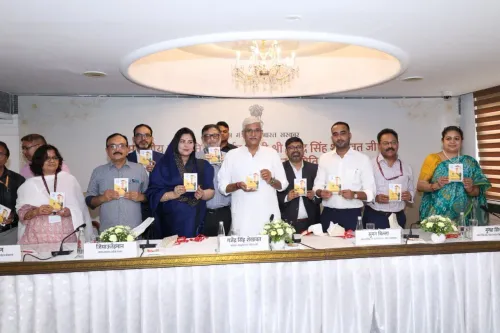
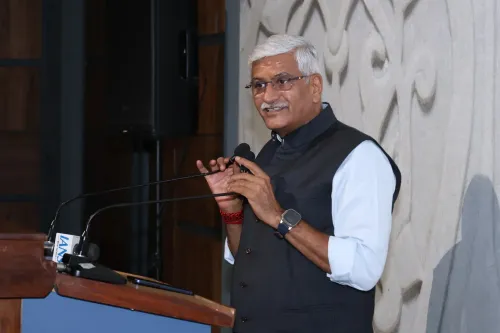
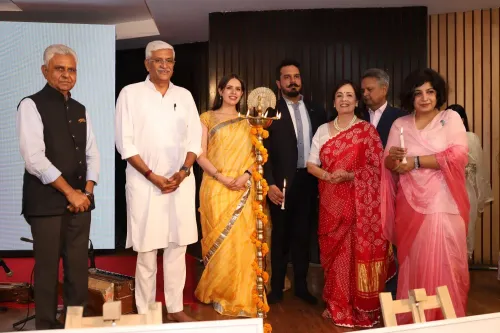
Union Culture and Tourism Minister Gajendra Singh Shekhawat participated in the Hindi Advisory Committee meeting of the Ministry of Culture in New Delhi on 10 July 2026, focusing on the effective implementation of Hindi as the official language across cultural institutions and administrative functions.
Context
Sharing his remarks after the meeting, Shekhawat quoted a guiding sentiment: 'Hindi hamaari sabhyatagat chetna ki naisargik abhivyakti hai' — 'Hindi is the natural expression of our civilisational consciousness.' He added that Hindi is essential for understanding and preserving India's cultural heritage.
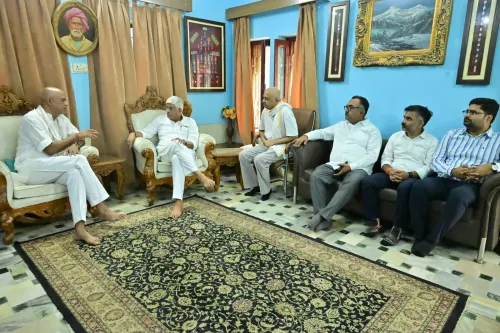
The meeting brought together members of the statutory advisory body to deliberate on how effectively the Rajbhasha framework is being applied within the ministry and its subordinate cultural bodies.
Policy Backdrop
Article 343 of the Constitution of India, adopted in 1950, designated Hindi in Devanagari script as the official language of the Union. The Official Languages Act, 1963, mandated the formation of Hindi advisory committees in central ministries to monitor and promote compliance with official-language rules in administrative work, correspondence, and publications.
Successive five-year official-language implementation programmes have required ministries to progressively increase Hindi usage in file notings and official communications. The current push also draws from Article 351 of the Constitution, which directs the Union to promote the spread of Hindi, and from the National Education Policy 2020, which emphasises the promotion of Indian languages alongside Hindi.
Stakeholders and Impact
The discussions at the meeting covered four broad areas: effective implementation of Rajbhasha Hindi in administrative work; wider use of Hindi in day-to-day official functions; promotion of Hindi within cultural institutions under the Ministry of Culture; and conservation and propagation of other Indian languages.
Central government employees, staff of cultural institutions such as museums and archives, and scholars of Indian languages are the primary stakeholders directly affected by the policy directions emerging from such meetings. The dual focus on Hindi promotion and protection of other Indian languages reflects the ministry's broader mandate under the Constitution.
What's Next
The Ministry of Culture is expected to issue follow-up guidance or circulars to its subordinate bodies based on the deliberations. Annual official-language implementation reports tabled in Parliament will serve as the formal accountability mechanism for measuring progress on the commitments discussed at the meeting.
The meeting signals continued institutional emphasis on integrating Hindi more deeply into the functioning of cultural bodies, while simultaneously reinforcing the government's stated commitment to preserving India's diverse linguistic heritage.
Point of View
But its timing reflects a broader political emphasis on Hindi and Indian-language identity that has intensified under the current government. The dual mandate — promoting Hindi while also protecting other Indian languages — is a careful balancing act that mirrors the language framework in the National Education Policy 2020, designed to pre-empt concerns from non-Hindi-speaking states. Shekhawat's framing of Hindi as a 'civilisational consciousness' elevates what is otherwise a compliance-review meeting into a statement of cultural nationalism. Stakeholders in southern and north-eastern states will watch whether follow-up circulars maintain that balance or tilt toward Hindi-first directives.
NationPress
8 Oct 2026
Frequently Asked Questions
What is the Hindi Advisory Committee of the Ministry of Culture?
The Hindi Advisory Committee is a statutory body attached to the Ministry of Culture that reviews and monitors the implementation of official-language policy — including Hindi usage in administrative work and cultural institutions — as mandated by the Official Languages Act, 1963.
What was discussed at the Ministry of Culture Hindi Advisory Committee meeting on 10 July 2026?
The meeting on 10 July 2026 in New Delhi discussed effective Rajbhasha Hindi implementation in administration, broader use of Hindi in official functions, promotion of Hindi within cultural institutions, and conservation and propagation of other Indian languages.
What is Rajbhasha Hindi?
Rajbhasha Hindi refers to the constitutional and statutory framework under which Hindi in Devanagari script serves as the official language of the Union of India, established under Article 343 of the Constitution and governed by the Official Languages Act, 1963 .
Who is Gajendra Singh Shekhawat?
Gajendra Singh Shekhawat is the Union Minister of Culture and Tourism, a senior BJP leader, and a Lok Sabha Member of Parliament from Jodhpur, Rajasthan , responsible for heritage preservation and language-promotion policy at the national level.
What happens after a Hindi Advisory Committee meeting?
After such meetings, the ministry typically issues circulars or guidance to its subordinate cultural bodies, and progress is formally tracked through annual official-language implementation reports tabled in Parliament .