Anurag Thakur Greets Rajnath Singh on Birthday, Hails Defence Gains
Synopsis
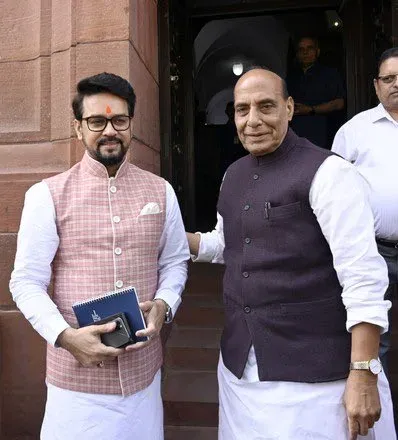
BJP MP Anurag Thakur greeted Defence Minister Rajnath Singh on his birthday on 10 July 2026, highlighting India's defence indigenization push under Aatmanirbhar Bharat and describing the Armed Forces as more technologically advanced and battle-ready.
Key Takeaways
BJP MP Anurag Thakur wished Rajnath Singh on his birthday on 10 July 2026 , praising his contribution to defence self-reliance.
Rajnath Singh has served as India's Defence Minister continuously since May 2019 .
The Aatmanirbhar Bharat Abhiyan (launched May 2020 ) targets 64 per cent of capital defence procurement from domestic sources.
The FDI cap in defence was raised to 74 per cent via automatic route in 2020 to attract private investment.
The Defence Procurement Procedure 2020 introduced the 'Buy (Indian-IDDM)' category to prioritise indigenous platforms.
Upcoming Union Defence Budget deliberations and new negative import lists will be key indicators of indigenization progress.
BJP Lok Sabha MP Anurag Thakur on Friday, 10 July 2026 extended birthday greetings to Defence Minister Rajnath Singh, crediting him with giving 'fresh momentum to the dream of Aatmanirbhar Bharat in defence' and describing India as having 'emerged as a formidable force in modern warfare.'
Context
Thakur, the BJP Lok Sabha MP from Hamirpur, Himachal Pradesh and former Union Minister of Information & Broadcasting and Youth Affairs & Sports, posted the message on X. He noted that the Armed Forces have become 'more technologically advanced and battle-ready' and that 'borders are more secure than ever before,' while wishing Singh good health and a long life.
Rajnath Singh has served as India's Defence Minister since May 2019, making him one of the longest-serving occupants of that office in recent decades. His tenure has coincided with a significant acceleration of defence indigenization policy.
Policy Backdrop
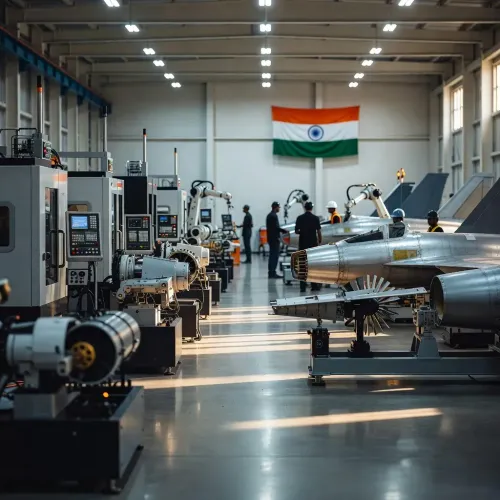
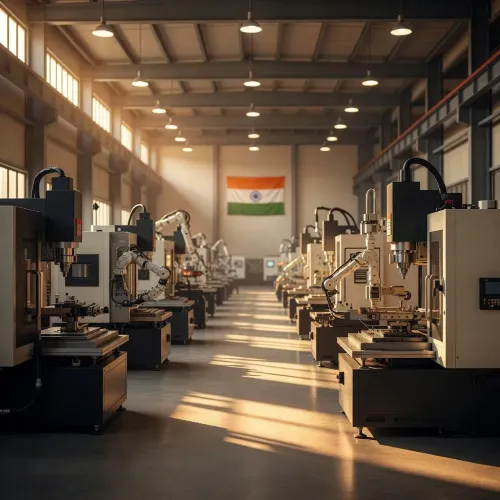
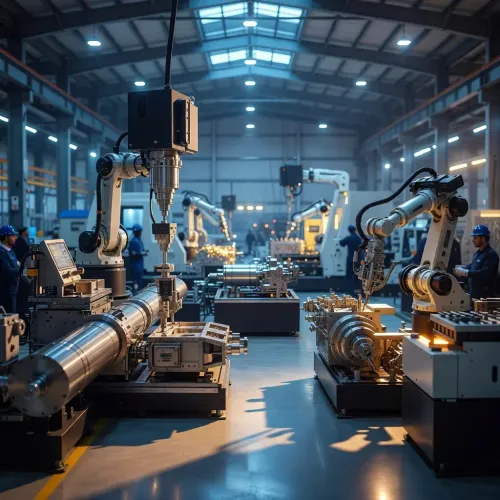
The Aatmanirbhar Bharat Abhiyan, announced in May 2020, set an explicit target of sourcing 64 per cent of capital defence procurement from domestic manufacturers. The initiative introduced negative import lists — categories of equipment that must be sourced domestically — to reduce India's historically high dependence on foreign defence platforms.
Complementing this, the government raised the FDI cap in defence to 74 per cent via the automatic route in 2020, inviting private and foreign investment into Indian manufacturing. The revised Defence Procurement Procedure 2020 also introduced the 'Buy (Indian-IDDM)' category, prioritising indigenously designed, developed, and manufactured equipment.
These measures form part of a broader strategic autonomy agenda that includes the development of two dedicated defence production corridors — in Uttar Pradesh and Tamil Nadu — aimed at building a robust domestic defence industrial base.
Stakeholders and Impact
The push for indigenization directly affects domestic defence manufacturers, both public-sector undertakings and a growing private sector ecosystem, which have expanded their order books under the revised procurement framework. The Indian Armed Forces — Army, Navy, and Air Force — are the primary end-users, absorbing platforms developed under these policies.
Border infrastructure upgrades and technology absorption partnerships have run parallel to procurement reforms, reflecting a multi-dimensional approach to national security that has drawn attention from strategic communities across the region.
What's Next
Parliamentary deliberations on the next Union Defence Budget and any fresh additions to the negative import list will be closely watched as indicators of how far indigenization targets are being met. Inductions of major indigenous platforms — including naval vessels, light combat aircraft variants, and artillery systems — remain key milestones for measuring the policy's progress under Singh's stewardship.
Point of View
But its framing — anchoring Singh's legacy explicitly in Aatmanirbhar Bharat and border security — reflects the BJP's ongoing effort to consolidate a defence-self-reliance narrative ahead of budget and procurement cycles. Singh's uninterrupted tenure since 2019 has given him unusual continuity to shepherd complex, multi-year indigenization programmes, and tributes from party colleagues serve to reinforce his political stature within the defence portfolio. The mention of 'technologically advanced and battle-ready' Armed Forces also signals the party's intent to keep national security credentials prominent in public discourse. Whether the indigenization targets translate into measurable reductions in import dependence remains the substantive test that policy watchers will apply.
NationPress
8 Oct 2026
Frequently Asked Questions
When is Rajnath Singh's birthday?
Rajnath Singh's birthday falls on 10 July . BJP MP Anurag Thakur greeted him on this occasion in 2026, highlighting his contributions as Defence Minister.
How long has Rajnath Singh been Defence Minister of India?
Rajnath Singh has served as India's Defence Minister since May 2019 , making his tenure one of the longest in recent history for that portfolio.
What is Aatmanirbhar Bharat in defence?
Aatmanirbhar Bharat Abhiyan , launched in May 2020 , includes a defence indigenization drive that targets sourcing 64 per cent of capital procurement domestically and uses negative import lists to reduce reliance on foreign equipment.
What did Anurag Thakur say about Rajnath Singh?
Anurag Thakur said Rajnath Singh's 'dedication has given fresh momentum to the dream of Aatmanirbhar Bharat in defence' and that India has 'emerged as a formidable force in modern warfare' under his watch.
What is India's FDI cap in defence manufacturing?
India raised the FDI cap in defence to 74 per cent via the automatic route in 2020 as part of efforts to attract private and foreign investment into domestic defence production.