CM Sai mourns Teejan Bai, calls her passing irreplaceable loss
Synopsis
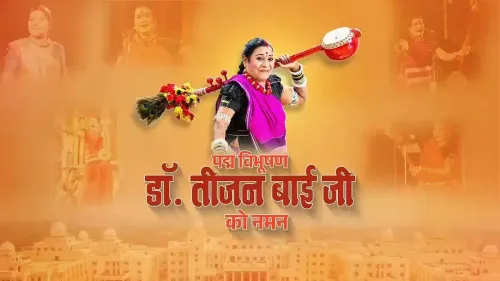
Chhattisgarh Chief Minister Vishnu Deo Sai mourned the passing of Dr. Teejan Bai, the Padma Vibhushan-decorated Pandavani legend, calling her death an irreplaceable loss for folk art, Chhattisgarh, and India's cultural heritage. He prayed for peace for the departed soul and strength for her grieving family and admirers.
Key Takeaways
CM Vishnu Deo Sai expressed condolences on 5 July 2026 over the passing of Pandavani exponent Dr.
He described her death as an 'irreplaceable loss' for folk art, Chhattisgarh , and India's cultural heritage.
Teejan Bai was honoured with Padma Shri (1988) , Padma Bhushan (2003) , and Padma Vibhushan (2019) .
She is credited with bringing the Chhattisgarhi oral tradition of Pandavani — Mahabharata narrative performance — to national and international stages.
CM Sai prayed to Lord Shri Ram to grant peace to the departed soul and strength to her family and the folk-art community.
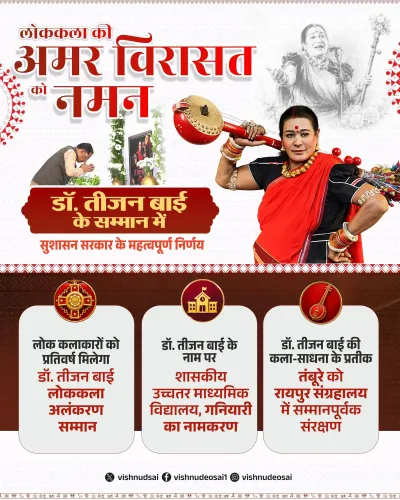
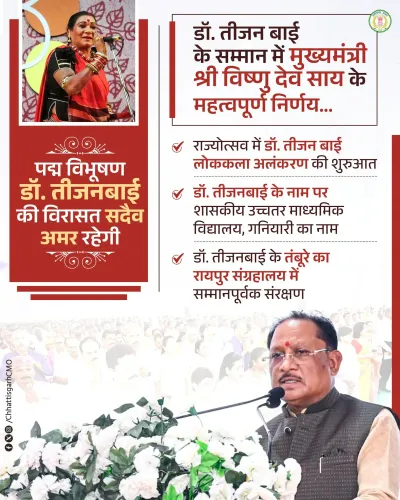
State memorial events and proposals to name cultural institutions after Dr.
Teejan Bai are anticipated.
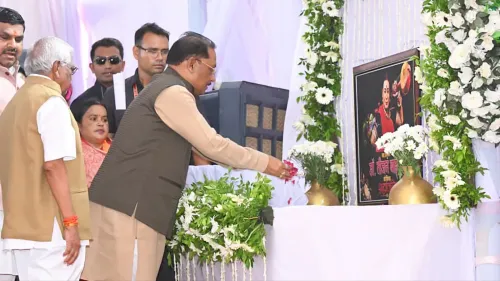
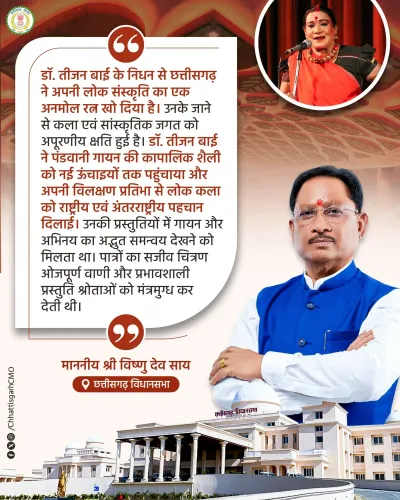
Chhattisgarh Chief Minister Vishnu Deo Sai on Sunday, 5 July 2026, expressed deep grief over the passing of Dr. Teejan Bai, the world-renowned Pandavani exponent and Padma Vibhushan awardee, calling her death an irreplaceable loss for the folk-art world, Chhattisgarh, and the entire nation's cultural heritage.
Context
In his post on X, CM Sai described Dr. Teejan Bai as the 'lok sanskriti ki amar gathakaar' (immortal chronicler of folk culture) of Chhattisgarh. He wrote that through her 'unparalleled singing style, extraordinary talent and preservation of folk traditions, she established Chhattisgarh's cultural identity on the world stage.' He concluded with a prayer to Lord Shri Ram to grant peace to the departed soul and strength to her bereaved family, countless admirers, and the entire folk-art community.
The Chief Minister's statement reflects the protocol of public mourning that senior elected officials observe on the passing of nationally decorated artists, particularly those whose work is closely identified with the state's cultural brand.
Policy Backdrop
Dr. Teejan Bai received three of India's highest civilian honours for her contribution to Pandavani — Padma Shri in 1988, Padma Bhushan in 2003, and the Padma Vibhushan in 2019. Pandavani is a Chhattisgarhi oral performance tradition that recounts episodes from the Mahabharata, and Teejan Bai is widely credited with taking the form from village stages to national and international audiences.
Since Chhattisgarh's formation in 2000, successive state governments have established cultural academies and annual festivals specifically to document and promote folk forms such as Pandavani. Teejan Bai's global recognition became central to the state's cultural identity and tourism narrative, making her passing a moment of institutional as well as personal mourning.
Stakeholders and Impact
The loss is felt most immediately by the community of Chhattisgarhi folk artists, cultural organisations, and the practitioners of Pandavani who regarded Teejan Bai as both a pioneer and a protector of the tradition. Her decades of performance brought visibility and state patronage to a form that might otherwise have remained confined to rural circuits.
For the broader cultural ecosystem, her death raises questions about succession and institutional support for Pandavani. Scholars and folk-art bodies have long argued that the form's survival depends on structured training programmes and documentation efforts that go beyond individual genius.
What's Next
State governments in such circumstances typically announce memorial events, condolence meetings in the legislative assembly, or proposals to name cultural institutions after the deceased artist. Upcoming Chhattisgarh cultural festivals and the state's annual folk-art calendar could serve as platforms for formal tributes. Whether the state government will announce a dedicated initiative — a chair, an academy, or a scholarship in Dr. Teejan Bai's name — is likely to be the key question for cultural administrators and folk-art advocates in the weeks ahead.
Point of View
And the state now faces the harder work of sustaining the form through policy rather than personality. The coming weeks will test whether the condolence statement translates into concrete support for the next generation of folk artists.
NationPress
3 Oct 2026
Frequently Asked Questions
Who was Teejan Bai and why was she famous?
Dr. Teejan Bai was a Chhattisgarh-born folk artist renowned for Pandavani, an oral performance tradition recounting Mahabharata episodes. She received the Padma Shri in 1988, Padma Bhushan in 2003, and the Padma Vibhushan in 2019, and is credited with taking Pandavani from village stages to international audiences.
What did Chhattisgarh CM Vishnu Deo Sai say about Teejan Bai's death?
CM Vishnu Deo Sai called her passing an 'irreplaceable loss' for the folk-art world, Chhattisgarh, and India's entire cultural heritage. He praised her unique singing style and her role in establishing Chhattisgarh's cultural identity on the world stage, and prayed for peace for the departed soul.
What awards did Teejan Bai receive from the Indian government?
The Indian government honoured Dr. Teejan Bai with three Padma awards: Padma Shri in 1988, Padma Bhushan in 2003, and the Padma Vibhushan — the third-highest civilian honour — in 2019.
What happens to Pandavani after Teejan Bai's death?
The future of Pandavani now depends on institutional support from the Chhattisgarh government and cultural organisations. State memorial events, training programmes, and possible institutions named after Dr. Teejan Bai are expected to be announced in the coming weeks.