CM Sai Announces Tributes to Folk Legend Teejan Bai
Synopsis
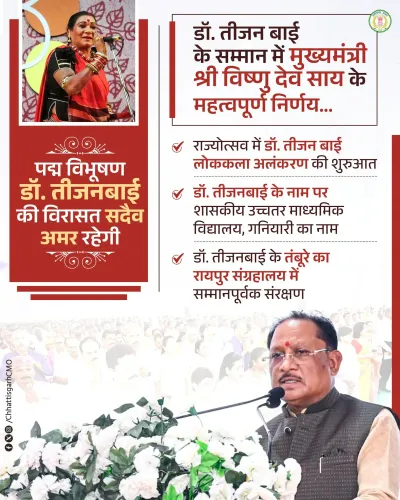
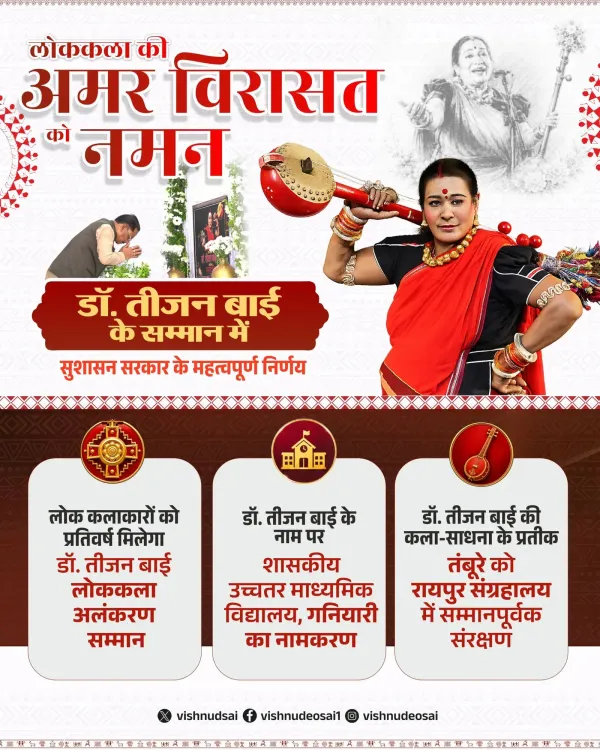
Chhattisgarh Chief Minister Vishnu Deo Sai announced three lasting tributes to the late Padma Vibhushan Dr. Teejan Bai: an annual folk-arts award in her name, the renaming of her ancestral village school in Ganiyari, and the museum preservation of her iconic tambura in Raipur.
Key Takeaways
Chief Minister Vishnu Deo Sai announced the decisions on 15 July 2026 via a Hindi post on X.
Teejan Bai Lokkala Alankaran' award will be conferred on folk artists each year to honour her legacy.
The Government Higher Secondary School in Ganiyari , her ancestral village, will be renamed after her.
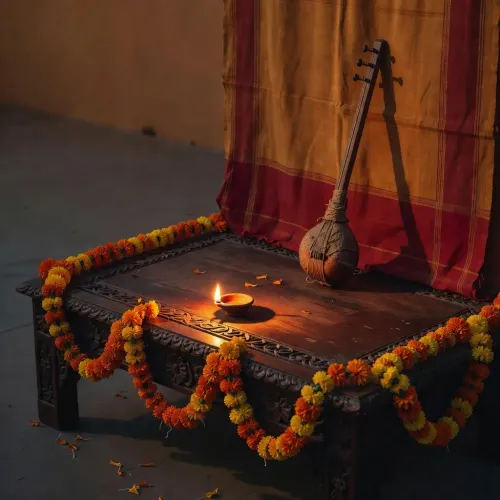
Her tambura , the instrument central to her Pandavani performances, will be preserved in a museum in Raipur .
Teejan Bai received the Padma Vibhushan in 2019 for advancing the Pandavani tradition internationally.
The measures follow a broader pattern of Indian state governments institutionalising the legacies of deceased Padma recipients.
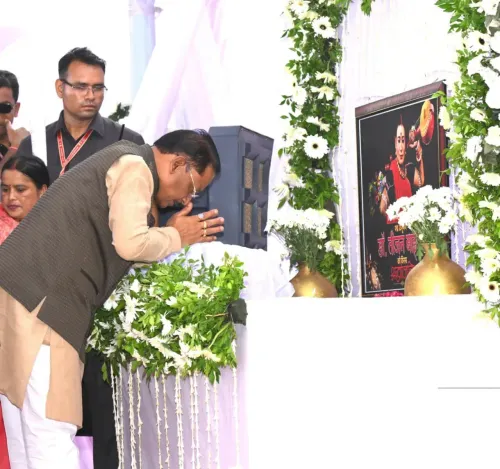
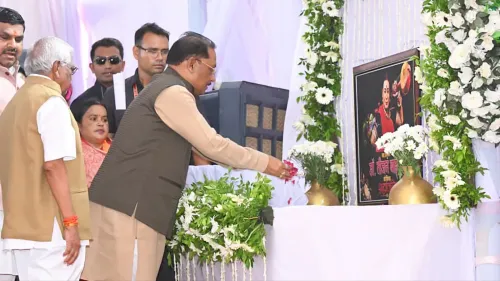
Chhattisgarh Chief Minister Vishnu Deo Sai announced on Wednesday, 15 July 2026 a set of state government decisions to permanently honour the late Padma Vibhushan Dr. Teejan Bai, the celebrated exponent of the Pandavani folk tradition who brought the art form to international stages. The announcements cover an annual folk-arts award, a school renaming in her ancestral village, and the preservation of her signature instrument in a state museum.
Context
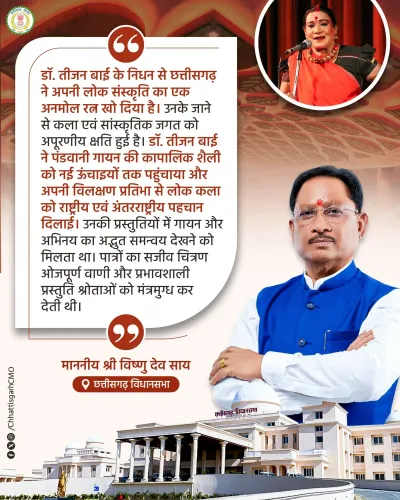
Posting in Hindi on 15 July 2026, Chief Minister Sai described Dr. Teejan Bai as 'Chhattisgarh ki gaurav' — the pride of Chhattisgarh — and as the folk-cultural identity of the entire nation. He wrote that through her 'advitiya lokkala sadhana' (unparalleled devotion to folk art) and exceptional talent, she gave Pandavani a new global identity. The post announced that the state government had taken 'important decisions' to grant her legacy a permanent place of honour.
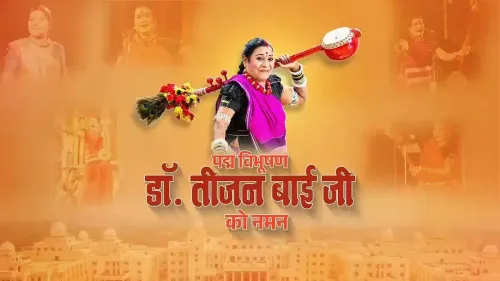
Dr. Teejan Bai, who hailed from Ganiyari village in Chhattisgarh, was the foremost practitioner of Pandavani, a narrative performance tradition rooted in episodes from the Mahabharata. She performed across India and internationally, drawing wide recognition for a form that had previously remained largely regional.
Policy Backdrop
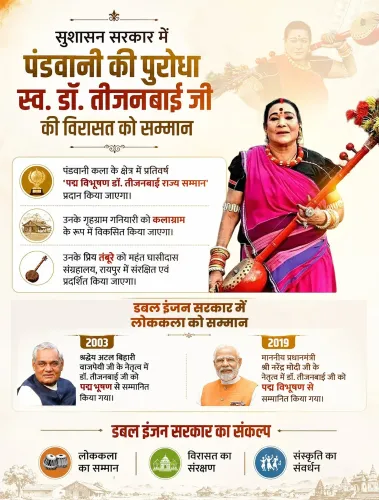
The Government of India conferred the Padma Vibhushan — the country's second-highest civilian honour — on Dr. Teejan Bai in 2019 for her contribution to the advancement of Pandavani. Her passing elevated calls within Chhattisgarh for durable, institutional recognition of her legacy beyond ceremonial condolences.
Chief Minister Sai's announcement outlines three concrete measures. First, folk artists will be honoured annually with the 'Dr. Teejan Bai Lokkala Alankaran' award. Second, the Government Higher Secondary School in her ancestral village of Ganiyari will be renamed in her honour. Third, the tambura — the stringed instrument central to her Pandavani performances — will be preserved with due respect in a museum in Raipur.
This pattern of annual awards, institutional namings, and artifact preservation is consistent with the approach of Indian state governments in commemorating deceased Padma recipients and promoting intangible cultural heritage. BJP-governed states in central and western India have notably emphasised public commemoration of traditional performing-arts practitioners as part of broader cultural policy.
Stakeholders and Impact
The Dr. Teejan Bai Lokkala Alankaran is expected to provide annual recognition and visibility to folk artists across Chhattisgarh, creating an institutional pipeline for honouring practitioners of traditional performing arts. For the Pandavani community in particular, the award signals sustained state patronage.
Students and the local community in Ganiyari will see the Government Higher Secondary School carry the name of their most celebrated native. The preservation of the tambura in a Raipur museum will make a tangible artefact of Teejan Bai's artistic life accessible to the public and to researchers of intangible cultural heritage.
What's Next
Observers will watch for the formal renaming ceremony at the Ganiyari school and the first conferment of the Dr. Teejan Bai Lokkala Alankaran award, both of which will test the state government's timeline for translating these announcements into action. The specific museum gallery in Raipur designated to house the tambura has not yet been identified in official communications. Together, these steps will shape how durably Chhattisgarh institutionalises the memory of one of its most globally recognised cultural figures.
Point of View
A school renaming, and artifact preservation mirrors a template increasingly used by state governments to institutionalise the legacies of Padma recipients, ensuring continued visibility for the ruling party's cultural stewardship. For Pandavani specifically, the Lokkala Alankaran award could prove the most consequential measure, as it creates an annual platform to surface living practitioners of an art form that risks losing mainstream attention after its most famous exponent. The true test of intent will come when the first award is conferred and the Ganiyari school formally renamed — moments that will either cement or hollow out today's announcement.
NationPress
13 Oct 2026
Frequently Asked Questions
Who was Dr. Teejan Bai?
Dr. Teejan Bai was a Chhattisgarh-born folk artist and the foremost exponent of Pandavani, a performance tradition that narrates episodes from the Mahabharata. She received the Padma Vibhushan in 2019, India's second-highest civilian honour, for her role in bringing Pandavani to national and international audiences.
What is the Dr. Teejan Bai Lokkala Alankaran award?
It is an annual state award announced by the Chhattisgarh government to honour folk artists in Dr. Teejan Bai's memory. The award is intended to provide institutional recognition to practitioners of traditional performing arts in the state each year.
Which school is being renamed after Teejan Bai?
The Government Higher Secondary School in Ganiyari, the ancestral village of Dr. Teejan Bai in Chhattisgarh, will be renamed in her honour as part of the tributes announced by Chief Minister Vishnu Deo Sai.
What is a tambura and why is it significant to Teejan Bai?
The tambura is a stringed instrument that Teejan Bai used as a central prop and musical accompaniment during her Pandavani performances. The Chhattisgarh government announced it will be preserved in a museum in Raipur as a symbol of her artistic legacy.