CM Sai pledges to preserve Teejan Bai's Pandavani legacy
Synopsis
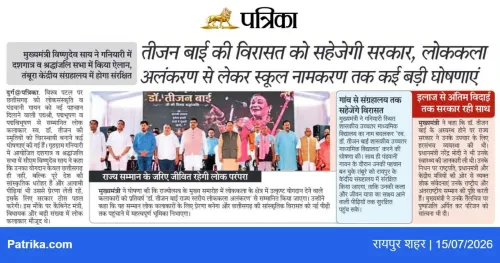
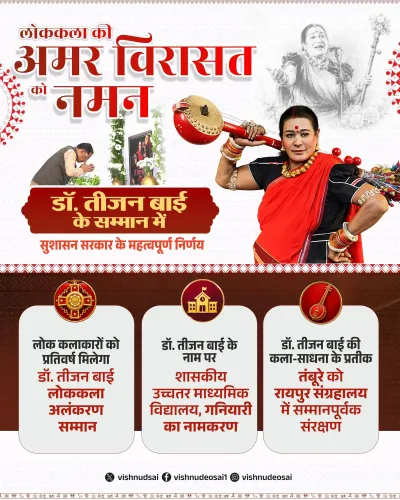
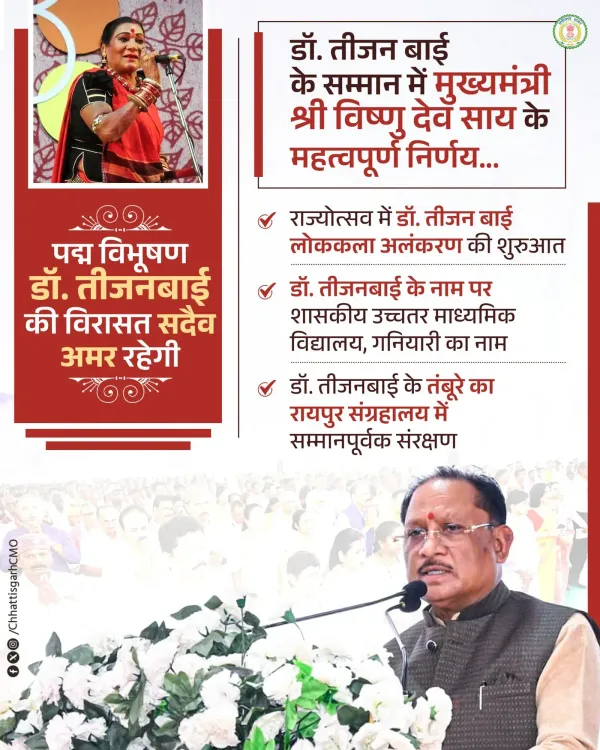
Chief Minister Vishnu Deo Sai has announced landmark decisions to preserve the legacy of late Padma Vibhushan folk legend Dr. Teejan Bai and safeguard the Pandavani oral tradition for future generations, the Chhattisgarh CMO said on 14 July 2026.
Key Takeaways
CM Vishnu Deo Sai has announced significant decisions to preserve and promote the legacy of late Dr.
Teejan Bai , the Padma Vibhushan-awarded Pandavani exponent.
The Chhattisgarh CMO described the move as a 'historic initiative' to keep her contribution alive for future generations.
Teejan Bai received the Padma Vibhushan in 2019 for her lifetime contribution to the Pandavani oral tradition.
Pandavani is an intangible cultural heritage practice from Chhattisgarh that dramatises Mahabharata episodes in the Chhattisgarhi dialect.
The specific institutional form of the initiative — academy, museum, or endowment — has not yet been publicly detailed.
The announcement aligns with national policy encouraging states to institutionalise support for oral and folk art traditions.
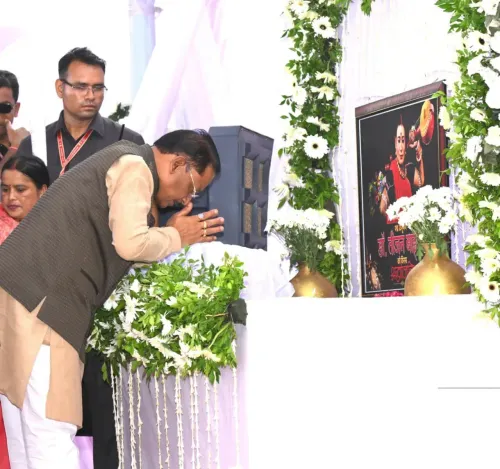
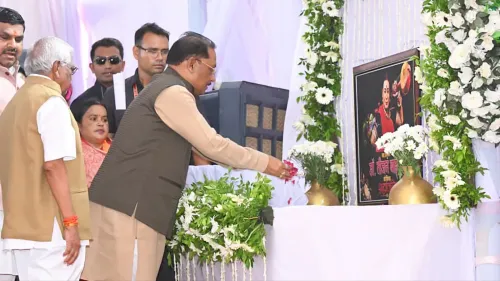
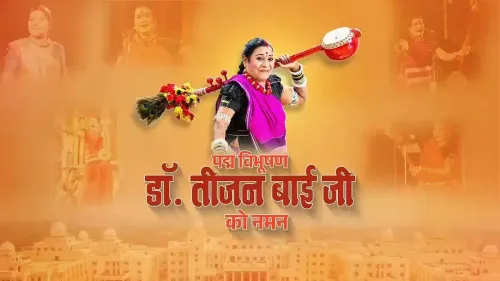
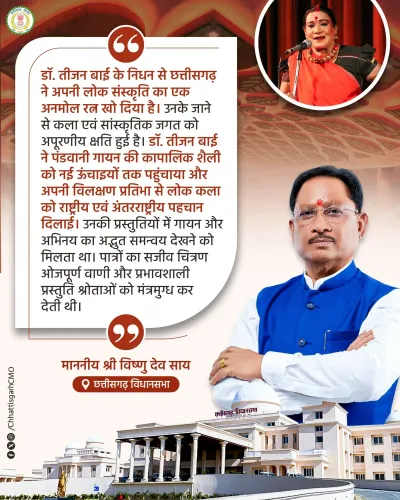
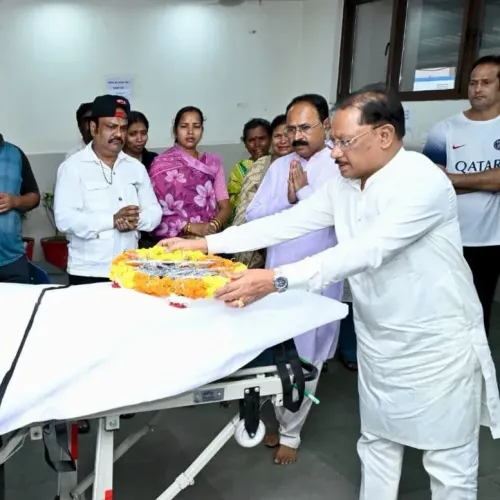
The Chief Minister's Office of Chhattisgarh announced on 14 July 2026 that Chief Minister Vishnu Deo Sai has taken significant decisions to permanently preserve and promote the legacy of the late Padma Vibhushan awardee Dr. Teejan Bai, the legendary exponent of the Pandavani oral tradition. The announcement describes the move as a 'historic initiative' aimed at keeping her irreplaceable contribution alive for future generations and affirming Chhattisgarh's cultural identity.
Context
The CMO's post, written in Hindi, declares this a resolve to make 'Chhattisgarh ki sanskritik asmita ko shashwat' — 'Chhattisgarh's cultural identity eternal.' Dr. Teejan Bai was the foremost practitioner of Pandavani, a solo oral-epic singing tradition from Chhattisgarh that dramatises episodes from the Mahabharata. Her performances, delivered in the Chhattisgarhi dialect with minimal instrumentation, brought the art form international recognition over several decades.
The Government of India conferred the Padma Vibhushan — the country's second-highest civilian honour — on Dr. Teejan Bai in 2019 for her lifetime contribution to the art. She remains the most celebrated face of Pandavani and a cultural symbol of the state.
Policy Backdrop
Chhattisgarh has a history of institutionalising folk arts: the state established the Teejan Bai Foundation and held state-level Pandavani festivals in the early 2000s to sustain the tradition. The current announcement by CM Sai signals a renewed and elevated commitment, with the CMO framing it as a decision to 'preserve and promote' her legacy in a lasting form.
The move aligns with a broader national policy direction under the Ministry of Culture, which has pushed state governments to document and promote intangible cultural heritage — particularly oral traditions at risk from urbanisation. Pandavani is recognised as an intangible cultural heritage practice, and its continuity depends significantly on institutional support for training and archiving.
Stakeholders and Impact
The most direct beneficiaries of any legacy-preservation initiative would be Chhattisgarh's folk artists, Pandavani practitioners, and the state's significant tribal communities for whom such oral traditions are living cultural expression. Formal institutional support — whether through an academy, archive, or endowment — would create structured pathways for young artists to learn and perform the tradition.
Cultural practitioners and scholars who have long advocated for state backing of oral traditions stand to gain from a dedicated framework. The announcement also carries symbolic weight for Chhattisgarh's identity politics, positioning the Sai government as a custodian of indigenous cultural heritage ahead of future policy cycles.
What's Next
The specific form of the 'historic initiative' — whether a dedicated Pandavani academy, a museum, a scholarship endowment, or inclusion in the state cultural budget — has not yet been detailed in the public announcement. Observers will watch for formal gazette notifications or budget allocations that give concrete shape to CM Sai's stated commitment.
A nomination of Pandavani to national or UNESCO intangible heritage lists is among the possibilities that cultural advocates have previously raised. The government's follow-through on these decisions will determine whether this marks a structural shift in how Chhattisgarh funds and governs its folk arts ecosystem.
Point of View
The announcement follows a pattern common among state governments of leading with intent before budget allocations confirm commitment. The real test will be whether the initiative produces a funded, staffed institution rather than a ceremonial gesture. If it does, it could set a replicable template for how central Indian states protect oral traditions facing demographic and urban pressures.
NationPress
13 Oct 2026
Frequently Asked Questions
Who was Dr. Teejan Bai and why is she significant?
Dr. Teejan Bai was the most celebrated exponent of Pandavani, a Chhattisgarhi oral tradition that dramatises Mahabharata stories through solo singing and performance. She received the Padma Vibhushan, India's second-highest civilian honour, in 2019 for her lifetime contribution to this art form.
What has CM Vishnu Deo Sai announced for Teejan Bai's legacy?
Chief Minister Vishnu Deo Sai has announced important decisions to preserve and promote the legacy of the late Dr. Teejan Bai, framing it as a historic initiative to keep her contribution alive for future generations. Specific details of the initiative have not yet been publicly disclosed.
What steps has Chhattisgarh taken earlier to promote Pandavani?
Chhattisgarh established the Teejan Bai Foundation and organised state-level Pandavani festivals in the early 2000s to sustain the tradition. The current announcement signals a renewed institutional commitment beyond those earlier efforts.
How does this fit into India's broader cultural heritage policy?
The initiative aligns with the national push led by the Ministry of Culture to document and promote intangible cultural heritage, particularly oral traditions at risk from urbanisation. State-level academies, archives, and training centres for folk artistes have become an increasingly common model across central India.