Karnataka drought: Shivakumar writes to PM Modi over 30% monsoon deficit
Synopsis
Karnataka is facing a looming drought with a 30% monsoon deficit, 141 of 240 taluks parched, reservoirs at just 34% capacity, and Kharif sowing barely a third of target. CM Shivakumar's urgent letter to PM Modi — and his public call for a central assessment team — signals the state is already in crisis mode, weeks before the monsoon is expected to peak.
Key Takeaways
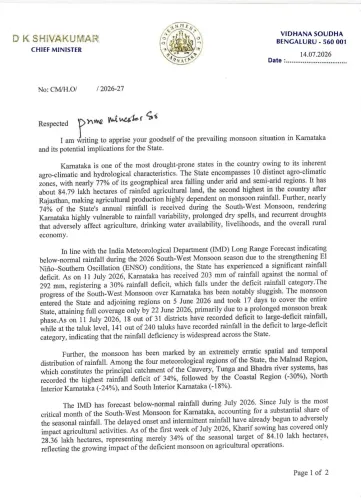
Shivakumar wrote to PM Narendra Modi on 14 July seeking urgent central intervention over Karnataka's drought conditions.
Karnataka received only 203 mm of rainfall against a normal of 292 mm — a deficit of nearly 30 per cent as of 11 July .
18 of 31 districts and 141 of 240 taluks have recorded deficient to large-deficit rainfall.
Kharif sowing stands at just 28.36 lakh hectares — 34 per cent of the 84.10 lakh hectare seasonal target.
Combined storage in 14 major reservoirs is 303 TMC , only 34 per cent of total capacity of 895.65 TMC .
Shivakumar has requested a central assessment team to be deputed to evaluate the ground situation.
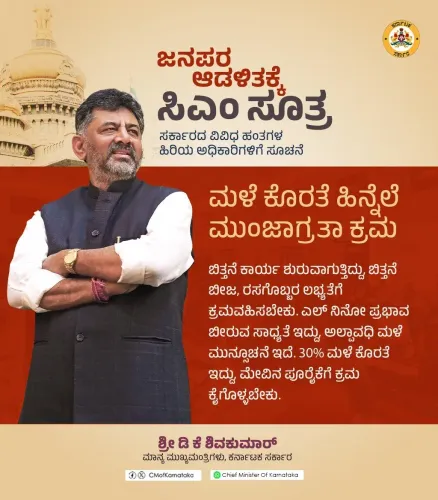
Karnataka Chief Minister D.K. Shivakumar on Tuesday, 14 July wrote to Prime Minister Narendra Modi seeking urgent central intervention as the state grapples with an emerging drought, driven by a 30 per cent monsoon deficit, critically low reservoir levels, and severe stress on both agriculture and drinking water supplies.
Scale of the Rainfall Shortfall
According to the Chief Minister's letter, Karnataka received only 203 mm of rainfall against the seasonal normal of 292 mm as of 11 July — a shortfall of nearly 30 per cent. The deficit is widespread: 18 of Karnataka's 31 districts have recorded deficit to large-deficit rainfall, and at the sub-district level, 141 of 240 taluks have reported deficient precipitation.
Among the four meteorological zones, the Malnad region has been the hardest hit with a 34 per cent deficit, followed by Coastal Karnataka at 30 per cent, North Interior Karnataka at 24 per cent, and South Interior Karnataka at 18 per cent.
Agricultural Impact and Kharif Sowing Crisis
The delayed onset of the South-West Monsoon and prolonged dry spells have severely disrupted agricultural activity across the state. Kharif sowing has covered only 28.36 lakh hectares — a mere 34 per cent of the seasonal target of 84.10 lakh hectares. Shivakumar cautioned that any decline in Karnataka's pulse output, particularly tur (pigeon pea), could ripple outward, affecting national availability and commodity prices.
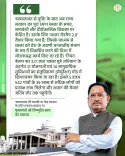
'The prolonged dry spell has adversely affected standing crops and significantly constrained the progress of Kharif sowing across the State,' Shivakumar stated in his letter to the Prime Minister.
Reservoir Storage at Critical Lows
Water storage across Karnataka's 14 major reservoirs stood at just 303 TMC as of 10 July — only 34 per cent of their combined gross storage capacity of 895.65 TMC. The state government has already begun prioritising available reservoir storage for drinking water, signalling the severity of the crisis.
What the State Government Has Done
Shivakumar said the state has initiated a range of drought mitigation measures, including issuing crop advisories and district-specific contingency plans. In a post on X, the Chief Minister said he had formally requested the Centre to depute a central assessment team to evaluate ground conditions and provide timely assistance. 'We stand firmly with every farmer and every family affected during this challenging time,' he said.
What Happens Next
The ball is now in the Centre's court. A central team deputation — if approved — would precede any formal drought declaration and unlock access to the National Disaster Response Fund (NDRF). With the monsoon season still far from its September peak, and sowing targets at barely a third of normal, Karnataka's agricultural outlook for Kharif 2025 remains deeply uncertain.
Point of View
Which would trigger NDRF claims and Centre-state negotiations that rarely go smoothly. Notably, this is not the first time a Karnataka government has had to write urgently to the Centre over monsoon failure; the state's dependence on a single South-West Monsoon window makes it structurally vulnerable. What makes this year's situation sharper is the tur (pigeon pea) warning — a crop with direct national price implications — giving Shivakumar's letter a macro-economic edge beyond state politics. Whether the Centre responds with speed or bureaucratic caution will be watched closely.
NationPress
15 Jul 2026
Frequently Asked Questions
Why did Karnataka CM Shivakumar write to PM Modi?
CM D.K. Shivakumar wrote to PM Narendra Modi on 14 July seeking urgent central intervention and financial assistance due to an emerging drought in Karnataka, caused by a 30 per cent monsoon deficit, critically low reservoir levels, and disrupted Kharif sowing.
How severe is Karnataka's monsoon deficit in 2025?
As of 11 July, Karnataka received 203 mm of rainfall against a normal of 292 mm — a shortfall of nearly 30 per cent. A total of 18 of 31 districts and 141 of 240 taluks have recorded deficient to large-deficit rainfall, with the Malnad region worst affected at 34 per cent deficit.
What is the status of Kharif sowing in Karnataka?
Kharif sowing has covered only 28.36 lakh hectares, which is just 34 per cent of the seasonal target of 84.10 lakh hectares. The delayed monsoon onset and prolonged dry spells are the primary reasons for the sharp shortfall.
How full are Karnataka's major reservoirs?
The combined storage across Karnataka's 14 major reservoirs stood at 303 TMC as of 10 July — only 34 per cent of their total gross capacity of 895.65 TMC. The state has prioritised available storage for drinking water supply.
What has Karnataka requested from the Centre?
Chief Minister Shivakumar has formally requested the Centre to depute a central team to assess the drought situation on the ground and provide timely assistance, including financial aid under national disaster relief frameworks.