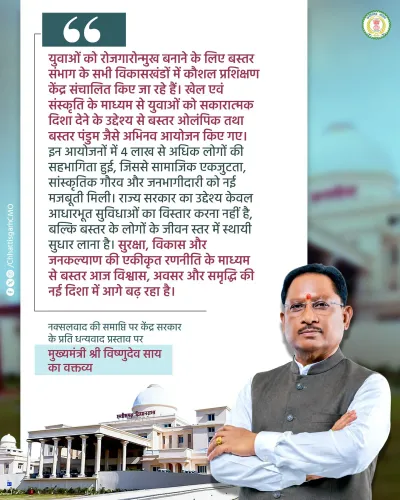
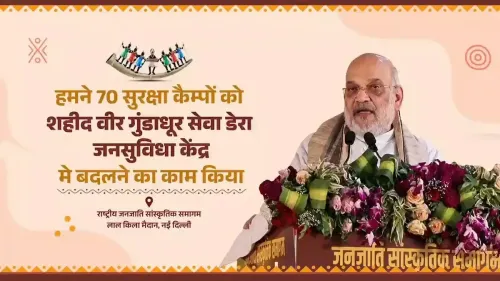
CM Sai: Security Camps Becoming 'Shahid Gundadhur Seva Dera' Hubs
Synopsis
Chief Minister Vishnu Deo Sai announced that Chhattisgarh is converting former security camps into multi-purpose civic hubs called Shahid Gundadhur Seva Dera, providing tribal communities in Bastar with local access to welfare, livelihood, and public services in the aftermath of Naxalism.
Key Takeaways
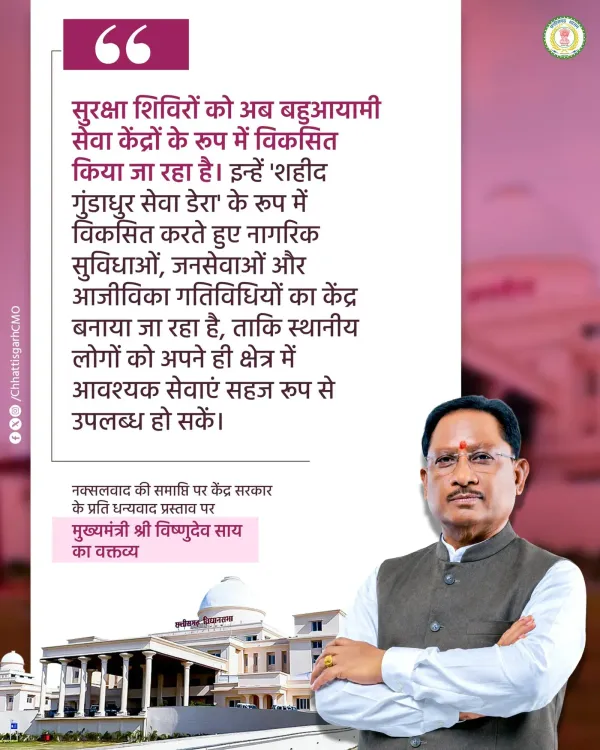
Security camps in Chhattisgarh are being converted into multi-dimensional service centres called Shahid Gundadhur Seva Dera .
The centres will provide civic amenities, public welfare services, and livelihood support to local residents within their own areas.
The initiative was announced by CM Vishnu Deo Sai during a statement on a thanksgiving resolution marking the end of Naxalism in the state.
The scheme is named after Gundadhur , the tribal leader of the 1910 Bastar rebellion against British rule.
The model follows a broader national pattern of repurposing LWE security infrastructure for civilian use, seen earlier in Andhra Pradesh and Jharkhand .
Future focus will be on budget releases and linkages with central programmes like the Aspirational Blocks Programme in newly Naxal-free zones.
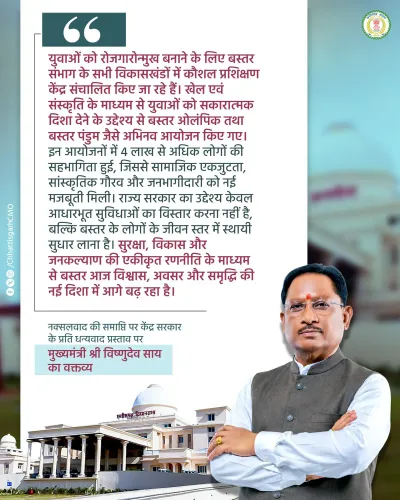
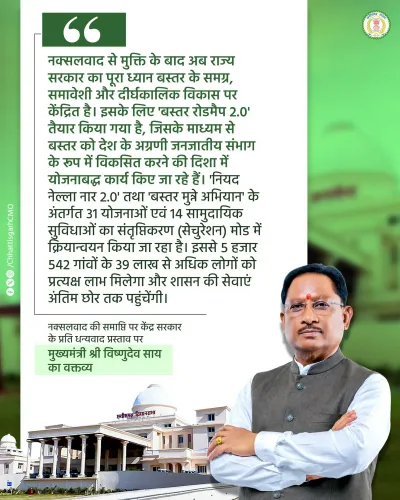
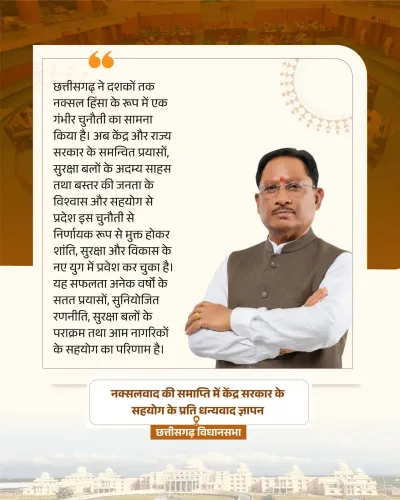
The Chief Minister's Office of Chhattisgarh announced on Wednesday, 15 July 2026 that the state is converting former security camps into multi-dimensional service centres under the Shahid Gundadhur Seva Dera initiative, as Chief Minister Vishnu Deo Sai addressed a resolution thanking the central government for its role in ending Naxalism in the state.
Context
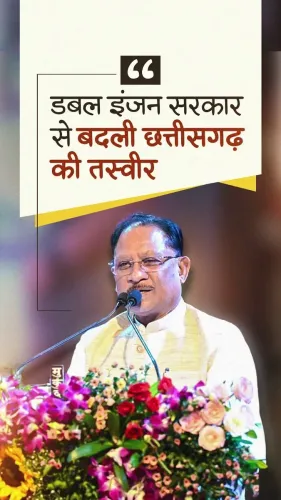
Speaking on a thanksgiving resolution moved in connection with the end of Naxalism, CM Sai stated that security camps are being developed as 'bahudayami seva kendron' (multi-dimensional service centres). He said these would serve as hubs for civic amenities, public welfare services, and livelihood activities so that local residents can access essential services within their own areas.
The camps are being rebranded as Shahid Gundadhur Seva Dera, named after Gundadhur, the tribal leader who led the historic 1910 Bastar rebellion against British rule — a figure of deep cultural resonance in the region's tribal communities.
Policy Backdrop
Bastar division in southern Chhattisgarh has for decades been the epicentre of Left Wing Extremism (LWE) in India. Between 2014 and 2023, the central government expanded the Integrated Action Plan and Road Requirement Plan for LWE-affected districts, linking security operations with infrastructure delivery in the state.
Chhattisgarh's 2023–24 surrender and rehabilitation policy offered incentives to Naxal cadres in Bastar, laying the groundwork for the current pivot toward civilian use of former security infrastructure. The Shahid Gundadhur Seva Dera scheme represents the next phase: converting cleared zones into sites of active state service delivery.
This model mirrors earlier experiments in Andhra Pradesh and Jharkhand, where security camps were repurposed as service points to build state legitimacy in tribal belts after kinetic operations reduced violence.
Stakeholders and Impact
Tribal communities and residents of interior Bastar stand to be the primary beneficiaries. These populations have historically had limited access to government welfare, banking, health, and livelihood services due to the security environment and poor connectivity in forest areas.
By anchoring services within existing camp infrastructure, the state aims to reduce the distance residents must travel for essential services and to establish a visible, functional state presence in areas that were long under Naxal influence. The naming of the centres after Shahid Gundadhur is a deliberate effort to frame the initiative within the region's own historical identity.
What's Next
Attention will now turn to rollout timelines and budget allocations for Seva Dera centres across newly declared Naxal-free zones, as well as potential linkages with centrally sponsored programmes such as the Aspirational Blocks Programme. Any follow-up assembly resolutions or formal central-state coordination frameworks will signal how quickly the transition from security infrastructure to civilian service delivery can be institutionalised.
The state's ability to operationalise these centres with consistent service delivery — rather than symbolic conversions — will be the measure by which the initiative's impact on Bastar's tribal communities is ultimately judged.
Point of View
The Sai government is attempting to convert a security dividend into lasting political legitimacy in Bastar. Naming the centres after a revered tribal rebel is a calculated act of cultural alignment, signalling that the post-Naxal state intends to speak the language of the region's own history. The initiative fits a wider pattern across the Red Corridor where the post-clearance phase — always the harder governance challenge — is being addressed through service-delivery anchors rather than purely administrative expansion. Whether the scheme delivers measurable outcomes for tribal communities, or remains a rebranding exercise, will determine its lasting significance.
NationPress
13 Oct 2026
Frequently Asked Questions
What is Shahid Gundadhur Seva Dera in Chhattisgarh?
Shahid Gundadhur Seva Dera is a Chhattisgarh government initiative that converts former security camps in Naxal-affected areas into multi-purpose centres offering civic services, public welfare, and livelihood support to local tribal communities, named after the tribal leader Gundadhur who led the 1910 Bastar rebellion.
Who is Gundadhur and why is the scheme named after him?
Gundadhur was a tribal leader from Bastar who led a major rebellion against British rule in 1910. The Chhattisgarh government named the Seva Dera scheme after him to honour his legacy and connect the initiative to the region's own tribal history and identity.
What did CM Vishnu Deo Sai say about Naxalism ending in Chhattisgarh?
CM Vishnu Deo Sai made the Seva Dera announcement during a statement on a thanksgiving resolution directed at the central government for its role in ending Naxalism in Chhattisgarh. He said security camps would now be developed as multi-dimensional service centres for local residents.
How will the security camp conversions benefit Bastar residents?
The converted Shahid Gundadhur Seva Dera centres aim to bring essential government services — including civic amenities, welfare schemes, and livelihood activities — directly into interior areas of Bastar, reducing the distances tribal communities must travel to access state services.
Is Chhattisgarh the first state to convert security camps for civilian use?
No. Andhra Pradesh and Jharkhand have undertaken similar conversions in the past, repurposing security infrastructure as service points after counter-insurgency operations reduced LWE violence. Chhattisgarh's Seva Dera model follows this broader pattern across India's Red Corridor states.