CM Chhattisgarh: 70 Bastar Security Camps to Become Service Centres

Synopsis
The Chhattisgarh CMO has announced that 70 of 200 Naxal-era security camps in Bastar will be repurposed as 'Shaheed Veer Gundadhur Seva Dera' civilian centres, delivering education and public services to tribal areas once gripped by insurgency.
Key Takeaways
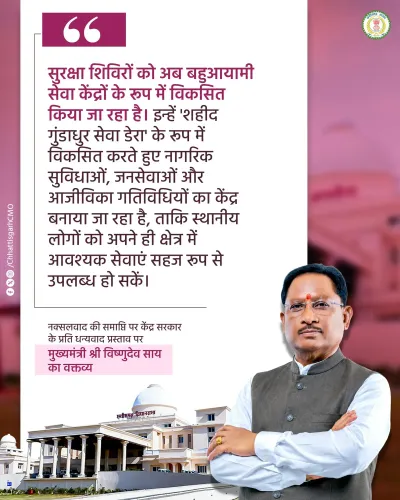
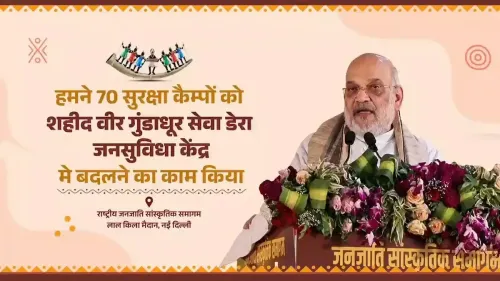
70 of 200 security camps in Bastar will be converted into civilian service centres named Shaheed Veer Gundadhur Seva Dera .
The centres are named after Veer Gundadhur , the tribal leader who led the Bhumkal rebellion against British rule in 1910 .
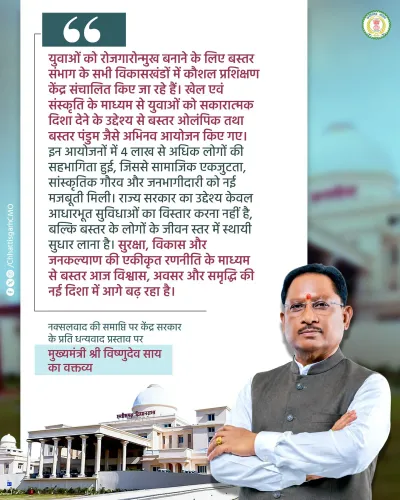
The initiative aims to deliver education, public service, and development to areas that experienced intense Naxal conflict for decades.
The move follows Chhattisgarh's long-standing policy of pairing security operations with development, aligned with the central government's SAMADHAN strategy .
Conversion timelines, budget allocations, and the future of the remaining 130 camps have not yet been publicly specified.
The Chief Minister's Office of Chhattisgarh announced on 22 May 2026 that 70 of the 200 security camps established in Bastar during the Naxal conflict will be converted into civilian service centres named 'Shaheed Veer Gundadhur Seva Dera' — a move the government says will bring education, public service, and development to areas once defined by fear and armed conflict.
Context
The post states in Hindi: 'Jahan kabhi bhay aur bandook ka saaya tha, wahan ab Shaheed Veer Gundadhur Seva Dera ke madhyam se shiksha, janaseva aur vikas pahunchega' — 'Where once there was only fear and the shadow of the gun, now education, public service, and development will reach through the Shaheed Veer Gundadhur Seva Dera.' The centres are named after Veer Gundadhur, the tribal leader who led the Bhumkal rebellion against British rule in the Bastar region in 1910 and is revered locally as a martyr.
Bastar, a tribal-dominated division in southern Chhattisgarh, was among the worst-affected areas of India's decades-long Naxal-Maoist insurgency. At the height of counter-insurgency operations, approximately 200 forward security camps were established across the region to extend state presence into remote forest areas.
Policy Backdrop
The announcement is rooted in a policy arc that stretches back to the mid-2000s, when Chhattisgarh governments began pairing intensified security operations with parallel efforts to deliver schools, health posts, and roads in former Naxal-affected zones. The central government's SAMADHAN strategy, articulated around 2017, formalised this dual approach — emphasising development alongside security to address underlying grievances in Left-Wing Extremism (LWE) districts, of which Bastar was a focal point.
The repurposing of counter-insurgency infrastructure for civilian use is an extension of this logic: as security conditions improve, the physical footprint of the state is redirected toward service delivery rather than containment. Neighbouring states with declining Naxal activity have pursued similar models.
Stakeholders and Impact
The primary beneficiaries are tribal communities in Bastar and residents of former Naxal strongholds who have historically had limited access to government services. By converting existing camp infrastructure, the state avoids the cost and time of building new facilities from scratch in difficult terrain.
Naming the centres after Veer Gundadhur carries symbolic weight — it positions the state as honouring indigenous resistance history while simultaneously asserting a new, development-oriented presence in the same geography. This framing is likely intended to build trust among tribal populations who have long been caught between insurgents and security forces.
What's Next
The government has not publicly specified a phased conversion timeline, budget allocation, or the criteria used to select these 70 camps from the larger pool of 200. The fate of the remaining 130 camps also remains to be announced. Delivery of the promised education and public-service functions will be the key metric by which the initiative is judged on the ground.
If implemented effectively, the Shaheed Veer Gundadhur Seva Dera model could become a template for the final phase of Chhattisgarh's post-insurgency transition — one that tests whether infrastructure built for security can be durably repurposed for dignity.
Point of View
The state attempts to align itself with tribal historical memory, a politically significant gesture in a region where state legitimacy has long been contested. The announcement fits a broader national pattern in LWE districts where declining violence is being used to justify a 'development dividend' narrative ahead of electoral and policy cycles. The real test, however, lies in implementation: whether these centres deliver functional services or remain symbolic shells will determine whether this initiative advances genuine reconciliation or serves primarily as optics.
NationPress
7 Oct 2026
Frequently Asked Questions
What is Shaheed Veer Gundadhur Seva Dera?
'Shaheed Veer Gundadhur Seva Dera' is the name given to civilian service centres that the Chhattisgarh government plans to establish by converting 70 former security camps in Bastar, aimed at providing education and public services to tribal communities in the region.
Who was Veer Gundadhur?
Veer Gundadhur was a tribal leader from the Bastar region of Chhattisgarh who led the Bhumkal rebellion against British colonial rule in 1910. He is revered as a martyr by local tribal communities.
How many security camps are being converted in Bastar?
Out of approximately 200 security camps established in Bastar during the Naxal conflict, 70 will be converted into Shaheed Veer Gundadhur Seva Dera civilian service centres.
Why were security camps set up in Bastar?
Around 200 forward security camps were set up across Bastar at the height of counter-insurgency operations against the Naxal-Maoist insurgency to extend state presence into remote tribal areas of southern Chhattisgarh.
What services will the Seva Dera centres provide?
According to the Chhattisgarh CMO's announcement, the centres are intended to deliver education, public service, and development to tribal areas in Bastar that were previously affected by Naxal conflict.