CM Office: Health Drive Reaches Bastar's Remote Villages
Synopsis
The Chhattisgarh Chief Minister's Office says the Mukhyamantri Swasthya Bastar Abhiyan is now reaching the most remote forest villages of Bastar, extending health services and welfare schemes to tribal communities in a region recovering from decades of Naxalite insurgency.
Key Takeaways
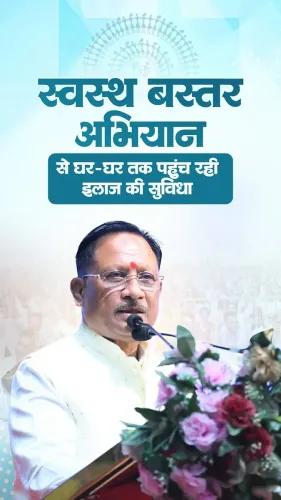
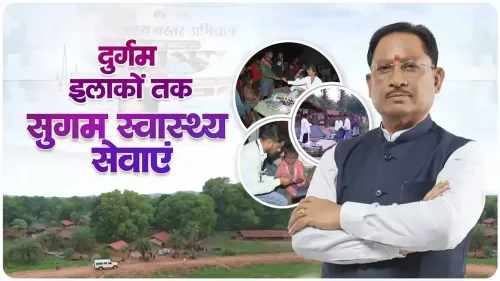
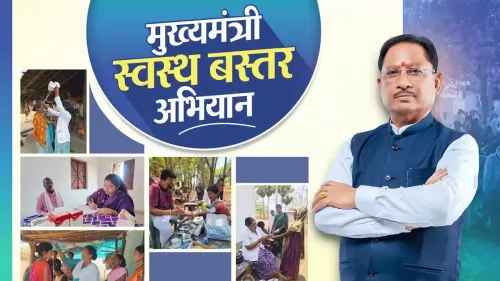
The Chief Minister's Office of Chhattisgarh announced on 31 May 2026 that the Mukhyamantri Swasthya Bastar Abhiyan is extending health services to remote forest villages in Bastar .
The state cites reduced Naxalite influence as the enabling condition for improved governance and welfare delivery in the region.
The campaign aims to ensure government schemes and health facilities reach the 'last person' in distant tribal hamlets.
Chhattisgarh has pursued a security-plus-development model in Bastar since the mid-2010s, with health outreach forming a key pillar of post-conflict consolidation.
Similar approaches in Jharkhand and Odisha have demonstrated the viability of extending welfare services into tribal belts following reduced insurgency.
Implementation data and health outcome metrics from the Abhiyan will be closely watched to assess last-mile delivery.
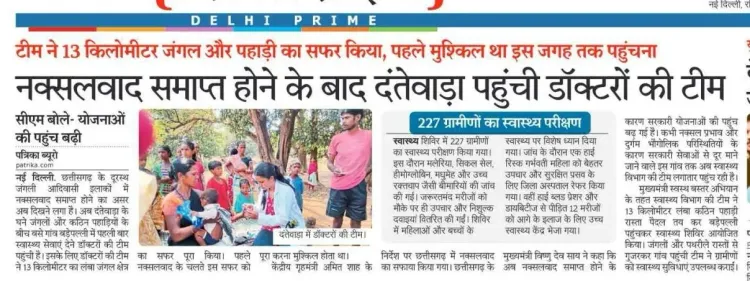
The Chief Minister's Office of Chhattisgarh announced on Sunday, 31 May 2026 that the Mukhyamantri Swasthya Bastar Abhiyan is now extending government health facilities and welfare schemes to the most remote forest villages of Bastar, signalling what the state describes as a new phase of governance in a region long marked by Naxalite insurgency.
Context
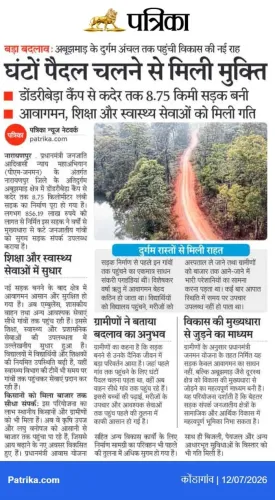
The post states, 'Naksalwad se mukti ke baad ab sushasan ka asar Bastar ke sudoor vananchalon mein bhi dikhai de raha hai' — 'After liberation from Naxalism, the impact of good governance is now visible even in the remote forest areas of Bastar.' It adds that government schemes and health services are being ensured to reach the last person, with the Mukhyamantri Swasthya Bastar Abhiyan bringing 'new hope' to distant villages in the division.
Bastar is a predominantly tribal division in southern Chhattisgarh that spent decades at the centre of the Naxalite insurgency, leaving its remote forest hamlets historically underserved by state administration. The phrase 'sushasan sarkar' — 'good governance government' — used in the post's hashtags reflects the state's framing of its post-conflict administrative agenda.
Policy Backdrop
Chhattisgarh intensified security operations in Bastar from the mid-2010s onward, resulting in a measurable decline in Naxal-related violence and a gradual expansion of administrative presence into areas previously inaccessible to state agencies. This security-plus-development model has been a defining feature of the state's approach to the region.
Parallel to security gains, state and central health programmes — including extensions of the National Health Mission and Ayushman Bharat — have targeted tribal districts in Chhattisgarh since 2018 to improve last-mile service delivery. The Mukhyamantri Swasthya Bastar Abhiyan is positioned within this broader policy lineage as a state-level instrument to consolidate those gains on the health front.
Stakeholders and Impact
The primary beneficiaries are tribal villagers and communities in the remote forest blocks of Bastar division, who have historically faced acute shortages of healthcare infrastructure and limited access to government welfare programmes. The campaign's stated goal of reaching the 'last person' — 'antim vyakti' — directly echoes the constitutional and welfare mandate of inclusive governance.
The approach mirrors similar post-insurgency outreach efforts in neighbouring states such as Jharkhand and Odisha, where improved law-and-order conditions have enabled state agencies to extend health and development services into forested tribal belts. For Bastar's communities, improved healthcare access represents a tangible dividend of the region's changed security environment.
What's Next
Attention will now turn to implementation metrics and health outcome data from the Mukhyamantri Swasthya Bastar Abhiyan as the campaign progresses through the year. Independent assessments of coverage — including the number of villages reached, patients screened, and schemes enrolled — will be critical to evaluating whether the initiative delivers on its stated promise of last-mile inclusion.
Any forthcoming state budget announcements expanding similar outreach to additional blocks across Bastar and other formerly Naxal-affected districts of Chhattisgarh will serve as a further indicator of the government's commitment to consolidating governance gains in the region's tribal heartland.
Point of View
Linking security gains in Bastar to tangible welfare outcomes for tribal communities. By anchoring health outreach to the narrative of post-Naxal liberation, the state is attempting to convert territorial recovery into a governance legitimacy story — a pattern seen across central India's tribal belt. The real test lies in verifiable coverage data: whether the campaign reaches the most isolated hamlets or concentrates in relatively accessible areas will determine its credibility. If outcome metrics are made public and independently assessed, this initiative could serve as a replicable model for last-mile delivery in conflict-affected tribal regions across India.
NationPress
22 Sept 2026
Frequently Asked Questions
What is the Mukhyamantri Swasthya Bastar Abhiyan?
The Mukhyamantri Swasthya Bastar Abhiyan is a Chhattisgarh state health outreach campaign aimed at delivering medical services and government welfare schemes to remote and tribal villages in the Bastar division.
Why is Bastar significant in the context of Naxalism?
Bastar is a tribal division in southern Chhattisgarh that was one of the most severely affected regions by the Naxalite insurgency for decades, leaving its remote villages with limited access to state services and infrastructure.
What does 'Sushasan Sarkar' mean in this context?
'Sushasan Sarkar' translates to 'good governance government' and is the Chhattisgarh government's branding framework for its post-Naxal development agenda, emphasising welfare delivery and administrative reach in formerly insurgency-hit areas.
How has Chhattisgarh approached development in Naxal-affected areas?
Chhattisgarh has followed a security-plus-development model since the mid-2010s, using improved law-and-order conditions to extend welfare schemes, health infrastructure, and administrative presence into remote tribal areas of Bastar.
Which central health schemes cover tribal areas in Chhattisgarh?
Extensions of the National Health Mission and Ayushman Bharat have been deployed in tribal districts of Chhattisgarh since 2018, forming the policy foundation on which state-level campaigns like the Mukhyamantri Swasthya Bastar Abhiyan are built.