CM Office: Good Governance Reaches Abujhmad
Synopsis
The Chhattisgarh Chief Minister's Office declared on 12 July 2026 that good governance and expanding public facilities have reached Abujhmad, the remote forested tribal belt in Bastar that has long been characterised by insurgency and infrastructure deficits, marking a symbolic milestone in the state's rural connectivity drive.
Key Takeaways
The Chhattisgarh CMO announced on 12 July 2026 that good governance has reached Abujhmad , a historically inaccessible tribal region in Bastar .
Abujhmad spans parts of Bijapur and Dantewada districts and has long been affected by left-wing extremism and acute infrastructure deficits.
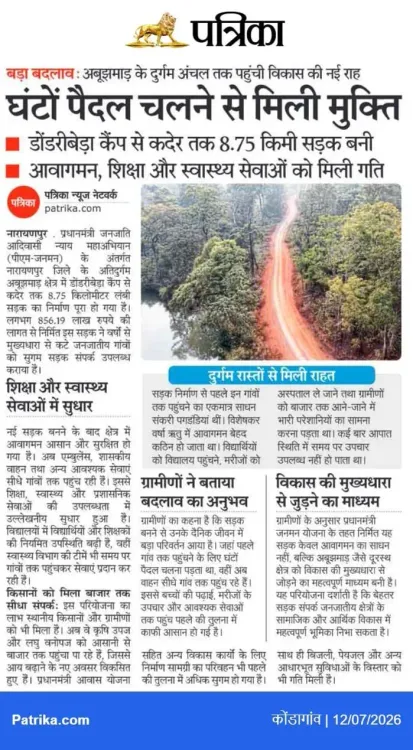
All-weather road construction in the region has been ongoing since around 2015 under state and central schemes including PMGSY and RCPLWE .
Improved connectivity directly benefits tribal villagers by reducing travel time to healthcare, markets, and government services.
The state government frames road connectivity in Abujhmad as both a development and a social-integration strategy for the Red Corridor belt.
Rollout timelines for further road stretches and all-weather connectivity targets are expected to be detailed in upcoming state budget announcements.
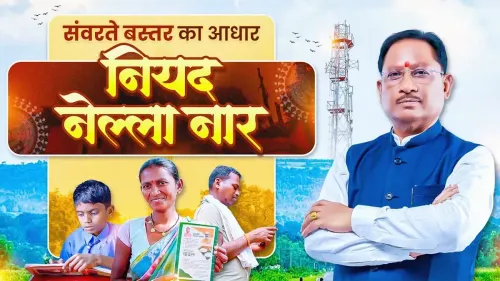
The Chief Minister's Office of Chhattisgarh declared on Sunday, 12 July 2026 that the momentum of good governance has now reached Abujhmad, one of the most remote and historically inaccessible tribal regions in the state, with expanding public amenities transforming everyday life there.
The post, shared in Hindi, stated: 'Abujhmad tak pahunchi sushasan ki raftaar, jan suvidhaon ke vistaar se badal rahi zindagi ki tasveer' — meaning, 'The pace of good governance has reached Abujhmad; the expansion of public facilities is changing the picture of life.' The message was accompanied by hashtags including #Abujhmad, #VikasKiRaftar (Speed of Development), #SushaSanSarkar (Good Governance Government), and #RoadConnectivity.
Context
Abujhmad is a densely forested tribal belt spread across parts of Bijapur and Dantewada districts in Chhattisgarh's Bastar division. For decades, the region was characterised by minimal state presence, acute infrastructure deficits, and significant left-wing extremist activity that made routine governance delivery extremely difficult.
The area's tribal communities — largely belonging to the Gond and related groups — had long remained cut off from all-weather roads, healthcare facilities, and formal markets. Reaching Abujhmad has therefore been treated as a symbolic and practical benchmark for any Chhattisgarh administration's rural outreach ambitions.
Policy Backdrop
State-led infrastructure drives targeting Abujhmad gained formal shape from around 2015, when Chhattisgarh began constructing all-weather roads under special packages for Left Wing Extremism-affected areas. These efforts ran in parallel with central government programmes including the Pradhan Mantri Gram Sadak Yojana (PMGSY) and the Road Connectivity Project for Left Wing Extremism Affected Areas (RCPLWE).
Both schemes have channelled significant funds into the Red Corridor districts of Bastar with the dual aim of reducing geographic isolation and expanding the footprint of basic service delivery — from schools and health sub-centres to ration distribution points. The Chhattisgarh government has framed road connectivity in these areas not merely as infrastructure policy but as a counter-insurgency and social-integration strategy.
Stakeholders and Impact
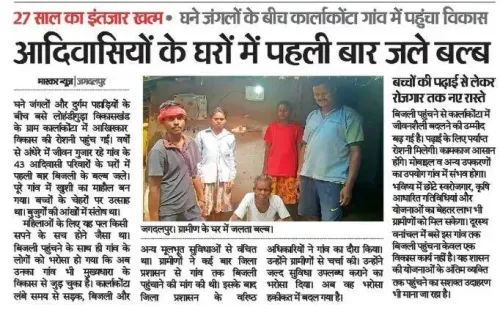
The primary beneficiaries of improved connectivity in Abujhmad are its tribal villagers, who have historically faced long treks on foot to access government services, medical care, and markets. All-weather roads directly reduce travel time, lower the cost of transporting agricultural produce, and make emergency healthcare reachable.
Broader Bastar region residents — across Bijapur, Dantewada, Narayanpur, and Sukma — stand to benefit from the demonstration effect of Abujhmad's integration, as state agencies use each completed road stretch to push further into previously unreached pockets. Security forces also benefit operationally from improved road access, which has historically been cited as a factor in reducing extremist mobility.
What's Next
The Chhattisgarh government is expected to announce rollout timelines for additional road stretches and all-weather connectivity targets as part of its state budget commitments. Analysts will watch whether the expansion of 'jan suvidhaen' (public facilities) translates into measurable improvements in health, education, and livelihood indicators for tribal communities in Abujhmad.
The broader test for the administration will be sustaining infrastructure maintenance and service delivery in these areas beyond the construction phase — a challenge that has historically tripped up connectivity programmes in remote Bastar pockets. Progress in Abujhmad is likely to serve as a reference point for evaluating the state's rural development agenda in the months ahead.
Point of View
The ruling dispensation is staking a reputational claim that linear infrastructure is translating into lived improvement for tribal communities. This fits a broader national pattern where road connectivity in LWE-affected districts is deployed simultaneously as development policy and as a counter-narrative to insurgency. The real test, however, will be whether the pace of facility expansion holds up against the historical pattern of incomplete last-mile delivery in Bastar's deep interior.
NationPress
11 Oct 2026
Frequently Asked Questions
What is Abujhmad and why is it significant?
Abujhmad is a remote, densely forested tribal region in Chhattisgarh's Bastar division, spanning parts of Bijapur and Dantewada districts. It has long been significant as one of India's most inaccessible areas, historically marked by limited state presence and left-wing extremist activity, making any infrastructure or governance outreach there a notable milestone.
What did the Chhattisgarh CMO announce about Abujhmad on 12 July 2026?
The Chief Minister's Office of Chhattisgarh posted on 12 July 2026 that the pace of good governance has reached Abujhmad, with the expansion of public facilities changing the picture of life for residents in the region.
What government schemes are funding roads in Abujhmad?
Road construction in Abujhmad is supported by central schemes including the Pradhan Mantri Gram Sadak Yojana (PMGSY) and the Road Connectivity Project for Left Wing Extremism Affected Areas (RCPLWE), alongside dedicated state government packages for LWE-affected areas that have been active since around 2015.
How does road connectivity help tribal communities in Abujhmad?
All-weather roads reduce the long treks tribal villagers previously had to make to access healthcare, ration shops, markets, and government services. They also lower the cost of transporting agricultural produce and make emergency medical care reachable for the first time in many villages.
Is Abujhmad still a Naxal-affected area?
Abujhmad has historically been one of the most significant Left Wing Extremism-affected pockets in Chhattisgarh's Bastar division. The state and central governments have pursued road and infrastructure expansion in the region as part of a broader strategy to reduce geographic isolation that has sustained insurgent presence, though the security situation continues to evolve.