CM Sai Highlights Niyad Nella Nar Push for Bastar Villages
Synopsis
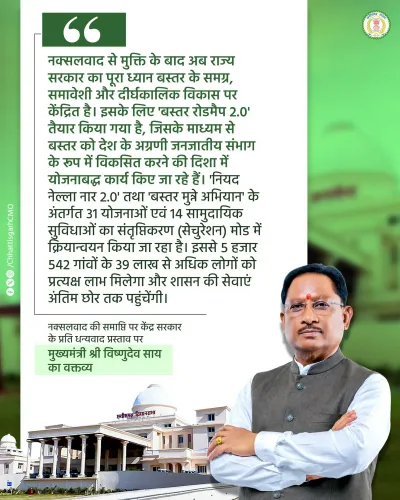
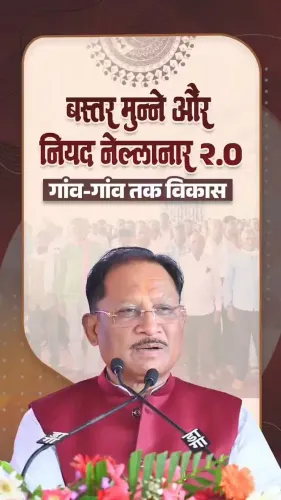
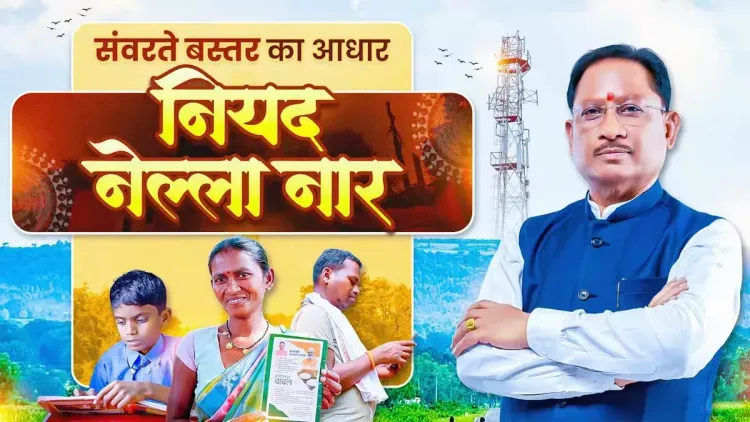
Chhattisgarh Chief Minister Vishnu Deo Sai on 24 May 2026 highlighted the Niyad Nella Nar Yojana, pledging roads, education, mobile connectivity and bus services for remote Bastar villages, vowing no village will be left behind.
Key Takeaways
CM Vishnu Deo Sai posted on 24 May 2026 reaffirming the government's development push in Bastar .
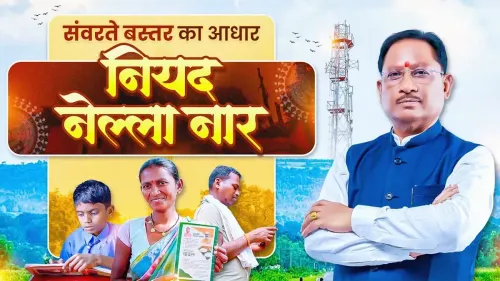
The Niyad Nella Nar Yojana targets roads, education, mobile networks and bus services for remote Bastar villages.
Bastar has a large tribal population and was historically one of Chhattisgarh 's most insurgency-affected regions.
The scheme aligns with the BJP government's post- December 2023 focus on last-mile welfare delivery in former Naxal-affected districts.
CM Sai declared the government's goal: 'No village left behind, no dream unfulfilled, and Bastar as a new identity of development and self-respect.' Progress reports and the 2026-27 state budget will be key indicators of scheme delivery on the ground.
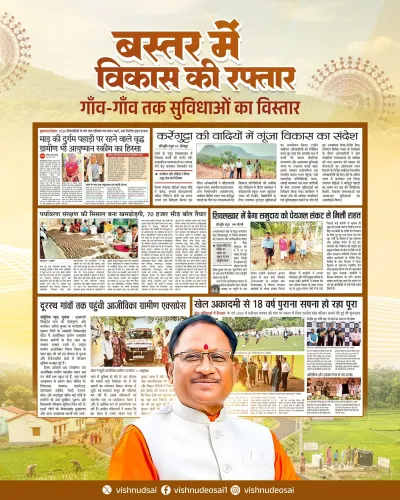
Chhattisgarh Chief Minister Vishnu Deo Sai on Sunday, 24 May 2026, reaffirmed his government's commitment to extending basic infrastructure and services to the most remote villages of Bastar through the Niyad Nella Nar Yojana, declaring that no village in the region should be left behind.
Context
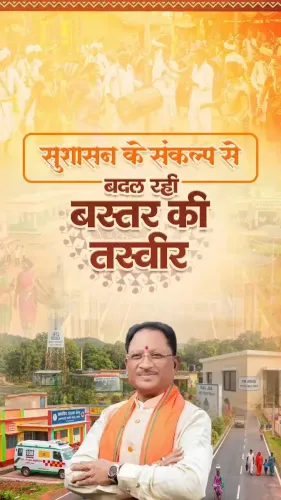
Posting in Hindi, CM Sai wrote: 'कभी जिन गांवों तक पहुंचना मुश्किल था, आज वहां विकास दस्तक दे रहा है' — 'Villages that were once hard to reach are today receiving the knock of development.' He added that where years of distance, deprivation and waiting once prevailed, there is now 'the light of hope, trust and new possibilities.'
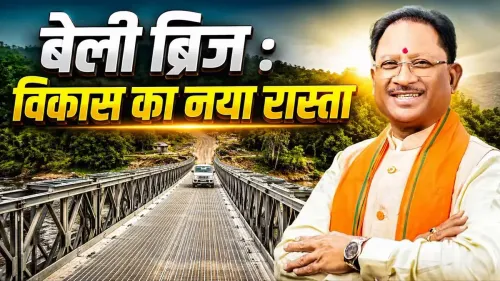
The Chief Minister specifically credited the Niyad Nella Nar Yojana with rapidly delivering roads, education, mobile network connectivity and bus services to the remote corners of Bastar. He described the scheme as a 'significant step' toward positive change in the lives of the region's tribal communities and their holistic development.
Policy Backdrop
The Niyad Nella Nar Yojana is a Chhattisgarh government initiative launched with the explicit aim of last-mile service delivery in districts historically affected by left-wing extremism. Bastar, a sprawling southern division of Chhattisgarh, has a large tribal population and was for decades among the areas most severely impacted by Naxal violence, which disrupted infrastructure development and public service access.
Following the BJP's return to power in Chhattisgarh after the December 2023 assembly elections, the Sai government announced a renewed focus on converting security gains in former insurgency-affected belts into visible welfare delivery. The approach mirrors central-government schemes such as the Road Connectivity Project for Left Wing Extremism Affected Areas, as well as earlier state-level tribal development missions that prioritised roads and mobile connectivity as the first rung of integration.
Stakeholders and Impact
The primary beneficiaries of the scheme are Bastar's tribal communities — referred to by CM Sai as 'janjatiya samaj ke bhai-behen' ('brothers and sisters of the tribal community'). Improved road access and bus services are expected to ease movement for daily wage earners, students and patients who previously faced long walks to reach markets, schools and health centres.
Mobile network extension addresses a parallel gap: large swathes of interior Bastar have historically had little or no cellular connectivity, limiting access to digital government services, banking and emergency communications. State governments across central India have pursued similar connectivity drives in tribal belts since the mid-2010s, making Chhattisgarh's current push part of a broader regional pattern.
What's Next
CM Sai set an unambiguous political benchmark in his post: 'कोई गांव पीछे न रहे, कोई सपना अधूरा न रहे' — 'No village should be left behind, no dream should remain unfulfilled' — and that Bastar should become 'a new identity of development, trust and self-respect.' Quarterly progress reports on scheme coverage and any supplementary allocations in the 2026-27 Chhattisgarh state budget will be the key indicators of whether the government's delivery matches its stated ambition.
As the BJP government approaches the midpoint of its term, the pace of visible infrastructure rollout in Bastar is likely to remain a closely watched metric for both political observers and the communities awaiting services on the ground.
Point of View
The BJP government signals that it views Bastar not merely as a security challenge but as a political and developmental opportunity. The framing — villages once unreachable now receiving development — is designed to contrast sharply with the previous Congress administration's record in the region. At a broader level, this reflects a central-India pattern where state governments use post-insurgency stabilisation windows to push welfare infrastructure, converting reduced Naxal violence into electoral goodwill among tribal voters. The real test will come in measurable outcomes: road kilometres laid, villages connected to mobile networks, and bus routes operationalised — metrics that will define whether the political promise translates into lasting change.
NationPress
10 Oct 2026
Frequently Asked Questions
What is the Niyad Nella Nar Yojana in Chhattisgarh?
The Niyad Nella Nar Yojana is a Chhattisgarh government scheme aimed at delivering basic infrastructure — roads, education, mobile network connectivity and bus services — to the most remote villages of the Bastar region, which have historically been underserved due to geography and left-wing extremism.
Which villages does the Niyad Nella Nar Yojana cover?
The scheme targets remote villages in the Bastar division of southern Chhattisgarh, an area with a large tribal population that was for decades heavily affected by Naxal activity, limiting access to public services and infrastructure.
What did CM Vishnu Deo Sai say about Bastar development?
CM Sai stated that villages once hard to reach are now receiving development, credited the Niyad Nella Nar Yojana with rapidly extending roads, education, mobile networks and bus services, and pledged that no village in Bastar will be left behind.
When did Vishnu Deo Sai become Chief Minister of Chhattisgarh?
Vishnu Deo Sai became Chief Minister of Chhattisgarh in December 2023 after the BJP won the state assembly elections.
How is Chhattisgarh addressing development in Naxal-affected areas?
The Chhattisgarh government under CM Sai has focused on last-mile delivery in former insurgency-affected districts, using schemes like the Niyad Nella Nar Yojana to extend roads, connectivity and transport — mirroring central government programmes such as the Road Connectivity Project for Left Wing Extremism Affected Areas.