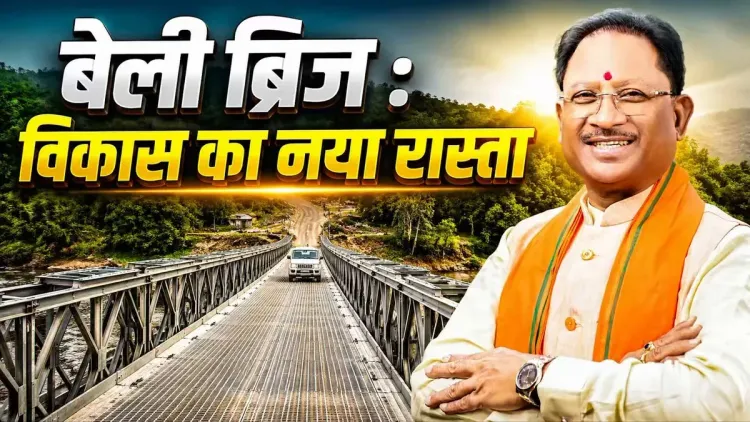
CM Vishnu Deo Sai flags Bailey bridges as Bastar's connectivity push
Synopsis
Chhattisgarh Chief Minister Vishnu Deo Sai said 21 Bailey bridges have been completed in Bijapur district, part of a wider push to link remote Bastar villages with roads and basic services. He said better connectivity is opening up education, health, employment and trade opportunities for tribal residents in the region.
Key Takeaways
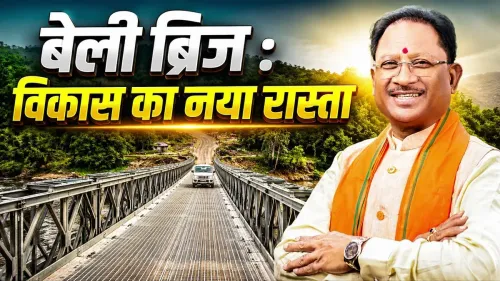
CM Vishnu Deo Sai called Bailey bridges a 'bridge of development' for Bastar.
He said 21 Bailey bridges have been built so far in Bijapur district.
The structures are aimed at linking remote, difficult-terrain villages.
The CM linked the works to gains in education, health, jobs and trade.
Bailey bridges are favoured in Bastar for quick assembly over seasonal rivers.
Connectivity push aligns with the PMGSY framework launched in 2000.
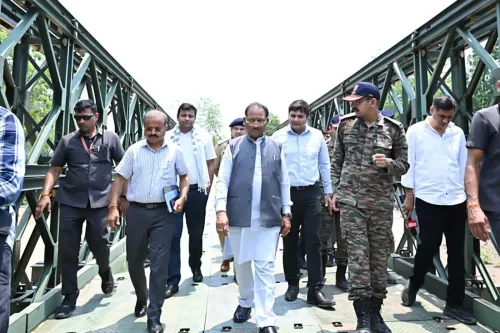
Chhattisgarh Chief Minister Vishnu Deo Sai on 3 June 2026 highlighted the expansion of Bailey bridges across the Bastar region as a key plank of the state's rural connectivity push, saying such structures are emerging as a 'bridge of development' for tribal hinterlands. In a post on X, the Chief Minister said 21 Bailey bridges have so far been built in Bijapur district alone, easing access to remote villages long cut off by difficult terrain.
Context
Writing in Hindi, the Chief Minister described the structures as 'Bastar mein vikas ka setu' (a bridge of development in Bastar). He said road, bridge and other basic infrastructure works are being expanded in tandem to connect inaccessible pockets, adding that '21 Bailey bridges have been built so far in Bijapur district, making the reach to far-flung villages more convenient and easier'.
He further argued that improved connectivity in Bastar is opening 'new doors of education, health, employment and trade', and that the daily lives of ordinary residents are improving as a result. The post was accompanied by a short video showcasing the works.
Policy backdrop
The Bastar division in southern Chhattisgarh covers several tribal-majority districts where dense forests, seasonal rivers and a long history of left-wing extremism have historically slowed road construction. Bijapur, one of the worst-affected districts, has been a focus of both security operations and infrastructure rollouts in recent years.
Bailey bridges — pre-fabricated modular steel structures — are widely used in such terrain because they can be assembled quickly without heavy equipment and are well-suited to streams that swell sharply during the monsoon. They have been deployed in central India as a stop-gap and, increasingly, as durable links pending permanent reinforced-concrete spans.
The broader policy lineage runs back to the Pradhan Mantri Gram Sadak Yojana, launched in 2000, which funds all-weather rural roads and small bridges in remote districts, including parts of Chhattisgarh. State governments across central India have layered their own programmes on top, prioritising LWE-affected blocks for accelerated execution.
Stakeholders and impact
The most immediate beneficiaries are residents of remote villages in Bijapur and the wider Bastar belt, where school attendance, ambulance access and market linkages have long been constrained by missing river crossings. Better year-round connectivity typically improves last-mile delivery of ration supplies, immunisation drives and welfare entitlements.
Local administration, the state Public Works Department and security agencies are the other key stakeholders. For paramilitary and police units operating in interior Bastar, motorable bridges reduce dependence on foot columns during the rains, while also enabling civil works crews to move materials deeper into the forest interior.
Small traders, forest-produce collectors and daily-wage workers stand to gain from shorter travel times to block headquarters. The Chief Minister's framing — linking physical infrastructure to education, health, jobs and trade — mirrors a pattern seen across central Indian states attempting to fold connectivity gains into a wider development narrative for tribal regions.
What's next
Attention will turn to whether the Bailey-bridge model is scaled up to the other Bastar districts — Sukma, Dantewada, Bastar, Kanker, Kondagaon and Narayanpur — and how many of the temporary spans are eventually upgraded to permanent structures. Future sanctions by the state's rural development and PWD wings, along with any official accessibility audits of interior villages, will indicate the pace of follow-through.
For the Sai government, which took charge in December 2023, sustained visibility on tribal-region infrastructure is likely to remain a core messaging plank, tying security gains in the Bastar belt to tangible civic dividends.
Point of View
Where the Sai government is steadily welding security consolidation in Bastar to visible civic dividends. Bailey bridges are a politically efficient story — quick to build, photogenic and easy to count — which makes them a recurring talking point even as permanent road networks lag. The broader test is whether these modular spans are upgraded to all-weather bridges and whether accessibility translates into measurable improvements in school attendance, institutional deliveries and market access. Until then, the numbers serve as a useful proxy for a deeper development claim that will need independent verification.
NationPress
21 Oct 2026
Frequently Asked Questions
What did Chhattisgarh CM Vishnu Deo Sai say about Bailey bridges in Bastar?
He said Bailey bridges are becoming a 'bridge of development' in Bastar, with 21 such structures already built in Bijapur district to connect remote villages with better roads and services.
How many Bailey bridges have been built in Bijapur district?
According to the Chief Minister's post, 21 Bailey bridges have been constructed so far in Bijapur district, improving access to far-flung villages in the Bastar region.
Why are Bailey bridges used in Bastar?
Bailey bridges are pre-fabricated modular steel structures that can be assembled quickly without heavy equipment, making them well-suited to Bastar's dense forests, seasonal rivers and difficult terrain.
Which districts make up the Bastar division?
The Bastar division in southern Chhattisgarh comprises Bastar, Bijapur, Sukma, Dantewada, Kanker, Kondagaon and Narayanpur, all marked by tribal-majority populations and historically poor road connectivity.
How does better connectivity help Bastar residents?
Improved roads and bridges shorten travel times to schools, health centres and markets, ease delivery of ration and welfare services, and open up employment and trade opportunities for tribal residents.