CM Vishnu Deo Sai inspects new Bailey bridge in Bijapur's Kondapalli

Synopsis
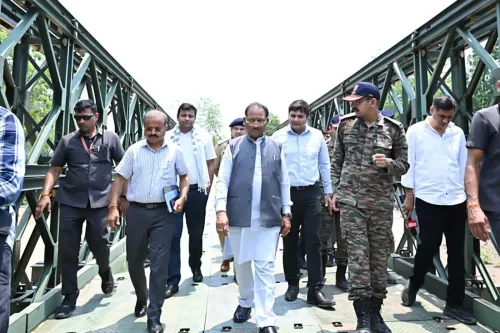
Chhattisgarh Chief Minister Vishnu Deo Sai inspected a newly built Bailey bridge in Kondapalli village of Bijapur district, describing it as a connector of development and trust. The visit, tied to the Sushasan Tihar 2026 campaign, spotlights the state's push to extend road and bridge access across the insurgency-affected Bastar region.
Key Takeaways
CM Vishnu Deo Sai inspected a new Bailey bridge at Kondapalli village in Bijapur district.
He said the bridge will ease access to education, health and employment opportunities.
The visit was flagged under the state's Sushasan Tihar 2026 governance campaign.
Bijapur lies in the Bastar division, historically affected by left-wing extremism.
Modular Bailey bridges are widely used in central India for quick connectivity in difficult terrain.
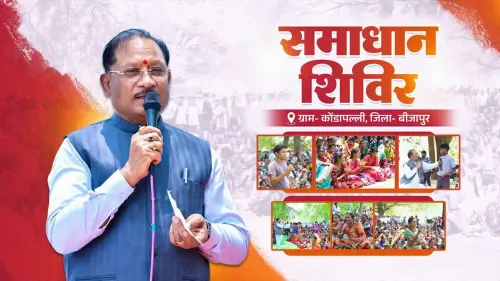
Chhattisgarh Chief Minister Vishnu Deo Sai on Wednesday inspected a newly constructed Bailey bridge in Kondapalli village of Bijapur district, describing the structure as a connector of 'development and trust' in the southern Bastar region. The visit was flagged under the state government's ongoing Sushasan Tihar 2026 good-governance outreach.
Context
In his post, the Chief Minister called the structure a 'vikas ka setu' (bridge of development), writing that he was 'extremely pleased' to inspect the newly built Bailey bridge at Kondapalli. He added that the bridge would ease access to 'education, health and employment opportunities' and was joining 'not just two banks, but development and trust as well'.
The post was accompanied by a short video from the inspection site and carried the hashtags #सुशासन_तिहार_2026 and #SushasanTihar2026, tying the visit to the state's flagship governance campaign for the year.
Policy backdrop
Bijapur, part of the Bastar division, has long been among the districts most affected by left-wing extremism in central India, with several pockets historically cut off during the monsoon when streams swell and kachha tracks become impassable. Successive Chhattisgarh governments, since the mid-2000s, have prioritised road and bridge construction in the region to reduce isolation and extend basic services.
Modular Bailey bridges — prefabricated steel structures that can be erected quickly without heavy site work — have emerged as a preferred option in such terrain. They allow administrations to span rivers and gullies in weeks rather than months, a critical advantage in areas where construction crews face security risks and short working windows.
Stakeholders and impact
For residents of Kondapalli and surrounding hamlets — predominantly tribal communities — the new crossing is expected to shorten travel time to the nearest schools, primary health centres and weekly haats. Better connectivity also tends to improve attendance of teachers, health workers and ration suppliers, who have historically struggled to maintain regular visits to interior villages.
The bridge fits a broader pattern across Chhattisgarh, Jharkhand and Odisha, where state agencies have used quick-assembly spans to push administrative reach into forested, insurgency-prone interiors. Security forces stationed in the Bastar belt also benefit from the same routes, which support faster movement of personnel and supplies.
By framing the inspection through the Sushasan Tihar 2026 banner, the Chief Minister linked a single physical asset to the state's wider governance narrative, which has centred on outreach camps, grievance redressal and visible public works in remote blocks.
What's next
Officials in the Bastar region are expected to roll out further connectivity announcements through the Sushasan Tihar window, with the state's budgetary commitments to Bastar infrastructure likely to draw scrutiny in coming sessions. The pace at which feeder roads are extended on either side of bridges such as the one at Kondapalli will determine how much of the promised access to 'education, health and employment' actually materialises for villagers.
For the Sai administration, which took office in December 2023, sustaining a visible pipeline of small but locally consequential projects in the south of the state remains central to its development pitch — and to the political case it is building in one of India's most challenging governance landscapes.
Point of View
A single Bailey bridge often does more political and administrative work than a marquee urban project — it signals state presence in territory where that presence has long been contested. The Chief Minister's choice of imagery, 'joining development and trust', is calibrated to that history. The real test will be whether feeder roads, schools and health posts follow the steel span, or whether the bridge stands as a standalone symbol.
NationPress
18 Oct 2026
Frequently Asked Questions
Where did CM Vishnu Deo Sai inspect the Bailey bridge?
He inspected a newly constructed Bailey bridge in Kondapalli village of Bijapur district in southern Chhattisgarh.
What is Sushasan Tihar 2026?
Sushasan Tihar 2026 is a state-level good-governance campaign in Chhattisgarh under which the government is highlighting public works, outreach camps and grievance redressal across districts.
Why are Bailey bridges used in Bastar?
Bailey bridges are prefabricated steel structures that can be assembled quickly, making them suitable for remote, forested and insurgency-affected areas like Bastar where conventional construction is slow and risky.
How will the Kondapalli bridge help local residents?
According to the Chief Minister, the bridge will make it easier for villagers to reach schools, health facilities and employment opportunities by improving year-round connectivity across the waterway.
When did Vishnu Deo Sai become Chief Minister of Chhattisgarh?
Vishnu Deo Sai took office as Chief Minister of Chhattisgarh in December 2023 after the BJP's victory in the state assembly elections.