Chhattisgarh CMO: Coffee Cultivation Comes to Abujhmad Tribes
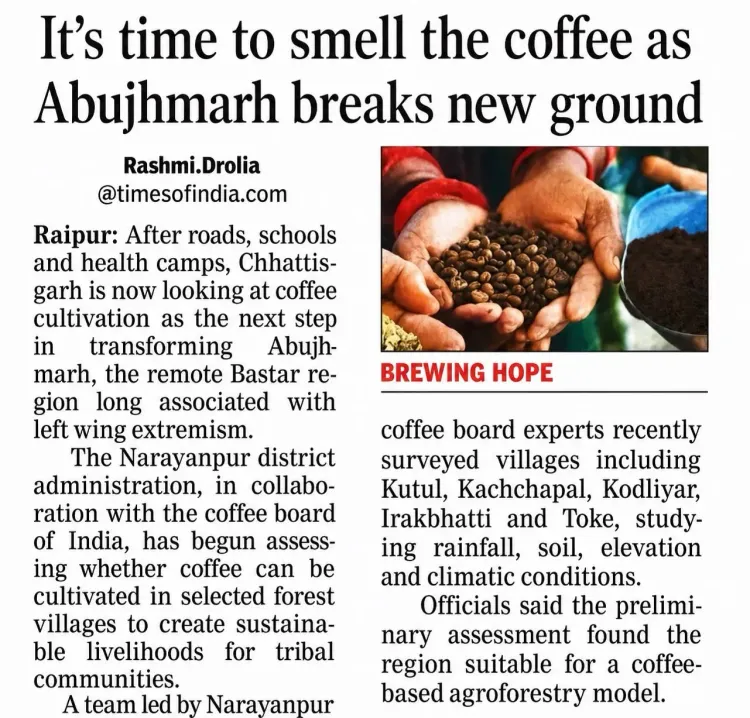
Synopsis
The Chhattisgarh CMO announced on 8 July 2026 that coffee cultivation is being introduced in Abujhmad villages to support Particularly Vulnerable Tribal Groups in Bastar, offering a high-value alternative crop and linking improved agricultural incomes with sustainable development in a historically remote and conflict-affected region.
Key Takeaways
The Chief Minister's Office of Chhattisgarh announced on 8 July 2026 that coffee cultivation is being introduced in Abujhmad villages.
Abujhmad is a remote forested area in Narayanpur district , Bastar division , home to Particularly Vulnerable Tribal Groups including the Abujh Maria .
The initiative aims to reduce tribal dependence on forest produce by introducing a high-value, shade-grown plantation crop suited to the region's ecology.
The programme fits within the national Left Wing Extremism development framework , linking agricultural income improvement with governance and security goals in Bastar .
Long-term success will depend on extension services, market linkages, and potential partnership with the Coffee Board of India for training and certification.
First harvests are typically expected three to four years after planting, making near-term implementation milestones critical to watch.
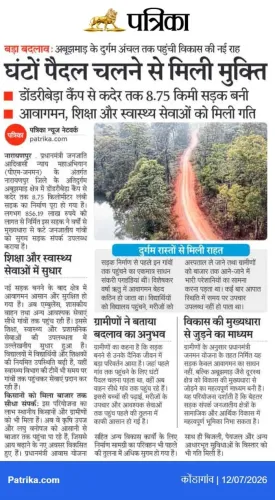
The Chief Minister's Office of Chhattisgarh announced on Wednesday, 8 July 2026 that coffee cultivation is being introduced in villages of Abujhmad, a remote forested region in Narayanpur district, Bastar division, to support tribal livelihoods and promote sustainable development.
Context
The CMO's post, shared under the hashtag #Sushasansarkar ('good governance government'), describes the initiative as bringing 'new opportunities' to Abujhmad — a region historically inhabited by Particularly Vulnerable Tribal Groups (PVTGs), most notably the Abujh Maria community. The area's dense forest cover and relative inaccessibility have long kept it outside the mainstream agricultural economy, making its communities heavily dependent on forest produce and shifting cultivation.
The announcement frames coffee cultivation not merely as an agricultural intervention but as a livelihood transformation — introducing a high-value plantation crop suited to the region's shade-rich forest environment.
Policy Backdrop
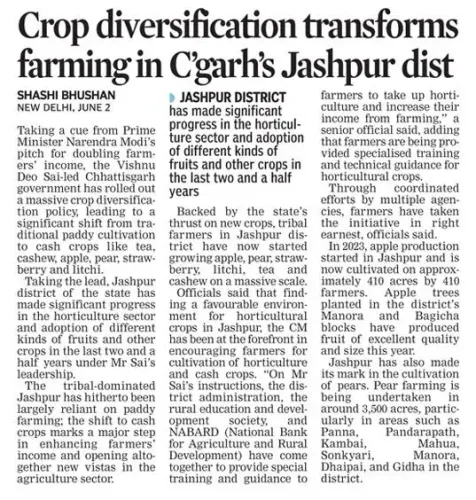
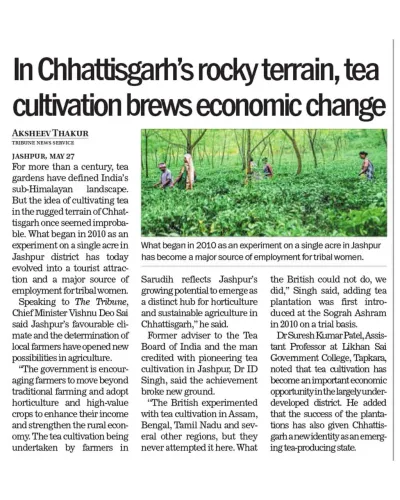
Chhattisgarh governments have run crop-diversification pilots in the Bastar-region tribal belt since the mid-2010s, seeking to reduce dependence on forest produce and provide year-round income to tribal cultivators. Coffee, which thrives under forest canopy and commands stable market prices, has emerged as a preferred alternative crop in similar central and eastern Indian tribal districts.
The initiative sits within the broader national Left Wing Extremism (LWE) development framework, which links improved agricultural incomes in former Naxal-affected districts with long-term security and governance goals. Bastar division, which includes Narayanpur district, has been a focal zone for such integrated development efforts. High-value plantation programmes in comparable geographies have shown that sustained success requires robust extension services, reliable market linkages, and secure land tenure for tribal farmers.
The Coffee Board of India has previously partnered with state governments to extend coffee cultivation into non-traditional growing zones, offering technical training and quality certification support — a model that analysts expect could be replicated here.
Stakeholders and Impact
The primary beneficiaries are tribal farming households in Abujhmad villages, who currently earn limited and seasonal incomes. Coffee cultivation, once established, can yield harvests for decades and generate both primary and processing-level employment within the community.
Shade-grown coffee also aligns with forest conservation objectives, potentially making the programme eligible for green-economy funding and carbon-offset mechanisms. For the state government, a successful rollout would demonstrate that governance and economic integration can reach even the most isolated tribal pockets of Chhattisgarh.
What's Next
Key milestones to watch include the timeline for first harvests — typically three to four years after planting for arabica varieties — alongside any formal tie-ups with the Coffee Board of India for farmer training and certification. Market and processing linkages, including whether a procurement or cooperative model will be established, will determine whether tribal cultivators capture value beyond the raw cherry stage.
As the Bastar region continues its gradual transition from conflict-affected territory to a zone of developmental opportunity, the Abujhmad coffee initiative will be closely watched as a test of whether high-value agriculture can take root in India's most challenging tribal geographies.
Point of View
A perennial shade-grown crop, the state signals an intent to work with the forest ecology rather than against it, which could ease both environmental and community resistance. However, the announcement's lack of specifics on scale, funding, and market linkages is a familiar pattern: the harder governance work of securing land tenure for tribal cultivators and building cold-chain or processing infrastructure rarely makes it into social media posts. The programme's credibility will ultimately rest on whether the Coffee Board of India or a comparable institution is formally onboarded before the first seedlings go in the ground.
NationPress
6 Oct 2026
Frequently Asked Questions
What is the Abujhmad coffee cultivation scheme in Chhattisgarh?
It is an initiative announced by the Chhattisgarh Chief Minister's Office on 8 July 2026 to introduce coffee as an alternative livelihood crop for tribal communities in Abujhmad villages, Narayanpur district, Bastar division.
Where is Abujhmad located?
Abujhmad is a remote, densely forested region within Narayanpur district in the Bastar division of southern Chhattisgarh, and is home to Particularly Vulnerable Tribal Groups including the Abujh Maria community.
Why is coffee being grown in Abujhmad?
Coffee is a high-value, shade-grown crop well suited to Abujhmad's forested terrain. The government aims to diversify tribal incomes away from seasonal forest produce and provide year-round sustainable livelihoods.
How does this scheme connect to Bastar's development efforts?
It is part of a broader Left Wing Extremism development framework under which central and state governments have promoted high-value agriculture in former Naxal-affected Bastar districts to improve incomes and strengthen governance.
When will tribal farmers in Abujhmad see income from coffee?
Coffee plants typically take three to four years to yield a first harvest, so income for tribal cultivators will depend on timely planting, training support, and the establishment of market or processing linkages in the coming agricultural seasons.