Chhattisgarh entrepreneur turns wild palm seeds into caffeine-free herbal coffee
Synopsis
A commerce graduate from Dantewada skipped the corporate path to spend two years turning wild palm seeds — long discarded as forest waste — into a caffeine-free herbal coffee. The brew just won first prize at Chhattisgarh's Innovation Mahakumbh and a personal felicitation from Chief Minister Vishnu Deo Sai, with a community income model for Bastar villagers built into its DNA.
Key Takeaways
Vishal Haldar from Dantewada, Chhattisgarh has developed a caffeine-free herbal coffee from wild date palm seeds called Chhind .
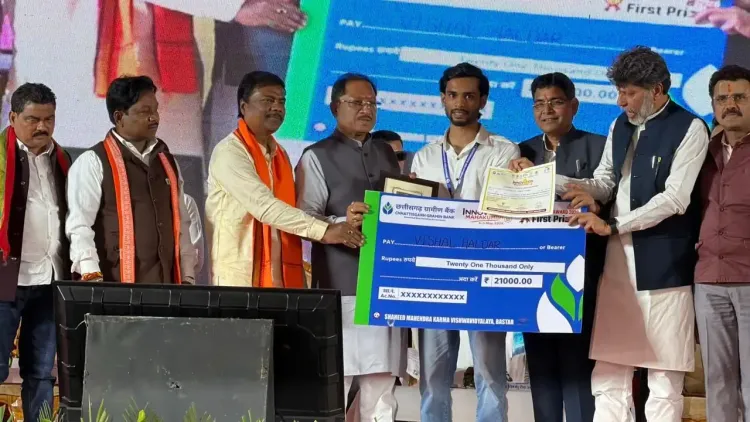
The product won first prize at the Innovation Mahakumbh at Shaheed Mahendra Karma University, Jagdalpur .
Chief Minister Vishnu Deo Sai and Finance Minister O.P.
Choudhary personally felicitated and tasted the brew.
The herbal coffee is reportedly rich in antioxidants and free of caffeine, targeting the global wellness beverage market.
Haldar is working with the Youth Up Foundation and the Dantewada district administration to build a supplementary income model for local villagers through Chhind seed collection.
The product is currently in its final testing and development phases ahead of commercial launch.
A young entrepreneur from Dantewada district in Chhattisgarh has developed a caffeine-free herbal coffee made from discarded wild date palm seeds — locally known as 'Chhind' — sparking what observers are calling a grassroots herbal revolution in the heart of Bastar. Vishal Haldar, the innovator behind the product, was recently felicitated by Chief Minister Vishnu Deo Sai at the Innovation Mahakumbh held at Shaheed Mahendra Karma University in Jagdalpur.
From Forest Waste to Herbal Brew
Haldar, a graduate in commerce and software development, chose to forgo a conventional corporate career and returned to his hometown of Bacheli in Dantewada. He spent nearly two years researching the potential of the Chhind plant — a wild date palm whose seeds were previously considered useless and left to rot in the forests. By combining modern research techniques with locally available natural resources, he developed a beverage that replicates the flavour and ritual of conventional coffee while eliminating the jitters and health concerns associated with caffeine.
Recognition at Innovation Mahakumbh
The innovation earned first prize at the Innovation Mahakumbh in Jagdalpur, where it was personally awarded by Chief Minister Vishnu Deo Sai. Prominent figures including State Finance Minister O.P. Choudhary and several academic experts sampled the brew during the event, praising both its quality and commercial potential. The recognition marks a significant milestone for a product still in its final testing and development phases.
Health Benefits and Market Potential
Beyond its novel origin, the herbal coffee is reportedly rich in antioxidants, positioning it as a wellness-oriented alternative in a global market that is increasingly health-conscious. The absence of caffeine makes it suitable for a broader demographic, including those who are sensitive to stimulants. Industry observers note that the global caffeine-free and herbal beverage segment has been growing steadily, and a product rooted in tribal forest heritage could find a niche in premium wellness markets.
Social and Economic Empowerment at the Core
Haldar's ambitions extend well beyond the product itself. Working through the Youth Up Foundation and in collaboration with the Dantewada district administration, he is actively encouraging local youth to pursue entrepreneurship. His model envisages a sustainable economic ecosystem where villagers earn supplementary income by collecting and processing Chhind seeds from surrounding forests — effectively turning a forest byproduct into a commercially viable commodity. The initiative aims to generate employment while fostering pride in Bastar's natural and cultural heritage.
What's Next
With government recognition now behind him, Haldar is expected to move toward commercial production once the product clears its final testing stages. His journey from a commerce graduate to a grassroots innovator offers a compelling template for how tribal and forest resources across India's interior regions can be harnessed for both economic and social good. If scaled, the model could be replicated across other forest-rich districts of Chhattisgarh and beyond.
Point of View
Yet economic models that convert those resources into income for local communities remain rare. The government felicitation is welcome, but the harder test will come at the commercialisation stage: whether the supply chain can be formalised without displacing the community income model that makes this initiative genuinely distinctive. If the Dantewada administration follows through with sustained support, this could become a replicable template for other forest-rich districts — not just a prize-winning prototype.
NationPress
25 Sept 2026
Frequently Asked Questions
What is the caffeine-free herbal coffee developed by Vishal Haldar?
It is a herbal beverage made from the seeds of the wild date palm plant locally known as Chhind, found in the forests of Bastar, Chhattisgarh. The product replicates the taste and ritual of conventional coffee without any caffeine, and is reportedly rich in antioxidants.
Who is Vishal Haldar and where is he from?
Vishal Haldar is a young entrepreneur and commerce and software development graduate from Bacheli in Dantewada district, Chhattisgarh. He spent nearly two years researching the Chhind plant before developing the herbal coffee product.
What recognition did the herbal coffee receive?
The product won first prize at the Innovation Mahakumbh held at Shaheed Mahendra Karma University in Jagdalpur. Chief Minister Vishnu Deo Sai personally presented the award, and State Finance Minister O.P. Choudhary also tasted and praised the brew.
How does this initiative benefit local communities in Bastar?
Haldar's model encourages villagers to collect and process Chhind seeds from local forests, creating a supplementary income stream. Working through the Youth Up Foundation and the Dantewada district administration, the initiative aims to turn a forest byproduct into a commercially viable product while generating local employment.
Is the herbal coffee available for purchase yet?
The product is currently in its final testing and development phases and has not yet been commercially launched. Commercial production is expected to follow once testing is complete.