Chhattisgarh CMO: Crop diversification powers Jashpur farm shift
Synopsis
The Chhattisgarh Chief Minister's Office said crop diversification is reshaping farming in tribal-majority Jashpur, with horticulture and high-value crops lifting rural incomes under CM Vishnu Deo Sai. The message frames the northern district as a model for moving farmers beyond paddy monoculture, aligning with central horticulture mission goals and state efforts on sustainable agriculture.
Key Takeaways
The Chhattisgarh CMO on 3 June 2026 credited crop diversification for opening new income avenues for farmers in Jashpur .
The push is framed under CM Vishnu Deo Sai , who took office in December 2023 and represents the Jashpur region politically.
The state is pivoting from paddy monoculture toward horticulture, pulses and millets, in line with the central Mission for Integrated Development of Horticulture launched in 2014 .
Primary beneficiaries are small and tribal farmers in northern Chhattisgarh, where terrain and climate favour fruits, spices and vegetables.
Key indicators to watch include district-level horticulture adoption data and possible inclusion of the Jashpur model in the next state agriculture budget.
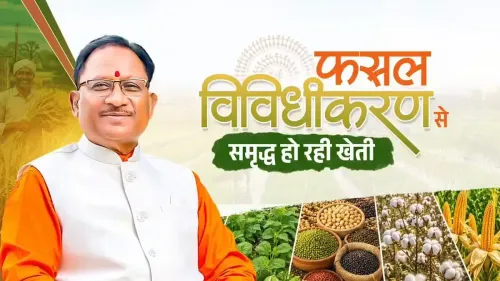
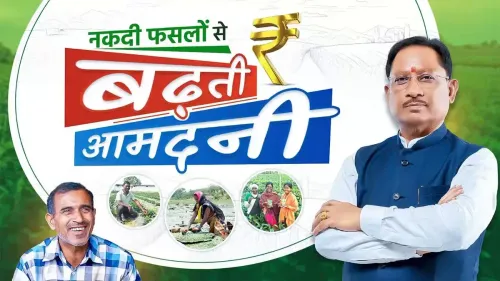
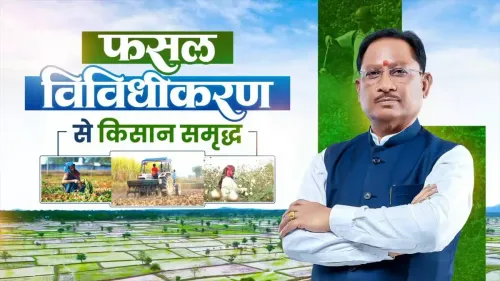
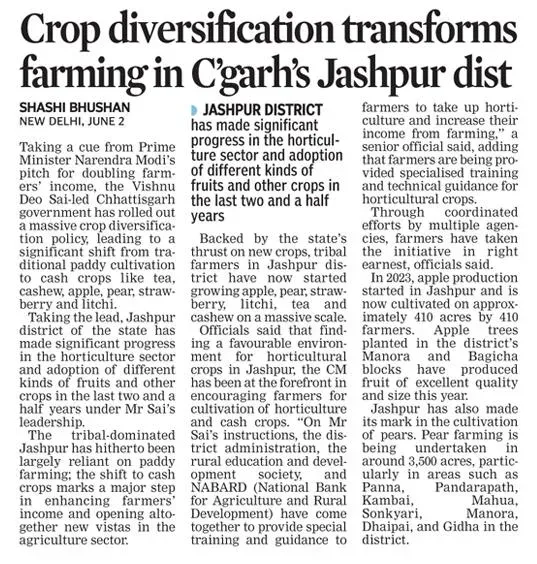
The Chief Minister's Office of Chhattisgarh on 3 June 2026 highlighted a structural shift in agriculture in the tribal-majority district of Jashpur, crediting crop diversification under Chief Minister Vishnu Deo Sai for opening new income avenues for farmers. In a post on X, the CMO said the adoption of horticulture and high-value crops was 'enhancing incomes, strengthening rural livelihoods, and paving the way for a more resilient and prosperous agricultural economy'.
The post, titled 'Crop Diversification reshaping agriculture, Jashpur Leads a New Era of Rural Prosperity', frames the northern Chhattisgarh district as a template for moving cultivators beyond paddy monoculture into higher-margin produce. It does not cite specific output figures, but positions Jashpur as a focal point in the state's rural development pitch.
Context
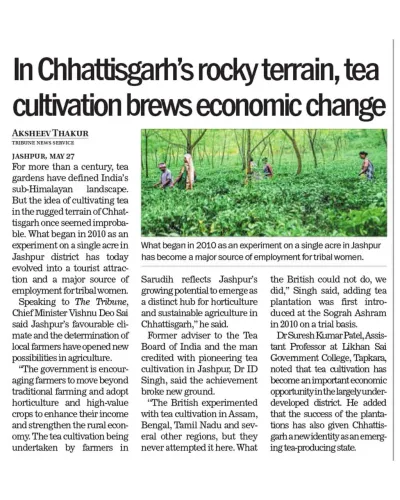
Jashpur, located in the state's northern hill belt, has a predominantly tribal population and an economy traditionally built around forest produce and rain-fed farming. Its plateau terrain, cooler micro-climate and laterite soils have long been considered suitable for fruit, vegetable and spice cultivation, making it a natural candidate for the kind of high-value cropping the CMO is now spotlighting.
Chief Minister Vishnu Deo Sai, a senior BJP leader who took office in December 2023, hails from the Jashpur region and has repeatedly tied his government's rural agenda to tribal districts in the north of the state. Wednesday's message extends that thread, putting agricultural reform at the centre of the administration's welfare narrative.
Policy backdrop
India's central Mission for Integrated Development of Horticulture, launched in 2014, has underwritten the expansion of fruit, vegetable and spice cultivation across states, including Chhattisgarh. The mission supports nurseries, protected cultivation, post-harvest infrastructure and farmer training, and has been a key vehicle for moving cultivators away from water-intensive staples.
Chhattisgarh's own agriculture policies since the mid-2010s have nudged farmers from paddy monoculture toward pulses, millets and horticulture, citing concerns over soil health, irrigation stress and the volatility of staple-grain markets. The state is India's leading paddy producer, which makes diversification politically delicate but economically significant.
The pattern is part of a wider national trend. Since the 2010s, Indian states have pursued diversification to cushion farmers against climate variability, groundwater depletion and price swings, while aligning with sustainable agriculture and rural income goals under central and state programmes.
Stakeholders and impact
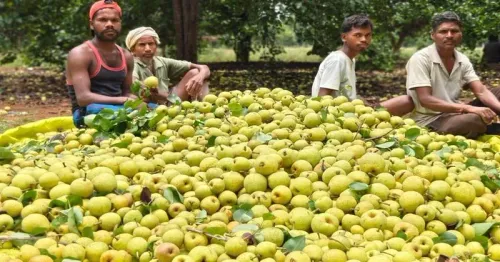
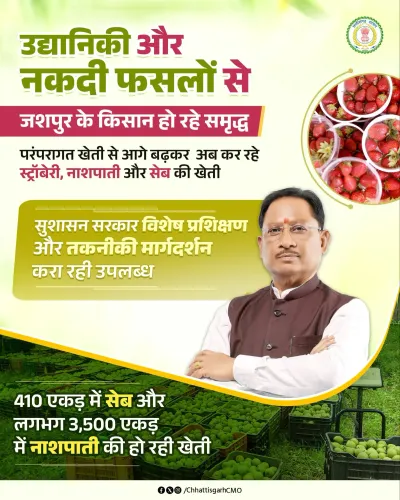
The most immediate constituency is the small and marginal farmer base in Jashpur, much of it from Scheduled Tribe communities whose holdings are typically below two hectares. For these households, horticulture crops such as tomato, ginger, turmeric, litchi and off-season vegetables can offer per-acre returns several times higher than paddy, provided market linkages and cold-chain access hold up.
Allied stakeholders include self-help groups, farmer producer organisations and the state horticulture department, which together handle inputs, training and aggregation. Private buyers and mandi traders in neighbouring Jharkhand and Odisha also factor into Jashpur's produce flows, given the district's location on the inter-state border.
For the state government, success in Jashpur carries political weight. A visible income lift in a tribal district aligns the BJP's welfare messaging with its electoral base in northern Chhattisgarh and complements parallel pushes on rural housing, drinking water and road connectivity.
What's next
The near-term marker to watch is the release of district-level horticulture adoption and farmer income data in upcoming Chhattisgarh agriculture reports, which would test the CMO's claim of a 'new era of rural prosperity' against measurable outcomes.
Equally significant will be whether the Jashpur approach is codified in the next state agriculture budget or action plan — through dedicated outlays for horticulture clusters, cold storage, or value-addition units. If institutionalised, the model could be extended to other tribal districts such as Surguja, Balrampur and Kondagaon, deepening the state's pivot away from paddy dependence.
Point of View
Showcasing horticulture gains there doubles as both policy signalling and constituency reinforcement. The bigger arc is national: states from Punjab to Telangana are nudging farmers toward diversified, higher-value cropping to manage water, climate and income risks. The credibility of the Jashpur claim will hinge on whether subsequent state data and budget allocations match the rhetoric.
NationPress
21 Oct 2026
Frequently Asked Questions
Who is the Chief Minister of Chhattisgarh in 2026?
Vishnu Deo Sai is the Chief Minister of Chhattisgarh. He is a senior BJP leader who took office in December 2023 and hails from the Jashpur region in the state's north.
What is crop diversification in Indian agriculture?
Crop diversification is the shift from growing a single dominant crop, such as paddy or wheat, to cultivating a wider mix including horticulture, pulses, millets and spices. It is promoted to raise farmer incomes, conserve water and soil, and cushion against price and climate shocks.
Why is Jashpur district suitable for horticulture?
Jashpur lies on a northern plateau with a cooler micro-climate, laterite soils and adequate rainfall, conditions well suited to fruits, vegetables and spices. Its largely tribal farming base and small landholdings also make high-value horticulture economically attractive.
What is the Mission for Integrated Development of Horticulture?
It is a centrally sponsored scheme launched in 2014 to expand horticulture in Indian states, including Chhattisgarh. The mission supports nurseries, protected cultivation, post-harvest infrastructure and training, and has been a key tool for moving farmers toward high-value crops.
How does crop diversification help tribal farmers in Chhattisgarh?
Diversification can lift per-acre returns for small and tribal farmers by replacing low-margin paddy with higher-value produce such as ginger, turmeric, tomato and litchi. It also spreads risk across crops and seasons, reducing vulnerability to a single market or weather event.