CM Sai Pushes Crop Diversification, Offers Rs 15,000/Acre Aid
Synopsis
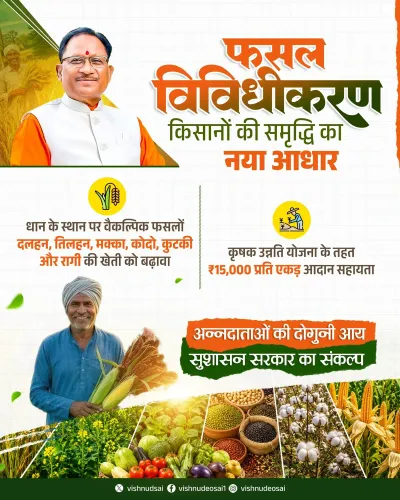
Chhattisgarh Chief Minister Vishnu Deo Sai announced on 10 July 2026 that farmers cultivating alternative crops — including millets, pulses and oilseeds — will receive Rs 15,000 per acre in input assistance under the Krishak Unnati Yojana, aiming to reduce the state's dependence on paddy monoculture.
Key Takeaways
Vishnu Deo Sai , Chief Minister of Chhattisgarh, announced input assistance of Rs 15,000 per acre for farmers growing alternative crops.
The benefit is available under the Krishak Unnati Yojana , the state's farmer welfare scheme.
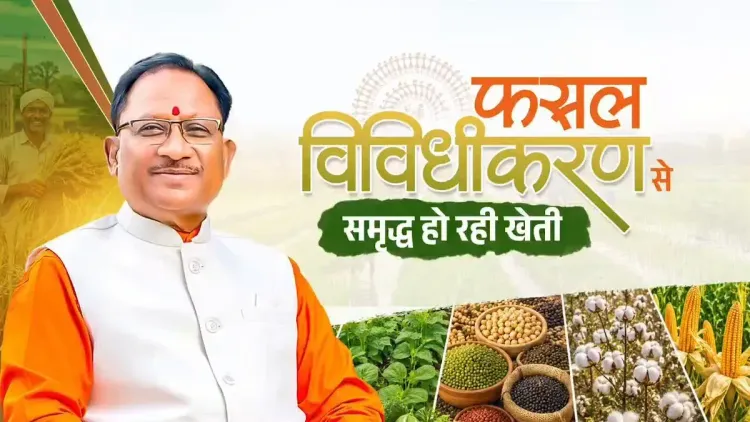
Targeted crops include pulses, oilseeds, maize, kodo, kutki, and ragi — all cultivated alongside or instead of paddy.
The move is aimed at increasing farmer income and reducing Chhattisgarh's heavy dependence on paddy monoculture .
The policy aligns with India's push for millet promotion following the International Year of Millets (2023) .
Rollout is expected during the 2026 kharif season ; disbursement details are yet to be formally notified.
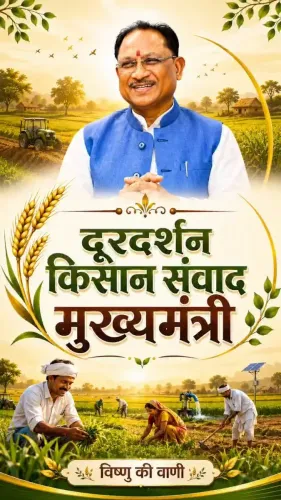
Chhattisgarh Chief Minister Vishnu Deo Sai on Friday, 10 July 2026 announced that the state government will provide input assistance of Rs 15,000 per acre to farmers who cultivate alternative crops under the Krishak Unnati Yojana, framing crop diversification as a new path to agricultural prosperity in the state.
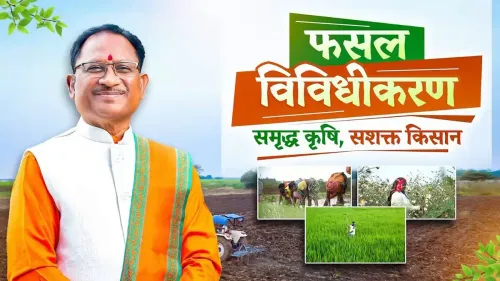
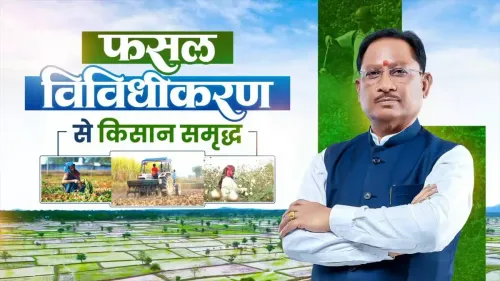
Posting on X in Hindi, Chief Minister Sai wrote: 'फसल विविधीकरण, समृद्धि की नई राह' ('Crop diversification — a new path to prosperity'), describing it as 'a powerful means to increase farmers' income and make farming more profitable.' He specifically named pulses, oilseeds, maize, kodo, kutki, and ragi as the alternative crops being promoted alongside paddy.
Context
Chhattisgarh is one of India's significant paddy-producing states, and its agricultural economy has long been anchored to rice cultivation. While paddy procurement has historically provided a stable income floor for farmers, dependence on a single crop has exposed growers to income volatility, soil degradation, and groundwater stress. Chief Minister Sai's post signals a deliberate state-level push to widen the cropping basket during the 2026 kharif season.
The announcement comes under the banner of what his government calls 'sushasan sarkar' ('good governance government'), a phrase Sai used in the post itself to describe the administration's commitment to farmer welfare.
Policy Backdrop
The Krishak Unnati Yojana is Chhattisgarh's farmer welfare scheme designed to provide input support for the cultivation of alternative crops alongside paddy. The Rs 15,000-per-acre assistance is intended to offset the transition costs farmers face when shifting away from a familiar staple crop to less-established alternatives.
The scheme aligns with a broader national policy direction. The Government of India observed 2023 as the International Year of Millets, promoting nutri-cereals — including ragi, kodo, and kutki — for both cultivation and consumption. Chhattisgarh's focus on these very crops places the state's policy within that continuing national and global push for climate-resilient, nutrition-sensitive agriculture.
Crop diversification has been a recurring theme in Indian agricultural policy as a corrective to the ecological and economic costs of rice monoculture, particularly in states where paddy procurement has crowded out other crops for decades.
Stakeholders and Impact
The primary beneficiaries are Chhattisgarh's paddy farmers who opt to cultivate one or more of the six named alternative crops. The input assistance of Rs 15,000 per acre is positioned as a direct income support measure to make the switch financially viable, particularly for smallholder farmers who may lack the capital to experiment with new crop varieties.
Beyond individual farm incomes, successful diversification could reduce pressure on irrigation infrastructure, improve soil health over successive seasons, and boost local availability of pulses and oilseeds — commodities whose domestic supply India has historically struggled to keep pace with demand. Millets such as ragi and kodo also carry significant nutritional value, making the initiative relevant to public health goals alongside agricultural ones.
What's Next
The immediate focus will be on the operational rollout of the Krishak Unnati Yojana assistance during the current kharif season, including the registration of eligible farmers and the disbursement mechanism for the per-acre support. Any supplementary budget provisions the Chhattisgarh government announces to fund the scheme at scale will be closely watched by farm groups and opposition legislators alike.
If uptake is strong during the 2026 season, the scheme could set a template for how other paddy-dependent states structure financial incentives for millet and pulse cultivation — making Chhattisgarh a policy reference point in India's broader crop-diversification conversation.
Point of View
A structural challenge that successive Chhattisgarh governments have acknowledged but struggled to address. The Rs 15,000-per-acre figure is significant because it targets the financial risk premium that makes smallholders reluctant to experiment with unfamiliar crops. By anchoring the scheme to millets such as ragi, kodo, and kutki, the BJP-led state government is also aligning itself visibly with the central government's post-2023 millet narrative, reinforcing a coordinated federal-state policy identity. Whether the scheme achieves lasting diversification or remains a seasonal subsidy will depend heavily on whether market linkages and procurement support for these alternative crops are built alongside the input assistance.
NationPress
9 Oct 2026
Frequently Asked Questions
What is the Krishak Unnati Yojana in Chhattisgarh?
The Krishak Unnati Yojana is a Chhattisgarh government scheme that provides input assistance to farmers who cultivate alternative crops such as pulses, oilseeds, millets, maize, kodo, kutki, and ragi alongside or instead of paddy.
How much financial assistance will Chhattisgarh farmers get for growing alternative crops?
Farmers cultivating the specified alternative crops under the Krishak Unnati Yojana will receive Rs 15,000 per acre as input assistance, according to Chief Minister Vishnu Deo Sai's announcement on 10 July 2026.
Which crops are covered under Chhattisgarh's crop diversification scheme?
The scheme covers pulses, oilseeds, maize, kodo, kutki, and ragi — all promoted as alternatives to paddy for Chhattisgarh farmers.
Why is Chhattisgarh promoting crop diversification?
Chhattisgarh has historically been heavily dependent on paddy cultivation, which can lead to soil degradation, groundwater depletion, and income volatility. Diversifying into millets, pulses, and oilseeds is intended to improve farmer income and build climate resilience.
How does Chhattisgarh's millet push connect to national policy?
India observed 2023 as the International Year of Millets, promoting nutri-cereals including ragi, kodo, and kutki. Chhattisgarh's Krishak Unnati Yojana directly targets these same crops, placing the state's scheme within the continuing national effort to mainstream millet farming.