CM Sai Pushes Crop Diversification With Rs 11,000/Acre Incentive
Synopsis
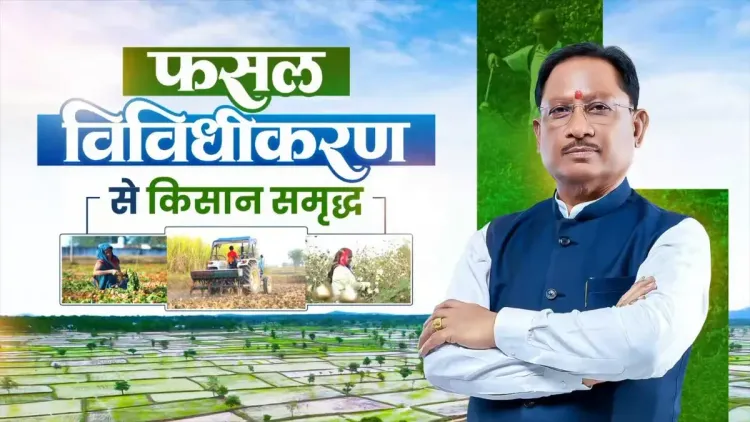
Chhattisgarh CM Vishnu Deo Sai has announced a financial incentive of up to Rs 11,000 per acre for farmers who shift from paddy to alternative crops including pulses, oilseeds, millets, maize and cotton, framing the move as a push for sustainable and profitable agriculture in the state.
Key Takeaways
Chhattisgarh CM Vishnu Deo Sai announced the crop diversification incentive on 7 June 2026 .
Farmers who shift away from paddy can receive up to Rs 11,000 per acre in financial support.
Eligible alternative crops include pulses, oilseeds, kodo-kutki, ragi, maize, and cotton .
The initiative targets small, marginal, and tribal farmers across Chhattisgarh.
The policy aligns with India's national push for millet promotion and the National Food Security Mission for pulses and oilseeds.
Kharif 2026 sowing data will serve as the first indicator of farmer uptake under the scheme.
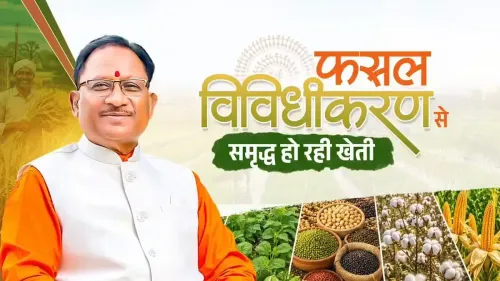
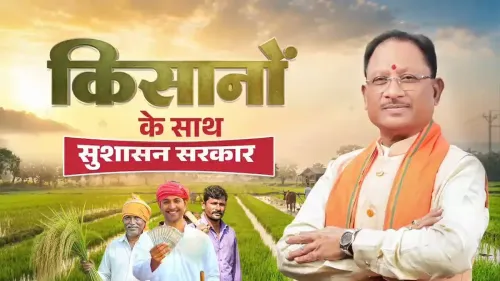
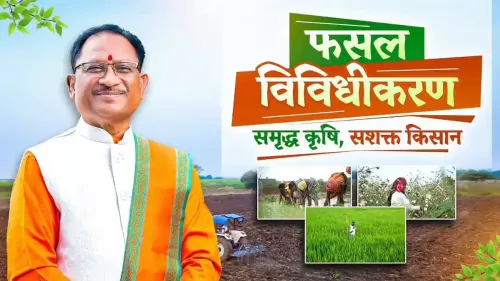
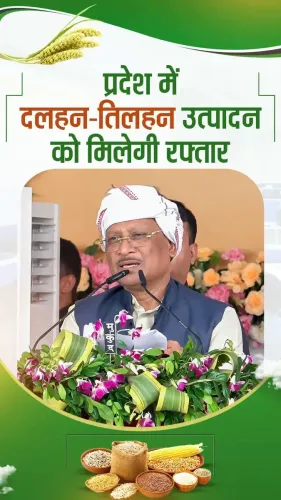
Chhattisgarh Chief Minister Vishnu Deo Sai announced on Sunday, 7 June 2026, that his government is actively promoting crop diversification to raise farmer incomes, offering a financial incentive of up to Rs 11,000 per acre to farmers who shift away from paddy cultivation to alternative crops.
Context
In his post on X, CM Sai wrote, 'सुशासन सरकार किसानों के लिए खोल रही है खेती की नई संभावनाओं के द्वार' ('The good-governance government is opening new doors of agricultural possibility for farmers'). He stated that the government is encouraging cultivation of pulses, oilseeds, kodo-kutki, ragi, maize, and cotton alongside paddy. Farmers who adopt crops other than paddy are being provided an economic incentive of up to Rs 11,000 per acre.
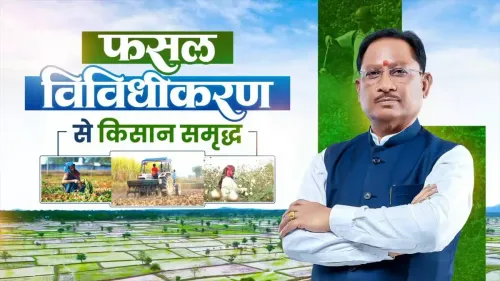
The Chief Minister described the initiative as central to increasing farmer incomes, preserving soil fertility, and making Chhattisgarh's agriculture more prosperous, sustainable, and profitable.
Policy Backdrop
Chhattisgarh has long been identified as a paddy-dominant state, with its agrarian economy heavily reliant on rice cultivation — particularly among small, marginal, and tribal farming communities in the Bastar and Surguja regions. Successive state and central governments have sought to reduce this dependence to address soil degradation, groundwater stress, and vulnerability to monsoon variability.
The central National Food Security Mission, active in Chhattisgarh since 2007, has funded state-level programmes for pulses and oilseeds expansion. India's leadership of the UN International Year of Millets in 2023 gave fresh momentum to the promotion of coarse cereals such as ragi, kodo, and kutki — crops that are nutritionally rich, climate-resilient, and traditionally grown by tribal communities in the state. The current incentive-based approach aligns with both central policy objectives and local agricultural realities.
The previous state government had introduced the Rajiv Gandhi Kisan Nyay Yojana in 2019, which provided per-acre income support primarily linked to paddy procurement. The Sai administration's diversification incentive represents a deliberate policy pivot — redirecting financial support toward encouraging farmers to move beyond paddy rather than deepening dependence on it.
Stakeholders and Impact
The primary beneficiaries are small and marginal farmers and tribal cultivators who form the backbone of Chhattisgarh's rural economy. For these communities, paddy has historically been the default crop due to assured government procurement; the Rs 11,000 per-acre incentive is designed to make alternative crops financially competitive.
Crop diversification also carries broader ecological benefits. Rotating or replacing paddy with pulses and oilseeds can restore soil nitrogen levels and reduce the water intensity of cultivation. Cotton and maize open additional market linkages, potentially connecting smallholders to agro-processing supply chains. For the state exchequer, a shift away from paddy can ease pressure on procurement and storage logistics.
What's Next
Kharif 2026 sowing data from the state agriculture department will be the first measurable indicator of how widely farmers are adopting the scheme. Analysts and opposition legislators are likely to seek details on farmer registration numbers, disbursement figures, and the administrative mechanism for verifying crop switching at the field level.
Any revision to the incentive amount in the next state budget, or an expansion of the eligible crop list, will signal whether the government intends to scale the programme further. The initiative's long-term credibility will depend on transparent reporting of outcomes — particularly in tribal-majority districts where agricultural extension infrastructure remains thin.
Point of View
The BJP government is attempting to make the economics of diversification tangible for smallholders who have little margin for experimentation. The move also lets the administration draw a visible policy contrast with the previous government's Rajiv Gandhi Kisan Nyay Yojana, which was seen as reinforcing paddy dependence. The real test will come in the kharif season — whether the incentive is large enough and the delivery mechanism reliable enough to shift behaviour on the ground.
NationPress
19 Sept 2026
Frequently Asked Questions
What is the Chhattisgarh crop diversification incentive announced by CM Sai?
The Chhattisgarh government is offering up to Rs 11,000 per acre to farmers who shift from paddy cultivation to alternative crops such as pulses, oilseeds, kodo-kutki, ragi, maize, and cotton, as announced by Chief Minister Vishnu Deo Sai on 7 June 2026.
Which crops are eligible under Chhattisgarh's crop diversification scheme?
Eligible crops include pulses (dahan), oilseeds (tilhan), kodo, kutki, ragi, maize, and cotton. Farmers who adopt any of these in place of paddy qualify for the per-acre financial incentive.
How does CM Sai's scheme differ from the Rajiv Gandhi Kisan Nyay Yojana?
The Rajiv Gandhi Kisan Nyay Yojana, launched in 2019, provided income support primarily linked to paddy procurement, reinforcing rice cultivation. CM Sai's scheme redirects incentives toward farmers who move away from paddy, making diversification financially attractive.
Why is Chhattisgarh promoting crop diversification?
Chhattisgarh's heavy reliance on paddy has contributed to soil degradation, groundwater stress, and vulnerability to monsoon variability. Diversifying into pulses, oilseeds, and millets is intended to restore soil fertility, reduce water use, and raise farmer incomes through better market linkages.
What is kodo-kutki farming and why is it significant in Chhattisgarh?
Kodo and kutki are minor millets traditionally cultivated by tribal communities in Chhattisgarh's Bastar and Surguja regions. They are climate-resilient, nutritionally rich, and require less water than paddy, making them central to both the state's diversification agenda and India's broader millet promotion drive.