CM Sai Govt Offers Rs 11,000/Acre to Diversify Crops
Synopsis
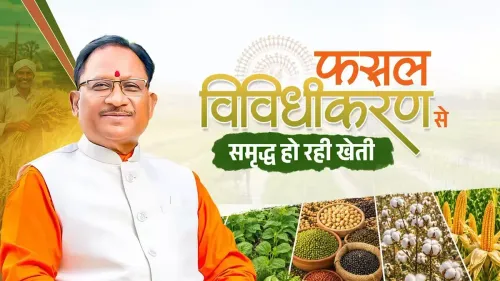
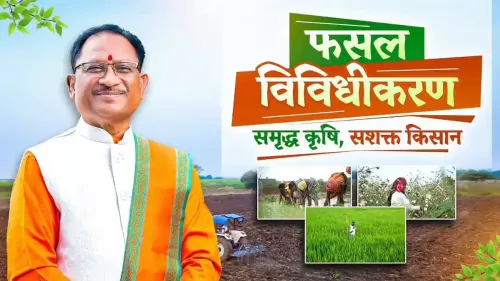
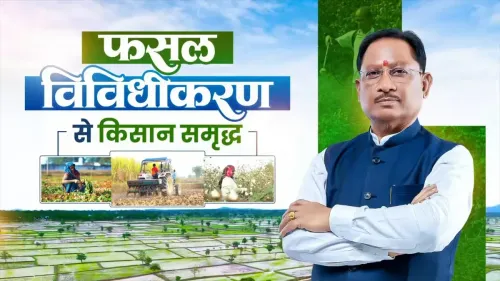
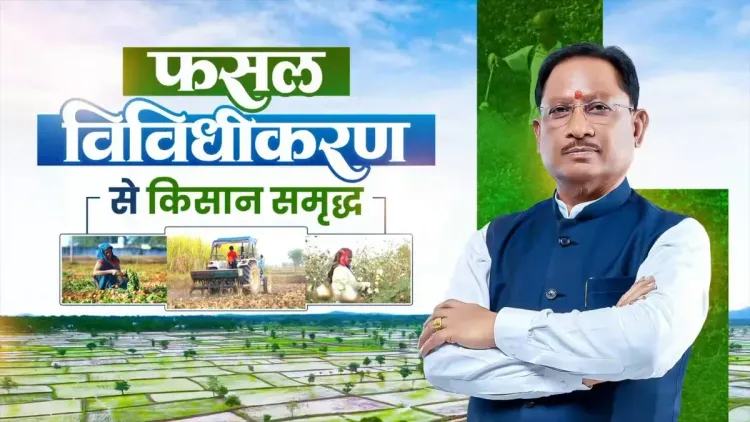
The Chhattisgarh government under CM Vishnu Deo Sai is offering farmers up to Rs 11,000 per acre to grow alternative crops — pulses, oilseeds, kodo, kutki, ragi, maize, and cotton — instead of paddy, aiming to raise incomes and improve soil sustainability.
Key Takeaways
The Vishnu Deo Sai government in Chhattisgarh is providing a financial incentive of up to Rs 11,000 per acre to farmers who shift away from paddy cultivation.
Promoted alternative crops include pulses, oilseeds, kodo, kutki, ragi, maize, and cotton .
The scheme aims to raise farmer incomes, maintain soil fertility, and make Chhattisgarh agriculture more sustainable and profitable.
The initiative aligns with national momentum behind millet promotion, including India's push during the International Year of Millets 2023 .
Small and marginal farmers — the majority of Chhattisgarh's agricultural workforce — are the primary target beneficiaries.
Actual impact will depend on farmer enrolment and area diverted from paddy during the upcoming kharif season.
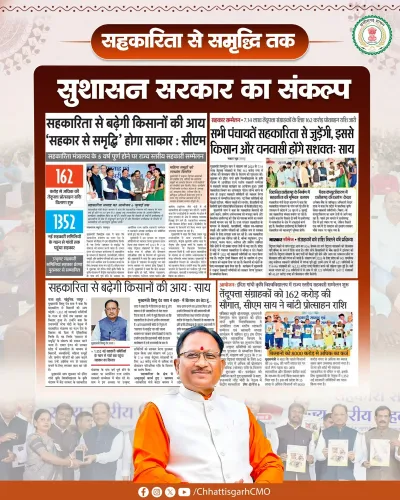
The Chief Minister's Office of Chhattisgarh announced on Sunday, June 7, 2026 that the Vishnu Deo Sai government is offering farmers a financial incentive of up to Rs 11,000 per acre to shift away from paddy cultivation toward alternative crops, framing the initiative as a cornerstone of its agricultural welfare agenda.
Context
The official post, shared in Hindi, states: 'Sushasan sarkar kisanon ke liye khol rahi hai kheti ki nayi sambhavanaon ke dwar' ('The good-governance government is opening new possibilities for farmers in agriculture'). It identifies a specific list of promoted crops — pulses, oilseeds, kodo, kutki, ragi, maize, and cotton — as viable alternatives to the state's dominant paddy monoculture. The incentive of up to Rs 11,000 per acre is directed at any farmer who adopts one or more of these alternatives in place of paddy.
Chhattisgarh is one of India's major rice-producing states, with a largely agrarian economy and a significant tribal farming population whose livelihoods have long been tied to paddy. The government's stated goals for the scheme are threefold: raise farmer incomes, preserve soil fertility, and make the state's agriculture more sustainable and profitable over the long term.
Policy Backdrop
The push for crop diversification in Chhattisgarh is consistent with a broader national agricultural policy direction that has sought to reduce dependence on water-intensive paddy and wheat monocultures, particularly across central and eastern India. The Government of India designated 2023 as the International Year of Millets, lending institutional momentum to the promotion of nutri-cereals such as ragi, kodo, and kutki — all of which feature in the Sai government's incentive list.
The previous Chhattisgarh government had also attempted to address farmer income through direct benefit transfers under a crop-support scheme, reflecting a continuity of intent across administrations even as the specific instruments differ. The current incentive-per-acre model represents the BJP government's chosen mechanism to make diversification economically attractive at the farm level rather than relying solely on advisory outreach.
Stakeholders and Impact
The primary beneficiaries are Chhattisgarh's small and marginal farmers, who typically cultivate one to three acres and have historically defaulted to paddy because of established procurement infrastructure and minimum support price guarantees. For these cultivators, an additional Rs 11,000 per acre in direct incentive can meaningfully offset the perceived income risk of switching to a less-familiar crop with thinner local market linkages.
Beyond individual incomes, the scheme carries implications for soil health across the state's agricultural belt. Continuous paddy cultivation depletes soil nutrients and stresses groundwater reserves; rotating with pulses and oilseeds can restore nitrogen levels and reduce irrigation demand. The inclusion of kodo and kutki — traditional millets cultivated by tribal communities in Chhattisgarh's upland areas — also signals an effort to revive indigenous crop systems alongside mainstream diversification.
What's Next
The practical test for the initiative will come during the upcoming kharif sowing season, when farmers make their cropping decisions. Key metrics to watch include farmer enrolment numbers, the total area shifted away from paddy, and whether disbursements of the Rs 11,000 per acre incentive are linked to any central government schemes on sustainable agriculture. Any supplementary budget allocation or convergence with national missions for soil health and millet promotion would signal the government's longer-term commitment to the programme.
If enrolment is substantial, the scheme could position Chhattisgarh as a model for other rice-belt states grappling with the twin pressures of farmer income stress and agricultural sustainability — a policy outcome the Vishnu Deo Sai government would likely highlight ahead of future electoral cycles.
Point of View
The BJP administration is simultaneously pursuing an agrarian welfare narrative and a cultural-identity signal to Chhattisgarh's large tribal electorate. The scheme fits squarely within a broader arc of central and state-level policy that has tried, with mixed results, to wean the rice belt off paddy monoculture — a challenge that cash incentives alone have historically not resolved without parallel investment in market linkages for alternative crops. Whether the programme achieves durable diversification or remains a seasonal subsidy will hinge on what the government builds around it in terms of procurement, processing, and extension support.
NationPress
21 Oct 2026
Frequently Asked Questions
What is the Chhattisgarh government's crop diversification incentive?
The Chhattisgarh government under CM Vishnu Deo Sai is offering farmers up to Rs 11,000 per acre as a financial incentive to grow alternative crops — such as pulses, oilseeds, ragi, kodo, kutki, maize, and cotton — instead of paddy.
Which crops are promoted under Chhattisgarh's diversification scheme?
The scheme promotes pulses, oilseeds, kodo, kutki, ragi, maize, and cotton as alternatives to the state's dominant paddy cultivation.
Who benefits from the Rs 11,000 per acre incentive in Chhattisgarh?
Any farmer in Chhattisgarh who adopts an alternative crop in place of paddy is eligible for the incentive, with small and marginal cultivators being the primary target group.
Why is Chhattisgarh promoting crop diversification?
The government says the initiative is aimed at raising farmer incomes, preserving soil fertility, and making the state's agriculture more sustainable and profitable in the long run.
How does Chhattisgarh's crop scheme relate to national millet policy?
The scheme aligns with the Government of India's push for millet cultivation, which gained momentum when India designated 2023 as the International Year of Millets, encouraging states to promote nutri-cereals like ragi, kodo, and kutki.