CM Sai Announces Rs 15,000 Input Aid for Pulses, Oilseeds in Chhattisgarh
Synopsis
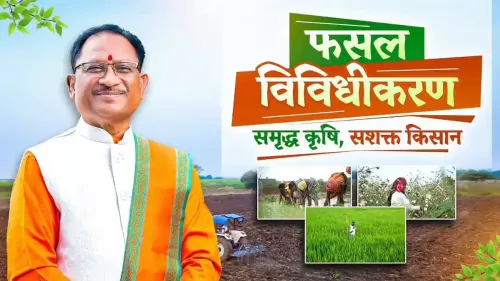
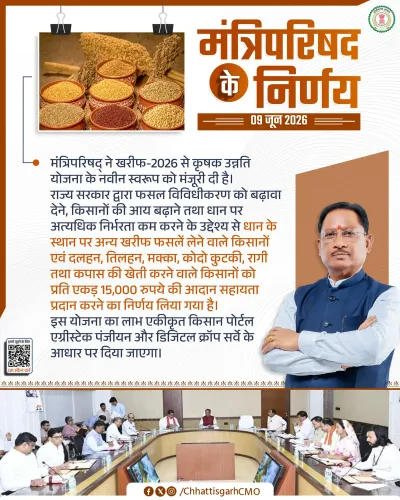
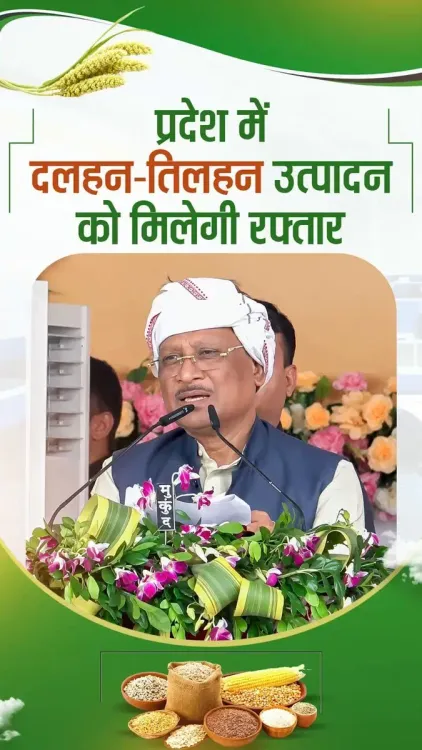
Chief Minister Vishnu Dev Sai has announced Rs 15,000 per acre in input assistance for pulse, oilseed, maize, and millet farmers in Chhattisgarh, alongside the selection of three state districts under the PM Dhanya-Dhaanya Yojana, aiming to cut import dependence and boost farmer incomes ahead of kharif 2026.
Key Takeaways
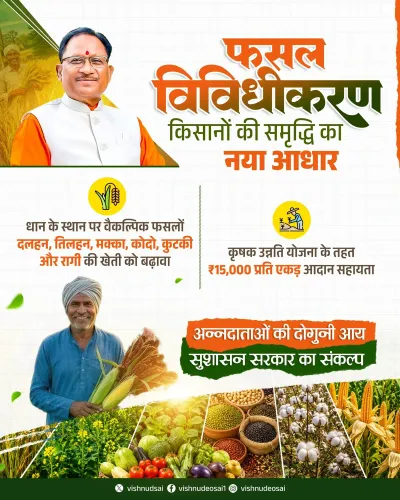
The Chhattisgarh government will provide Rs 15,000 per acre as input assistance for farmers growing pulses, oilseeds, maize, kodo, and kutki.
Three districts in Chhattisgarh have been selected under the PM Dhanya-Dhaanya Yojana ; their names have not yet been officially disclosed.
The announcement was made by CM Vishnu Dev Sai at a Kisan Sammelan in Rajnandgaon on 22 June 2026 .
The scheme targets coarse cereals such as kodo-kutki, which are nutritionally rich and climate-resilient crops central to tribal farming in the state.
The move aligns with the national Atmanirbhar Bharat goal of reducing dependence on imported pulses and edible oils.
The real-world impact will hinge on timely disbursal of funds ahead of the upcoming kharif sowing season .
The Chief Minister's Office of Chhattisgarh, quoting Chief Minister Vishnu Dev Sai, announced on Monday, 22 June 2026 that the state government has decided to provide an input assistance of Rs 15,000 per acre for crops including pulses, oilseeds, maize, and the coarse millets kodo and kutki. The announcement also confirmed the selection of three districts in Chhattisgarh under the PM Dhanya-Dhaanya Yojana, a centrally sponsored scheme aimed at boosting agricultural productivity at the district level.
Context
Speaking at what the post tagged as a Kisan Sammelan (farmers' conclave) in Rajnandgaon, CM Sai declared: 'Dalhan-tilhan utpadan badhane ke liye hamari sarkar pratibaddh hai' — 'Our government is committed to increasing the production of pulses and oilseeds.' The statement signals a deliberate push to diversify Chhattisgarh's cropping pattern beyond paddy, which has long dominated the state's agricultural landscape.
The input assistance of Rs 15,000 is earmarked for farmers growing pulses (dalhan), oilseeds (tilhan), maize (makka), and the traditional coarse cereals kodo and kutki — crops that are nutritionally rich, climate-resilient, and central to the food systems of tribal communities across central India. The government framed the measure as a step toward 'new strength for farmers' prosperity.'
Policy Backdrop
The PM Dhanya-Dhaanya Yojana is a centrally sponsored scheme designed to target districts with significant yield gaps in food crops, channelling focused resources to lift production. The selection of three Chhattisgarh districts under this scheme places the state within a national grid of priority agricultural zones, though the specific names of the selected districts were not disclosed in the official post.
The move aligns with the broader Atmanirbhar Bharat framework, under which both the central and state governments have sought to reduce India's dependence on imported pulses and edible oils — two commodity categories where the country has historically run large import bills. Chhattisgarh's rainfed and tribal farming belts are considered well-suited for pulse and oilseed cultivation, as well as for coarse cereals that require less water and fewer inputs than paddy.
The state's emphasis on kodo-kutki also resonates with the legacy of the 2023 International Year of Millets, which prompted several state governments to mainstream coarse cereals into procurement and support frameworks. Chhattisgarh's state budgets from 2023 onwards had already included millet-promotion measures, making the current announcement an extension of that policy trajectory.
Stakeholders and Impact
The primary beneficiaries are pulse and oilseed farmers across Chhattisgarh, particularly smallholders and tribal cultivators in rainfed districts who grow kodo-kutki as a subsistence crop. An input subsidy of Rs 15,000 — covering costs such as seeds, fertilisers, and crop-protection inputs — can meaningfully lower the financial risk of switching from paddy to these alternative crops.
At the district level, the inclusion of areas under the PM Dhanya-Dhaanya Yojana is expected to unlock additional central government resources for extension services, seed distribution, and market linkages. Rajnandgaon, which has hosted multiple farmer outreach events and sits within Chhattisgarh's pulse-growing belt, is a district that observers have associated with such initiatives, though official confirmation of the three selected districts is awaited.
What's Next
The critical test will be the on-ground rollout of the Rs 15,000 input assistance ahead of the upcoming kharif season, when pulse and oilseed sowing decisions are made. Timely disbursal to farmer accounts — and clear eligibility criteria — will determine whether the announcement translates into an actual shift in cropping patterns.
State agricultural reports for kharif 2026 will be closely watched for any measurable uptick in area sown under pulses, oilseeds, and coarse cereals in the selected districts. The broader success of the PM Dhanya-Dhaanya Yojana in Chhattisgarh could serve as a template for other central-Indian states with similar agro-climatic profiles seeking to reduce import dependence and strengthen nutrition security.
Point of View
000 input subsidy and district-level selection under a central scheme — reflects the BJP-led Chhattisgarh government's strategy of layering state resources on top of central programmes to visibly differentiate its agricultural agenda from the previous Congress dispensation. Targeting pulses, oilseeds, and millets simultaneously addresses both India's chronic import dependence in edible oils and pulses and the nutritional needs of the state's large tribal population, giving the policy both economic and social resonance. The use of a farmers' conclave in Rajnandgaon as the announcement platform suggests deliberate political outreach in a district that has electoral significance for the ruling party. However, the absence of publicly disclosed names for the three selected districts and the operational guidelines for the PM Dhanya-Dhaanya Yojana means the announcement is still in its declaratory phase — implementation timelines will be the real measure of intent.
NationPress
21 Sept 2026
Frequently Asked Questions
What is the Rs 15,000 input assistance announced by Chhattisgarh CM Vishnu Dev Sai?
The Chhattisgarh government has announced an input assistance of Rs 15,000 per acre for farmers cultivating pulses, oilseeds, maize, and the coarse millets kodo and kutki, aimed at encouraging diversification away from paddy and boosting production of these crops.
What is the PM Dhanya-Dhaanya Yojana and why are three Chhattisgarh districts selected?
The PM Dhanya-Dhaanya Yojana is a centrally sponsored scheme that targets districts with significant food-crop yield gaps, channelling focused support for seeds, extension services, and market linkages. Three Chhattisgarh districts have been selected under the scheme to accelerate production growth, though their names have not yet been officially announced.
Which crops are covered under the Chhattisgarh input subsidy scheme?
The scheme covers pulses (dalhan), oilseeds (tilhan), maize (makka), and the traditional coarse cereals kodo and kutki, all of which are important for both food security and the livelihoods of tribal farming communities in Chhattisgarh.
What is kodo-kutki and why is it significant for Chhattisgarh farmers?
Kodo and kutki are indigenous coarse millets grown primarily by tribal communities in central India. They require less water and fewer chemical inputs than paddy, making them climate-resilient, and they are nutritionally dense, making their promotion a food-security priority for the state.
When will Chhattisgarh farmers receive the Rs 15,000 input assistance?
The government has announced the decision but has not yet publicly specified the exact disbursal timeline. The rollout is expected ahead of the kharif 2026 sowing season, and farmers should watch for official state agricultural department notifications for eligibility and application details.