CM Chhattisgarh Runs Night Health Camps in Sukma, Bastar
Synopsis
The Chhattisgarh CMO announced that night health camps under the Mukhyamantri Swasth Bastar Abhiyan are reaching remote villages in Sukma, with over 2 lakh screenings completed. Free diagnostics, medicines, and ambulance services are now accessible in areas once dominated by Naxalite insurgency.
Key Takeaways
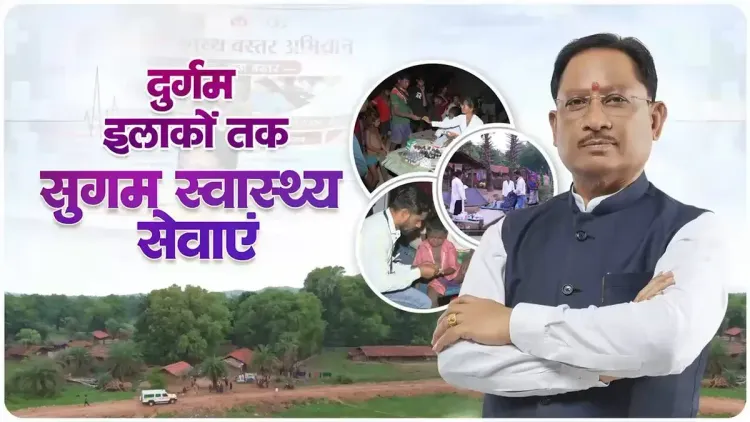
Night health camps are being held at Kondasanwali, Sukma under the Mukhyamantri Swasth Bastar Abhiyan .
More than 2 lakh people have been screened under the campaign so far, according to the CMO's office.
Services include diagnostics, free medicines, free ambulance linkages, and on-site health worker support.
Sukma is among the districts in Bastar division most affected by Left-Wing Extremism, making service delivery historically difficult.
The campaign is part of a longer state strategy linking security stabilisation with accelerated welfare delivery in former conflict zones.
The CMO framed the initiative as evidence of Bastar 's transition from insurgency-era fear to trust and development.
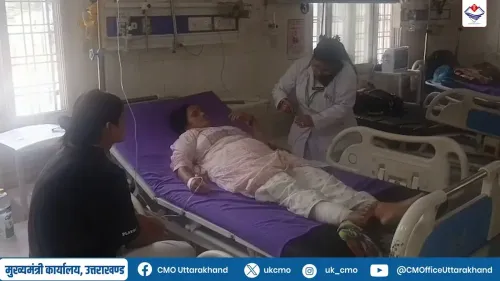
The Chief Minister's Office of Chhattisgarh announced on Monday, 25 May 2026 that night health camps are being conducted at Kondasanwali, Sukma under the Mukhyamantri Swasth Bastar Abhiyan, extending medical services to remote villages across the Bastar division. The office stated that more than 2 lakh people have been screened so far under the campaign.
Context
The post, written in Hindi, states: 'Mukhyamantri Swasth Bastar Abhiyan ke tahat Sukma ke Kondasanwali mein night health camp lagakar swasth sevaen gaon-gaon tak pahunchai ja rahi hain' — 'Under the Chief Minister's Healthy Bastar Campaign, night health camps are being organised at Kondasanwali in Sukma to bring health services to every village.' The CMO added that diagnostics, medicines, free ambulance services, and health worker support are now accessible even in the most remote pockets of the region. The campaign's stated milestone of over 2 lakh health screenings marks a significant operational scale for a region that has historically struggled with basic service delivery.
Policy Backdrop
Bastar division, comprising seven districts including Sukma, has for decades been among the areas most severely affected by Left-Wing Extremism in India. Chhattisgarh has operated mobile medical units and haat-bazaar clinics in LWE-affected blocks since the mid-2000s under the National Rural Health Mission framework. After intensified security operations in the region between 2010 and 2018, the state government introduced dedicated development packages that linked improved access to welfare services with reduced insurgent influence — a model also adopted by neighbouring states such as Jharkhand and Odisha.
The Mukhyamantri Swasth Bastar Abhiyan represents a continuation and deepening of that approach. Night-time camps are a deliberate adaptation to local terrain and the practical constraints of reaching dispersed tribal settlements, where daytime access can be limited by both geography and historical distrust of government presence.
Stakeholders and Impact
The primary beneficiaries are tribal villagers in remote hamlets across Bastar, communities that have long faced acute shortages of qualified health workers, diagnostic facilities, and reliable emergency transport. Free ambulance linkages address a critical gap: in districts such as Sukma, the absence of motorable roads to health centres has historically meant that medical emergencies went untreated. The CMO's post frames the shift in evocative terms — 'Kabhi Naxali dahashat ke saaye mein jeene wala Bastar aaj bharose, vikas aur janseva ki nayi pahchan banta dikh raha hai' — 'Bastar, which once lived under the shadow of Naxalite terror, is today emerging as a new symbol of trust, development, and public service.'
Health workers deployed through the campaign are also building routine contact with communities that state agencies previously could not reach consistently, creating a foundation for follow-up care and disease surveillance in areas with limited baseline health data.
What's Next
Observers will watch whether the campaign expands to other districts within Bastar division beyond Sukma, and whether the screening data feeds into referral pathways under Ayushman Bharat or state insurance schemes. Health outcome surveys from the region — tracking indicators such as maternal mortality, child immunisation rates, and communicable disease burden — will be the longer-term measure of whether the campaign's reach translates into durable improvements. The broader pattern across India's LWE-affected states suggests that sustained welfare delivery, rather than episodic camps alone, is what consolidates the state's presence and credibility in formerly inaccessible communities.
Point of View
Positioning welfare delivery as the proof of governance rather than security metrics alone. Whether the screening numbers translate into improved health outcomes will depend on whether referral chains and follow-up care are in place — a question the campaign's current communications do not yet address.
NationPress
24 Sept 2026
Frequently Asked Questions
What is the Mukhyamantri Swasth Bastar Abhiyan?
The Mukhyamantri Swasth Bastar Abhiyan is a state health outreach programme run by the Government of Chhattisgarh that deploys mobile camps, diagnostics, free medicines, and ambulance services to remote and tribal villages in the Bastar division.
Where is Kondasanwali and why is it significant?
Kondasanwali is a village in Sukma district, southern Chhattisgarh, located in a part of Bastar division that has historically seen high Left-Wing Extremist activity and limited access to government health services.
How many people have been screened under the Bastar health campaign?
According to the Chief Minister's Office of Chhattisgarh, more than 2 lakh people have been screened under the Mukhyamantri Swasth Bastar Abhiyan as of 25 May 2026.
Why are night health camps held in Bastar?
Night camps are an adaptation to the terrain and security constraints of remote Bastar villages, where daytime access can be difficult and communities have historically been hard to reach through conventional health infrastructure.
Is Bastar still affected by Naxalism?
Bastar division, including Sukma district, has been one of India's most significant Left-Wing Extremism zones for decades. Security operations have reduced insurgent activity in several areas, and the state government has simultaneously stepped up welfare delivery to establish a stronger civilian presence.