CM Sai: 95% Health Screenings Done in Bastar Drive
Synopsis
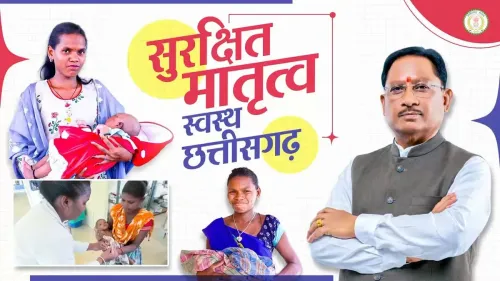
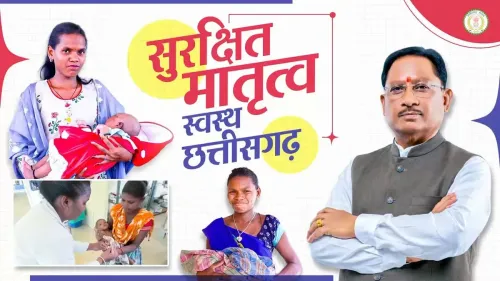
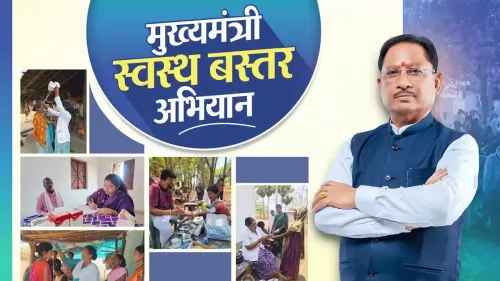
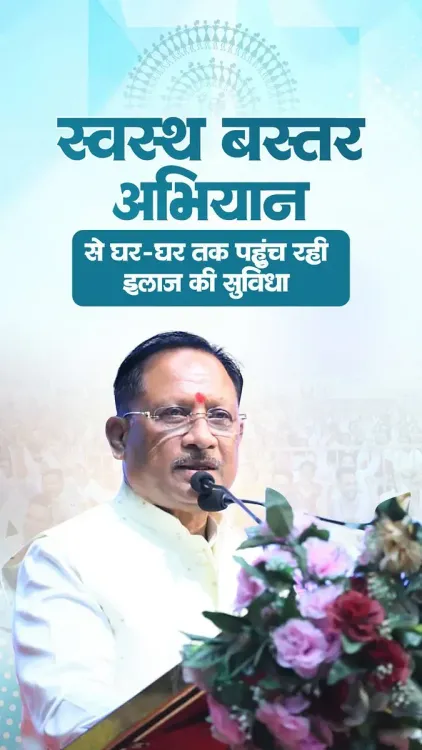
Chhattisgarh CM Vishnu Deo Sai announced that the Mukhyamantri Swasth Bastar Abhiyan has completed door-to-door health screenings for approximately 95 percent of the population across Bastar's villages, reaffirming the state's commitment to last-mile health delivery in the tribal belt.
Key Takeaways
Chhattisgarh CM Vishnu Deo Sai announced the update on 13 June 2026 via his official X account.
The Mukhyamantri Swasth Bastar Abhiyan has achieved approximately 95 percent health screening coverage across villages in the Bastar region.
Health department teams are conducting door-to-door examinations, targeting every individual in the tribal division.
The campaign aims to reach the 'last person in the forest areas' ( वनांचल के अंतिम व्यक्ति ), addressing historically limited healthcare access in Bastar .
The drive builds on the National Health Mission (2005) and Ayushman Bharat (2018) framework, extending the state's tribal-welfare health mandate.
District-wise outcome data and possible replication in Surguja division are the next milestones to watch.
Chhattisgarh Chief Minister Vishnu Deo Sai announced on Saturday, 13 June 2026 that door-to-door health screenings under the Mukhyamantri Swasth Bastar Abhiyan have covered approximately 95 percent of the population across villages in the Bastar region, with health department teams continuing to reach every individual in the tribal belt.
Context
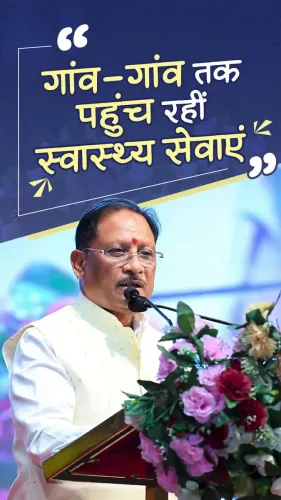
Posting in Hindi, CM Sai stated: 'बस्तर क्षेत्र में मुख्यमंत्री स्वस्थ बस्तर अभियान के तहत स्वास्थ्य विभाग की टीम गांव-गांव पहुंचकर प्रत्येक व्यक्ति का स्वास्थ्य परीक्षण कर रही है' ['Under the Mukhyamantri Swasth Bastar Abhiyan in the Bastar region, the health department team is reaching village by village and conducting health examinations of every individual']. He added that the state remains 'continuously committed to delivering better health services to the last person in the forest areas' (वनांचल के अंतिम व्यक्ति तक).
Bastar is a seven-district tribal division in southern Chhattisgarh characterised by dense forests, a large indigenous population, and historically limited access to fixed public health facilities. Reaching dispersed hamlets in this terrain has long posed a logistical challenge for successive state administrations.
Policy Backdrop
The Mukhyamantri Swasth Bastar Abhiyan is a state-government initiative deploying mobile health teams to screen residents at their doorsteps — a model that builds on the foundation laid by the National Health Mission (NHM), operational since 2005, which supports rural and tribal health outreach infrastructure across states including Chhattisgarh.
The broader national framework includes Ayushman Bharat Pradhan Mantri Jan Arogya Yojana, rolled out in 2018, which extends hospitalisation cover to low-income households. Since Chhattisgarh's formation in 2000, dedicated tribal-welfare health policies have been a recurring feature of state governance, given the large Scheduled Tribe population concentrated in divisions such as Bastar and Surguja.
Both BJP and Congress administrations in the state have framed time-bound mobile screening campaigns as instruments to close human-development gaps in Left-Wing-Extremism-affected pockets where permanent facilities remain sparse.
Stakeholders and Impact
The primary beneficiaries are tribal communities spread across Bastar's villages, many of whom face geographical and socioeconomic barriers to accessing conventional outpatient care. Rural health workers — including ASHAs, auxiliary nurse-midwives, and district health teams — are the operational backbone of the drive.
A coverage figure of approximately 95 percent of the local population, if sustained and independently verified, would represent a significant last-mile outreach milestone for a region historically under-served by the public health system. The screenings are designed to identify undetected conditions early and connect residents with referral and treatment pathways.
What's Next
Attention will now turn to district-wise disease-burden data and immunisation coverage figures for Bastar in the coming months, which will indicate whether the screening drive translates into measurable health outcomes. Officials and observers will also watch whether the model is replicated in other tribal divisions of Chhattisgarh, such as Surguja. The completion of the remaining screenings and the subsequent referral and treatment pipeline will be the next key operational milestones for the Sai government.
Point of View
Invoking the politically resonant language of reaching the 'last person' in the forest — a framing that echoes the BJP's broader 'Antyodaya' welfare narrative. Reporting a near-complete screening figure before the campaign formally concludes is a calculated signal to tribal constituencies ahead of any future electoral cycle in a region that has historically been a swing factor in Chhattisgarh politics. The drive also fits a longer pattern in which both major state parties have used time-bound health missions to demonstrate administrative reach in Left-Wing-Extremism-affected Bastar, where visible state presence carries political weight beyond the health domain. Independent verification of the 95 percent figure and downstream treatment outcomes will ultimately determine whether the campaign is remembered as a substantive intervention or a well-publicised screening exercise.
NationPress
19 Sept 2026
Frequently Asked Questions
What is the Mukhyamantri Swasth Bastar Abhiyan?
The Mukhyamantri Swasth Bastar Abhiyan is a Chhattisgarh state government door-to-door health screening campaign that deploys health department teams to examine residents village by village across the Bastar tribal region.
How much of Bastar has been covered under the health screening drive?
According to CM Vishnu Deo Sai, approximately 95 percent of the population in the Bastar region has been screened under the Mukhyamantri Swasth Bastar Abhiyan as of 13 June 2026.
Why is Bastar targeted for a special health campaign?
Bastar is a seven-district tribal division in southern Chhattisgarh with dense forests and a large indigenous population that has historically had limited access to fixed public health facilities, making door-to-door outreach essential.
How does the Mukhyamantri Swasth Bastar Abhiyan relate to central health schemes?
The state campaign builds on the National Health Mission (2005), which supports rural and tribal health infrastructure, and complements Ayushman Bharat (2018), which provides hospitalisation cover to low-income households across India.
What happens after the health screenings in Bastar are completed?
After screenings, residents identified with health conditions are expected to be connected to referral and treatment pathways; district-wise disease-burden and immunisation data in coming months will indicate the campaign's broader health impact.