CM Sai Shares Shah Quote on 70 Naxal Camps Turned Service Centres
Synopsis
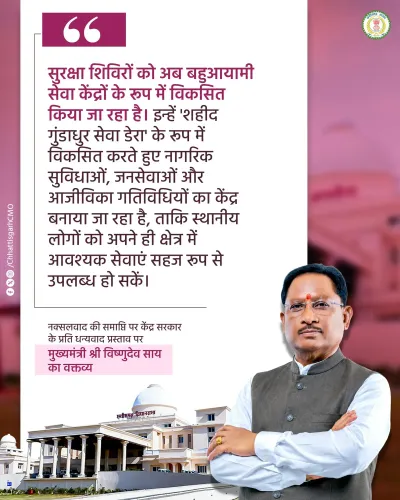
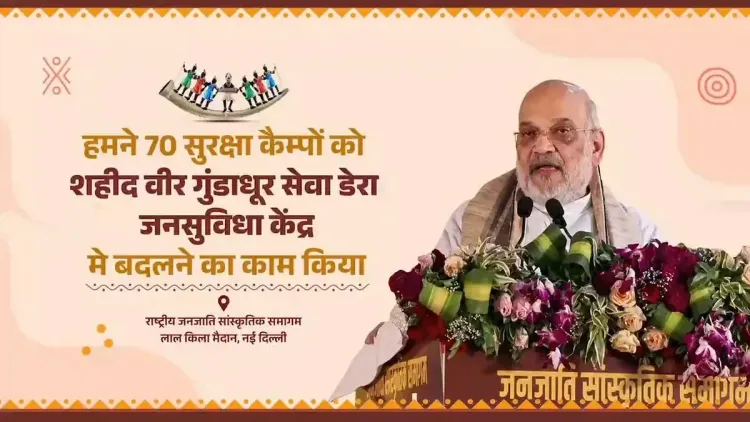
Chhattisgarh CM Vishnu Deo Sai amplified a statement by Home Minister Amit Shah announcing that 70 former security force camps in Naxal-hit areas have been renamed and repurposed as 'Shaheed Veer Gundadhur' civilian service centres under PM Modi's government.
Key Takeaways
70 former security force camps in Naxal-affected areas of Chhattisgarh are being converted into civilian service centres.
The centres are named 'Shaheed Veer Gundadhur Seva, Sadbhavana evam Jan Suvidha Kendra' after the 1910 tribal rebellion leader.
The announcement was attributed to Union Home Minister Amit Shah and shared by CM Vishnu Deo Sai on 24 May 2026.
The move is framed as part of PM Narendra Modi 's combined security-plus-development approach to Left Wing Extremism.
Similar transitions from military to civilian infrastructure have been reported in Jharkhand and Odisha .
The Ministry of Home Affairs has recorded declining LWE-related incidents since 2014 , enabling this infrastructural pivot.
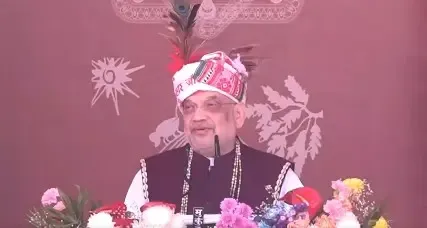
Chhattisgarh Chief Minister Vishnu Deo Sai on Sunday, 24 May 2026, shared a statement by Union Home Minister Amit Shah highlighting the conversion of 70 former security force camps in Naxal-affected areas into civilian service centres named after tribal icon Veer Gundadhur.
Context
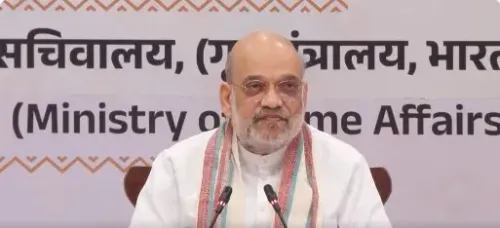
The post quotes Amit Shah, Union Minister of Home Affairs and Cooperation, as saying: 'एक समय था जब नक्सलवाद से लड़ने के लिए हमारे सुरक्षा बलों के कैंप स्थापित किए गए थे' ('There was a time when camps of our security forces were established to fight Naxalism'). Shah added that under Prime Minister Narendra Modi's leadership, those same 70 camps have now been converted into 'Shaheed Veer Gundadhur Seva, Sadbhavana evam Jan Suvidha Kendras' — or Martyr Veer Gundadhur Service, Goodwill and Public Facility Centres.
Chief Minister Sai's decision to amplify this statement underscores the BJP-led state government's alignment with the Centre's framing of anti-Naxal gains as a development dividend for Chhattisgarh's tribal heartland.
Policy Backdrop
Security forces established forward bases across Bastar and surrounding districts during the 2000s and early 2010s as part of intensified counter-insurgency operations. The Union Ministry of Home Affairs formalised a multi-pronged approach through the SAMADHAN strategy from 2017 onward, combining security operations with infrastructure investment and local governance outreach.
Parallel to this, the Road Connectivity Project for Left Wing Extremism Affected Areas, approved in 2016, aimed to open formerly inaccessible Naxal zones in Chhattisgarh and neighbouring states to roads and public services. The naming of the new centres after Veer Gundadhur — the tribal leader who led the 1910 Bhumkal rebellion against British colonial rule — is a deliberate invocation of local history to build legitimacy in Scheduled Tribe-dominated districts.
Stakeholders and Impact
The primary beneficiaries are tribal communities in Bastar and other formerly conflict-affected districts, who have historically had limited access to government services. Converting military infrastructure into civilian facilities signals a shift in the state's relationship with these communities — from a security-first posture to one that also delivers health, welfare, and administrative services at the local level.
For the security forces that once manned these camps, the transition reflects a receding threat footprint. The Ministry of Home Affairs has recorded a consistent decline in Left Wing Extremism-related incidents since 2014, a trend the ruling dispensation has cited as evidence of policy success. Similar camp-to-service-centre transitions have been undertaken in Jharkhand and Odisha.
What's Next
Attention will now turn to the operational rollout of these 70 centres — whether staffing, connectivity, and service delivery match the stated intent. District-level development data for Bastar and potential parliamentary or state assembly questions on rehabilitation spending will be early indicators of on-ground progress.
Broader LWE policy watchers will also track whether further camp conversions are announced, and whether the Veer Gundadhur branding translates into sustained community trust in areas where state presence was long associated primarily with armed operations.
Point of View
A colonial-era tribal martyr, the BJP signals cultural sensitivity alongside administrative outreach in Scheduled Tribe constituencies that are electorally significant. CM Sai's amplification of Shah's words reinforces the Centre-state coordination narrative that has been central to the BJP's Chhattisgarh pitch since the December 2023 election. The real test, however, lies in whether these 70 centres deliver measurable services — or remain symbolic rebranding exercises in districts that have long awaited substantive welfare delivery.
NationPress
26 Sept 2026
Frequently Asked Questions
What are the Veer Gundadhur Jan Suvidha Kendras in Chhattisgarh?
These are 70 former security force camps in Naxal-affected areas of Chhattisgarh that are being converted into 'Shaheed Veer Gundadhur Seva, Sadbhavana evam Jan Suvidha Kendras' — civilian service, goodwill, and public facility centres — under the central government's development push in Left Wing Extremism-hit districts.
Who is Veer Gundadhur and why are the centres named after him?
Veer Gundadhur was a tribal leader from Bastar who led the Bhumkal rebellion of 1910 against British colonial rule and is revered as a martyr in Chhattisgarh. Naming the centres after him is intended to build local legitimacy and cultural resonance in Scheduled Tribe-dominated districts.
How many Naxal camps have been converted in Chhattisgarh?
According to the statement shared by CM Vishnu Deo Sai, quoting Union Home Minister Amit Shah, 70 former security force camps have been converted into civilian service centres.
What is India's SAMADHAN strategy for Naxalism?
SAMADHAN is a multi-pronged strategy introduced by the Union Ministry of Home Affairs in 2017 to address Left Wing Extremism through a combination of security operations, infrastructure development, intelligence coordination, and local governance outreach in affected states including Chhattisgarh.
Has Naxal violence declined in Chhattisgarh?
The Ministry of Home Affairs has recorded a consistent decline in Left Wing Extremism-related incidents across India since 2014, and the conversion of security camps into civilian facilities is cited by the government as evidence of receding insurgent activity in previously affected districts.