Will Maoists Respond to Amit Shah's Call for Development?
Synopsis
In a significant address, Amit Shah urges Maoists to abandon violence and embrace development for tribal villages. With promises of rehabilitation and major projects, he envisions a transformed Bastar within five years.
Key Takeaways
Amit Shah's call for Maoists to abandon violence is a significant step towards peace.
Development projects aim to transform Bastar into a thriving region.
The government promises essential services and support for tribal farmers.
Vocational training for youth is crucial for economic growth.
Bastar's cultural heritage is valued and celebrated on a national level.
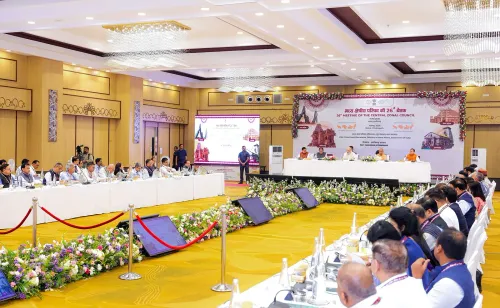
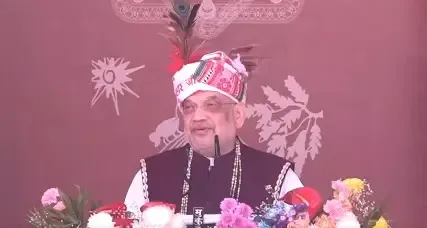
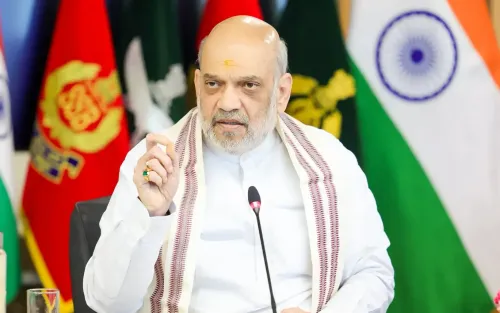
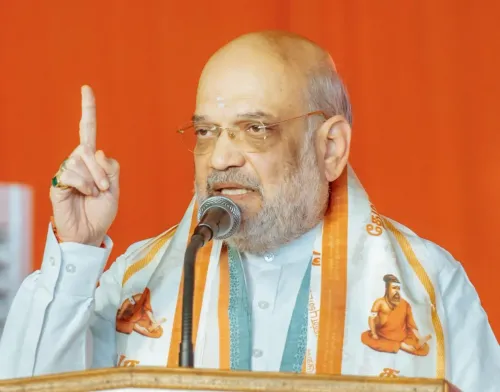
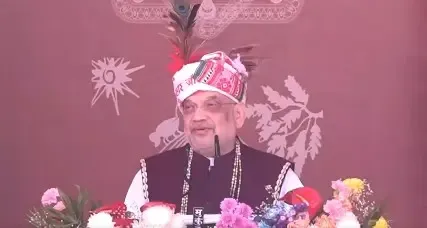
Raipur/Jagdalpur, Feb 9 (NationPress) Union Home Minister Amit Shah emphasized that the struggle against Naxalism is aimed at safeguarding the future of tribal villages rather than targeting individuals. He reiterated his plea for Maoists to abandon their weapons and integrate into the mainstream of development.
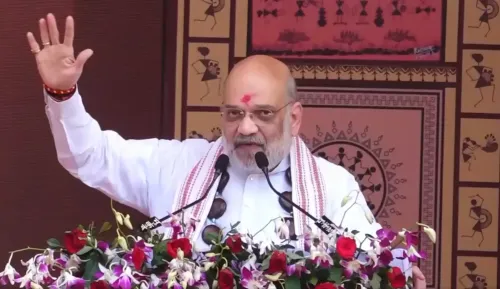
During a gathering of tribal communities in Jagdalpur, Chhattisgarh, at the conclusion of the Bastar Pandum festival, he urged those still armed to surrender, promising them dignified rehabilitation through the state’s appealing package, which has already motivated over 2,500 individuals to renounce violence. He cautioned that those who engage in planting improvised explosive devices, assaulting villages, or damaging schools will face stringent action, underscoring that violence will be met with robust resistance and highlighting that Maoism has only led to devastation.
Shah pointed out the significant changes in Bastar, asserting that the region is becoming a shining example for the nation.
Schools that had been closed for years are now reopening, and he assured that within five years, Bastar would transform into the most developed division in Chhattisgarh. By December 27, every village will have electricity, mobile connectivity, and full access to medical facilities, colleges, post offices, and other vital services, Shah announced to the large audience of tribal residents.
The government plans to procure all tribal farmers’ paddy, offer free rice, gas cylinders, and piped water, while creating new prospects such as adventure tourism, homestays, canopy walks, and glass bridges once Naxalism is eradicated.
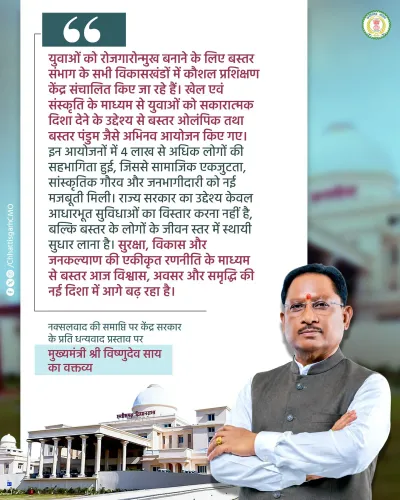
Shah unveiled several major development initiatives: a new 118-acre industrial zone, an irrigation and 120-megawatt power project on the Indravati River, the Rs 3,500-crore Raoghat-Jagdalpur rail line currently under construction, river interlinking projects, and vocational training for 90,000 youth.
He noted the remarkable transition from a curfew-like atmosphere to one filled with joy and cultural vibrancy at night, symbolizing a profound shift in Bastar’s societal landscape.
The Home Minister celebrated Bastar’s rich tribal heritage, home to communities such as the Abuj Maria, Dandami Maria, Muria, Gond, Halba, Bhatra, Dorla, Dhurwa, Parja, and Gadaba, each possessing unique languages, dances like Sur Kasar, Rela, and Ghotul, and traditions preserved through centuries.
He commended the “Bastar Pandum” festival for showcasing this culture on a national level and announced that the top-performing teams across all 12 categories would be invited to Rashtrapati Bhavan for an opportunity to present their art and dine with the President, calling it an immense honor.
HM Shah also acknowledged the sacrifices made by the security forces -- Chhattisgarh Police, DRG, CRPF, ITBP, and BSF -- in the battle against Naxalism.
He expressed heartfelt gratitude on behalf of Bastar’s tribal communities and extended condolences to the families of the fallen heroes. He expressed full confidence that Bastar would be entirely free of Naxalism within the designated timeframe.
Ending with the powerful chants of “Jai Danteshwari Mai” and “Vande Mataram,” HM Shah reaffirmed that Bastar’s genuine identity lies not in violence but in its rich art, culture, music, and heritage -- treasures that are jewels of Indian civilization.
Point of View
Amit Shah's address highlights a crucial step towards peace and development in tribal regions. The call to Maoists to abandon violence reflects a broader strategy aimed at integrating these communities into the nation's economic and cultural fabric. The emphasis on development projects indicates a commitment to long-term stability and prosperity.
NationPress
20 Sept 2026
Frequently Asked Questions
What did Amit Shah urge Maoists to do?
Amit Shah urged Maoists to lay down their arms and join the mainstream of development.
What is the government's plan for Bastar?
The government plans to transform Bastar into the most developed division in Chhattisgarh within five years, providing essential services and opportunities.
What initiatives were announced for tribal farmers?
The government will procure all tribal farmers’ paddy, provide free rice, gas cylinders, and piped water.
How many youth will receive vocational training?
Vocational training will be provided to 90,000 youth in the region.
What did Shah say about the cultural heritage of Bastar?
He highlighted Bastar's rich tribal heritage and the importance of preserving its unique culture.