CM Sai: 3,600 Naxal victims fitted with artificial limbs in Jagdalpur
Synopsis
At a Jagdalpur camp marking PM Modi's 25 years of public service, 3,600 Naxal-disabled persons received artificial limbs — over 1,570 from Bastar alone. CM Vishnu Deo Sai quoted Home Minister Amit Shah declaring Naxalism in Chhattisgarh now ended.
Key Takeaways
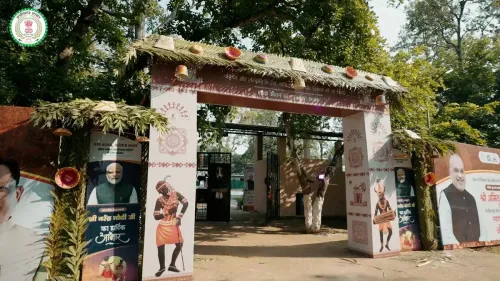
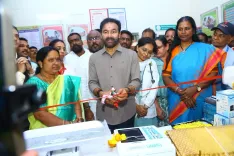
A three-day camp in Jagdalpur (5–7 October 2026) fitted 3,600 persons with disabilities — victims of Naxalite violence — with prosthetic and assistive devices.
Over 1,570 beneficiaries were from Bastar district alone, reflecting the district's severe disability toll from five decades of IED attacks.
The camp was part of programmes marking 25 years of PM Narendra Modi's public service .
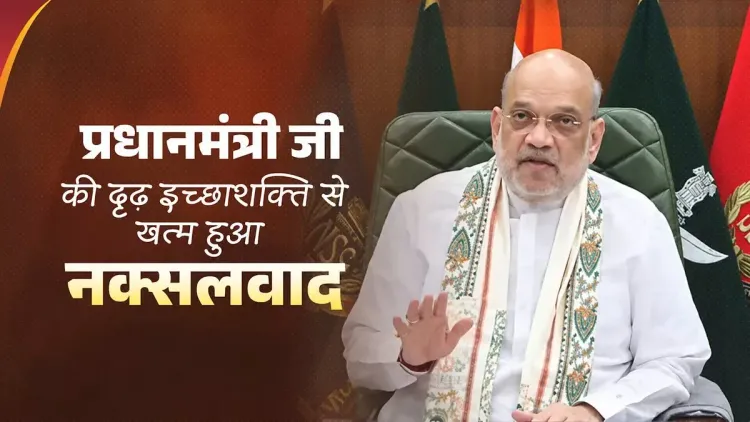
Union Home Minister Amit Shah was quoted declaring that 'Naxalism has ended' — ahead of his stated deadline of 31 March 2026 .
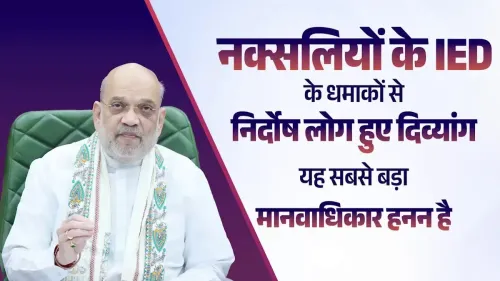
CM Vishnu Deo Sai framed IED-caused disability as 'the greatest human rights violation', linking rehabilitation to the broader counter-insurgency narrative.
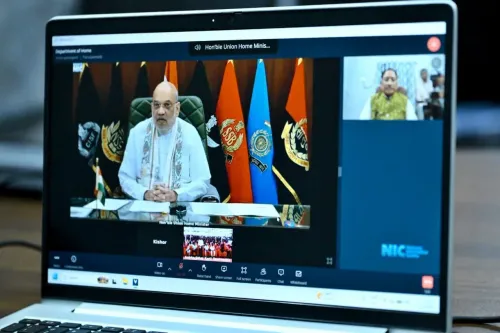
An IED blast does not just destroy a limb — it rewrites a life. In Jagdalpur, Bastar, between 5 and 7 October 2026, Chhattisgarh Chief Minister Vishnu Deo Sai flagged an effort to begin rewriting some of those lives back: a three-day camp that fitted 3,600 persons with disabilities — victims of five decades of Naxalite violence — with prosthetic and assistive devices, with over 1,570 beneficiaries from Bastar district alone.
A camp born from 25 years of Modi's public service
The Jagdalpur camp was held as part of a series of programmes marking 25 years of Prime Minister Narendra Modi's public service. Quoting Union Home Minister Amit Shah in his post, Chief Minister Sai drew a direct line from the national commemoration to the ground reality of Chhattisgarh's most wounded communities. The gesture is deliberate: linking welfare delivery to a political milestone signals that rehabilitation is now woven into the state's security-and-governance narrative, not treated as a footnote to it.
Bastar's five decades of IED wounds
The numbers from the camp tell a story that security briefings rarely do. Bastar, the sprawling forested district in southern Chhattisgarh, has been the epicentre of Naxalite activity since the movement took root in the region in the 1970s. Improvised Explosive Devices became the insurgency's signature weapon against security forces, civilians, and local administrators alike — each blast capable of severing a limb and permanently altering a family's economic fate. As CM Sai's post notes, quoting Shah: 'jab aap IED lagakar kisi ka haath ya paon uda dete hain, to isse bada manavaadhikar ka hanan koi nahin ho sakta' — 'there can be no greater violation of human rights than blowing off someone's hand or foot with an IED.'
Central and state governments have run artificial-limb camps in Naxal-affected districts as part of counter-insurgency welfare measures since the 2000s, but the scale reported at Jagdalpur — and the concentration of 1,570-plus beneficiaries from Bastar alone — underscores how deep the disability toll runs in this single district.
Shah's 31 March 2026 deadline — and the claim of closure
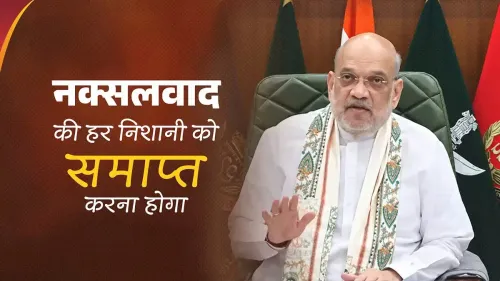
The post's most striking line is a direct quote from Amit Shah: that Prime Minister Modi had resolved to end Naxalism before 31 March 2026, and that 'today, Naxalism has ended.' The Home Minister had publicly set that deadline over recent years as security forces stepped up operations across the Abujhmad forest belt and the tri-junction of Chhattisgarh, Telangana, and Maharashtra. Whether the insurgency has been fully extinguished or substantially degraded to its lowest operational capacity in five decades is a distinction security analysts will debate — but the political declaration, made by the country's top law-enforcement minister, is itself consequential.
CM Sai's decision to amplify the quote in the context of a disability-relief camp is pointed: it frames the welfare work not as charity but as the humane corollary of a security mission now declared complete.
What rehabilitation looks like on the ground
Prosthetic and assistive-device camps in conflict-affected zones are logistically complex — they require orthotists, physiotherapists, patient assessments, and follow-up fitment. A single three-day event serving 3,600 individuals across Jagdalpur represents significant state capacity and coordination. For many beneficiaries in remote Bastar villages, travel to a district headquarters is itself a barrier; such camps bring services closer to communities that have historically been the last to receive them.
Point of View
The state government is attempting to close a narrative loop — transitioning the story from conflict to reconstruction. The scale of beneficiaries (3,600 in three days) also serves as an implicit indictment of the insurgency's human cost, pre-empting any attempt to romanticise the movement. For Bastar, where state presence has historically been contested, high-visibility welfare camps are as much about restoring civic trust as they are about prosthetics.
NationPress
15 Oct 2026
Frequently Asked Questions
What happened at the Jagdalpur artificial limb camp in October 2026?
A three-day camp held in Jagdalpur, Bastar, from 5 to 7 October 2026 provided prosthetic and assistive devices to 3,600 persons with disabilities who were victims of Naxalite violence. Over 1,570 of the beneficiaries were from Bastar district alone.
Has Naxalism ended in Chhattisgarh?
Union Home Minister Amit Shah was quoted by CM Vishnu Deo Sai declaring that 'Naxalism has ended today.' Shah had previously set a deadline of 31 March 2026 to eliminate the insurgency. The claim has not been independently verified but represents the government's official position.
Why was the Jagdalpur camp organised?
The camp was part of nationwide programmes marking 25 years of Prime Minister Narendra Modi's public service. It specifically targeted Naxalism-affected persons with disabilities in Chhattisgarh's Bastar region.
How has Naxalism caused disability in Chhattisgarh?
Over five decades, Naxalite groups used IEDs and other weapons against civilians, security forces, and local administrators in Chhattisgarh — particularly in Bastar. Blast injuries frequently resulted in loss of limbs, creating a large population of persons with permanent disabilities.
What is Amit Shah's target for ending Naxalism?
Home Minister Amit Shah had publicly declared a target of eliminating Naxalism from India before 31 March 2026. CM Sai's post quotes Shah as stating the goal has now been achieved.