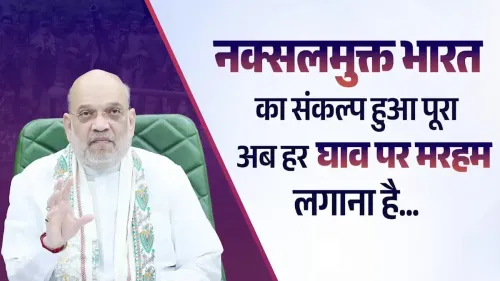
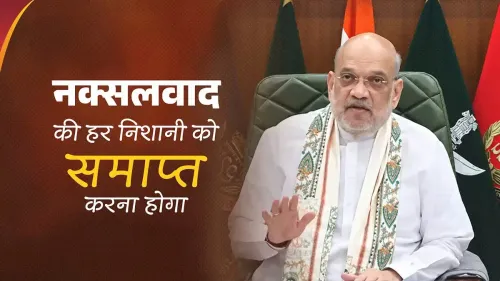
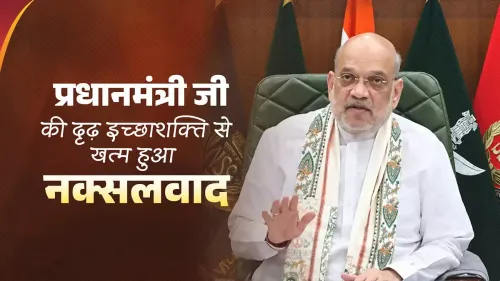
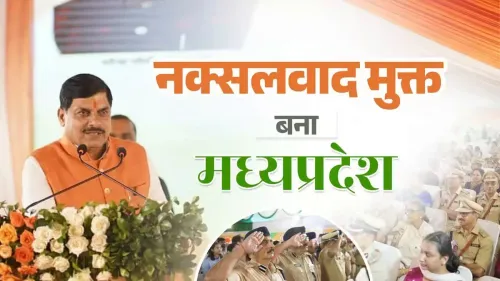
CM Rekha Gupta shares Amit Shah's rebuke of Naxal IED attacks
Synopsis
Delhi CM Rekha Gupta amplified Home Minister Amit Shah's condemnation of Naxalite IED attacks, calling the permanent disabling of innocent civilians the gravest possible human-rights violation and reaffirming the government's framing of Maoist violence as terrorism.
Key Takeaways
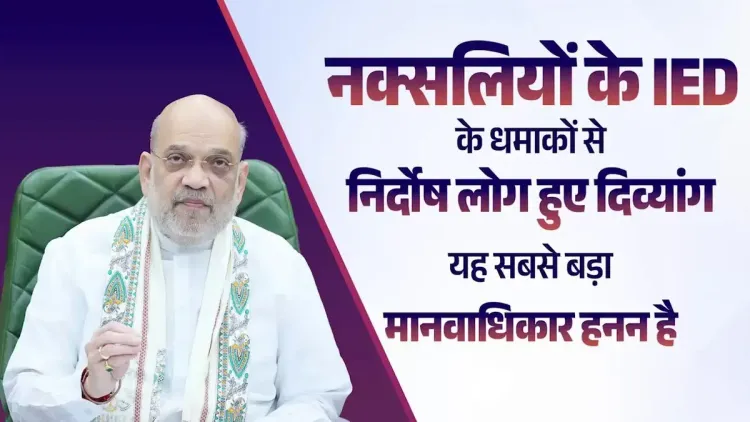
Delhi CM Rekha Gupta shared a statement by Union Home Minister Amit Shah on 15 October 2026 .
Shah said Naxalites used IED blasts for political goals, permanently disabling innocent civilians — calling it the gravest human-rights violation possible.
CPI(Maoist) has been banned as a terrorist organisation under the UAPA since 2009 .
The SAMADHAN strategy (2017) combines security operations, development spending, and rehabilitation in Naxal-affected states including Chhattisgarh, Jharkhand and Odisha .
The government's consistent counter-narrative reframes Maoist violence as terrorism against the very tribal communities the insurgents claim to represent.
A pointed moral indictment, not a policy brief — that is what Delhi Chief Minister Rekha Gupta placed before her followers on Thursday, 15 October 2026, sharing Union Home Minister Amit Shah's stark verdict on Naxalite violence: that detonating IEDs to permanently disable innocent civilians is among the gravest human-rights violations imaginable.
In the quoted statement, Amit Shah said: 'Naxaliyon ne rajnaitik uddeshya ke liye IED ke dhamake kar nirdosh logon ko divyang banaya' — 'Naxalites, in pursuit of political goals, have used IED blasts to render innocent people disabled — there can be no greater violation of human rights.' The framing is deliberate and surgical: strip away the ideological veneer, and what remains is the permanent crippling of civilians.
IEDs as political tools — the Red Corridor's hidden toll
CPI(Maoist), banned under the Unlawful Activities (Prevention) Act in 2009, has used improvised explosive devices as a signature tactic across India's Red Corridor — the stretch of forested districts running through Chhattisgarh, Jharkhand and Odisha. The devices have historically targeted security force convoys, but their blast radius does not discriminate, and civilian casualties — including permanent disability — have been a documented consequence for two decades.
Shah's framing of disability as a human-rights category is pointed. By calling victims divyang (persons with disability), he draws on language more commonly associated with welfare and dignity to describe what he characterises as a deliberate act of terror against the very communities Maoists claim to champion.
SAMADHAN, development, and the government's counter-narrative
The Ministry of Home Affairs launched its SAMADHAN strategy in 2017, combining security operations with development spending and surrender-and-rehabilitation schemes in Naxal-affected districts. Senior BJP leaders have consistently paired condemnations of Naxal violence with this development narrative — arguing that roads, schools, and mobile connectivity are arriving precisely where the insurgents had blocked them for years.
CM Gupta's decision to amplify Shah's words fits a pattern of state-level BJP leadership reinforcing the Centre's counter-insurgency messaging. The human-rights framing is also a direct counter to Maoist propaganda, which positions IED campaigns as defensive resistance on behalf of Adivasi communities.
What the statement ultimately demands is a reckoning: if protecting tribal rights is the stated goal, what does permanently disabling a tribal villager achieve? That question — sharp, unanswered by the insurgency — is precisely the one the government wants hanging in the air.
Point of View
The BJP leadership is fighting the ideological battle on Maoist ground — forcing a reckoning with the civilian cost of a movement that markets itself as a protector of the marginalised. Amplifying Shah's words from Delhi, CM Rekha Gupta extends this counter-narrative beyond the Home Ministry into the broader party ecosystem. The message is calibrated: as SAMADHAN-linked development inches into the Red Corridor, the political imperative is to ensure that the image of Naxalism remains inseparable from the image of a villager permanently crippled by a roadside bomb.
NationPress
15 Oct 2026
Frequently Asked Questions
What did Amit Shah say about Naxalite IED attacks?
Home Minister Amit Shah stated that Naxalites have used IED blasts for political purposes to permanently disable innocent civilians, calling it the gravest possible violation of human rights.
Why did Delhi CM Rekha Gupta share Amit Shah's Naxal statement?
CM Rekha Gupta shared the statement to amplify the central government's framing of Naxalite violence as terrorism targeting civilians, reinforcing the BJP's counter-insurgency narrative.
Is CPI(Maoist) a banned organisation in India?
Yes. CPI(Maoist) has been designated a terrorist organisation and banned under the Unlawful Activities (Prevention) Act since 2009.
What is India's SAMADHAN strategy against Naxalism?
Launched by the Ministry of Home Affairs in 2017, SAMADHAN combines security operations with development programmes and surrender-and-rehabilitation schemes in Naxal-affected districts across Chhattisgarh, Jharkhand and Odisha.
Which states are most affected by Naxalite violence in India?
The Red Corridor — primarily Chhattisgarh, Jharkhand and Odisha — has historically seen the highest concentration of CPI(Maoist) activity and IED-related civilian and security-force casualties.