CM Sai Backs Amit Shah's Vow to Erase Every Trace of Naxalism
Synopsis
Chhattisgarh CM Vishnu Deo Sai amplified Union Home Minister Amit Shah's declaration that erasing every trace of Naxalism — not just ending it — is now the BJP government's goal, paired with a firm commitment to victim dignity and rehabilitation.
Key Takeaways
Amit Shah declared the central government stands 'like a rock' behind Naxal victims in Chhattisgarh .
The stated mission has expanded beyond neutralising Naxal cadres to erasing 'every sign' of Naxalism.
The BJP state government , in office since December 2023 , is committed to both security operations and victim rehabilitation.
The SAMADHAN framework provides the central government's policy structure combining security, development, and surrender-rehabilitation.
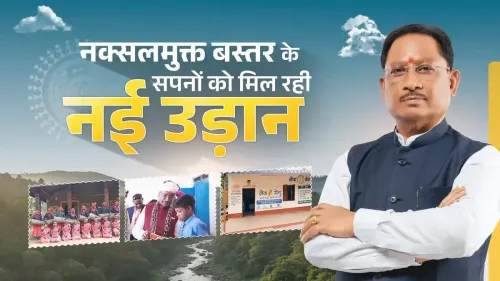
Bastar region remains the primary focus, carrying decades of insurgency and underdevelopment.
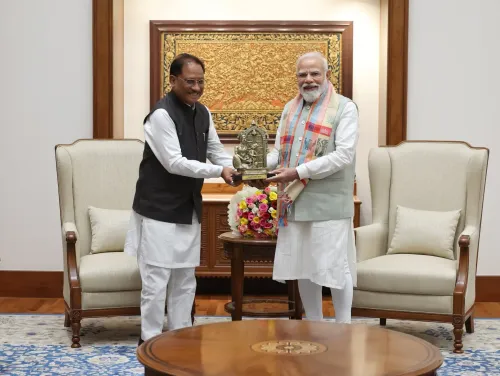
CM Sai's post explicitly linked Prime Minister Narendra Modi and Amit Shah , underscoring a coordinated state-Centre message.
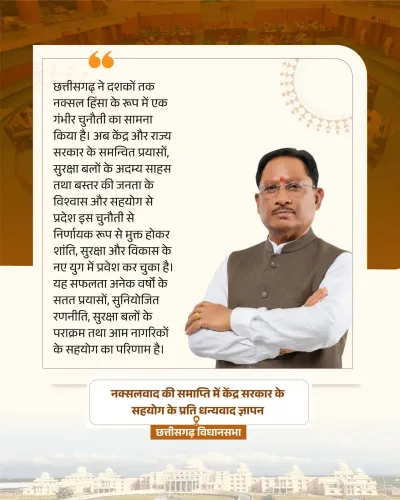
Wiping out Naxalism is no longer enough — every last trace of it must be erased. That is the line Chhattisgarh Chief Minister Vishnu Deo Sai amplified on Thursday, 15 October 2026, sharing a pointed declaration by Union Home Minister Amit Shah that frames the BJP government's counter-Naxal mission in its most sweeping terms yet.
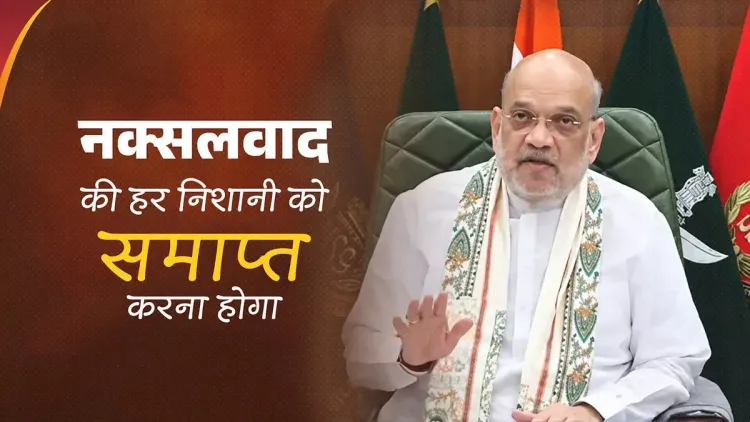
In the quoted statement, Shah said: 'The BJP-governed Chhattisgarh government has worked to heal the wounds of Naxalism's victims and is also making arrangements so that those victims can live a life of dignity. The central government stands like a rock in support of Naxal victims. It will not be enough simply to end Naxalism — now we must erase every sign of it.' CM Sai shared the statement while also tagging Prime Minister Narendra Modi and Amit Shah, signalling a coordinated message from both the state and central leadership.
From Security Operations to a Dignity Agenda
The framing marks a deliberate shift in public messaging — from a security-first narrative to one that centres victim rehabilitation. Chhattisgarh's Bastar region, which encompasses some of the country's most Naxal-affected districts, has long carried the dual burden of insurgency and underdevelopment. The BJP government that took office in December 2023 after a decisive assembly election win has consistently positioned itself as taking a harder line on Left Wing Extremism while simultaneously promising development dividends to tribal communities.
The central government's SAMADHAN strategy — a multi-pronged framework combining security operations, infrastructure development, and surrender-and-rehabilitation packages in LWE-affected districts — provides the policy backbone for these pledges. Shah's framing of the Centre as standing 'like a rock' (chattan ki tarah) for victims reinforces that the Delhi-Raipur axis on this issue is intentionally unified and visible.
What 'Erasing Every Sign' Actually Means
The rhetoric carries operational weight. Beyond neutralising active Naxal cadres, the declared goal now includes dismantling the ideological, infrastructural, and social residue of decades of Left Wing Extremism — restoring confidence in state institutions in areas where the writ of government was historically weak or absent. That is a far longer, harder mission than any single security operation.
Key to its success will be the actual rollout of rehabilitation packages for victims, the pace of development work reaching interior tribal villages, and the numbers of former cadres who enter and complete surrender programmes. CM Sai's public endorsement of Shah's statement signals that the state government intends to keep rehabilitation — not just body counts — at the centre of how it measures progress.
The battle for Bastar has always been fought on two fronts. The question now is whether the second front — the one that offers dignity, not just defeat — can be won at the same pace as the first.
Point of View
High-stakes campaign. The shift in language from 'eliminating Naxals' to 'erasing every trace' is significant: it repositions the BJP's agenda as civilisational restoration, not just policing, which broadens its appeal to tribal voters who are victims, not combatants. Whether rehabilitation infrastructure actually catches up with the pace of security operations will be the real test of this dual-track promise. The coordinated tagging of both Modi and Shah signals this messaging is centrally managed, not ad hoc.
NationPress
15 Oct 2026
Frequently Asked Questions
What did Amit Shah say about Naxalism in Chhattisgarh?
Amit Shah declared that ending Naxalism alone is insufficient — the government must now erase every sign of it — while affirming the Centre stands firmly behind Naxal victims in Chhattisgarh to ensure they can live with dignity.
What is the BJP government's plan for Naxal victims in Chhattisgarh?
The BJP government in Chhattisgarh, supported by the central government, is working to provide rehabilitation and dignified living conditions for people affected by Naxal violence, alongside ongoing security operations in affected districts.
What is the SAMADHAN strategy for Naxal-affected areas?
SAMADHAN is the central government's multi-pronged framework for tackling Left Wing Extremism, combining security operations, infrastructure development, and surrender-and-rehabilitation packages in Naxal-affected districts.
Which areas of Chhattisgarh are most affected by Naxalism?
The Bastar region of Chhattisgarh, comprising several districts in the state's southern belt, has historically been the most severely Naxal-affected part of the state.
When did Vishnu Deo Sai become Chief Minister of Chhattisgarh?
Vishnu Deo Sai assumed office as Chief Minister of Chhattisgarh in December 2023 after the BJP won the state assembly elections.