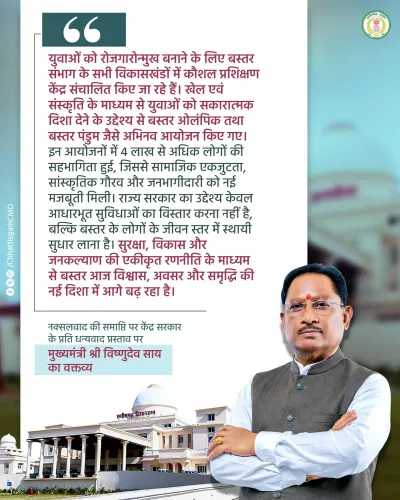
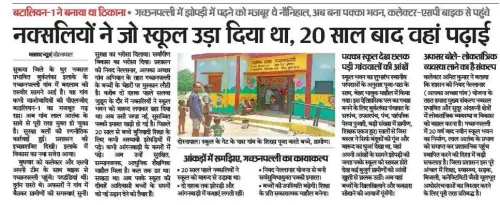
Chhattisgarh CMO: Bastar security camps become tribal schools
Synopsis
Chhattisgarh's CMO announces a striking transformation in Narayanpur, Bastar: former security camps built during anti-Naxal operations are being repurposed as residential education centres for tribal children, marking a concrete shift from conflict infrastructure to human development.
Key Takeaways
The Chief Minister's Office of Chhattisgarh announced on 25 October 2026 that former security camps in Narayanpur, Bastar are being converted into residential education centres for tribal children.
Bastar division accumulated extensive security infrastructure during intensified anti-Naxal operations in the 2000s and 2010s ; that infrastructure is now being repurposed for civilian education.
A residential model is especially critical in Narayanpur , where forest terrain and economic vulnerability keep many tribal children out of school.
The initiative aligns with the state government's Viksit Chhattisgarh (Developed Chhattisgarh) development narrative and broader national tribal education schemes.
Enrolment and retention figures at the new centres will be the key indicators of on-ground impact in the months ahead.
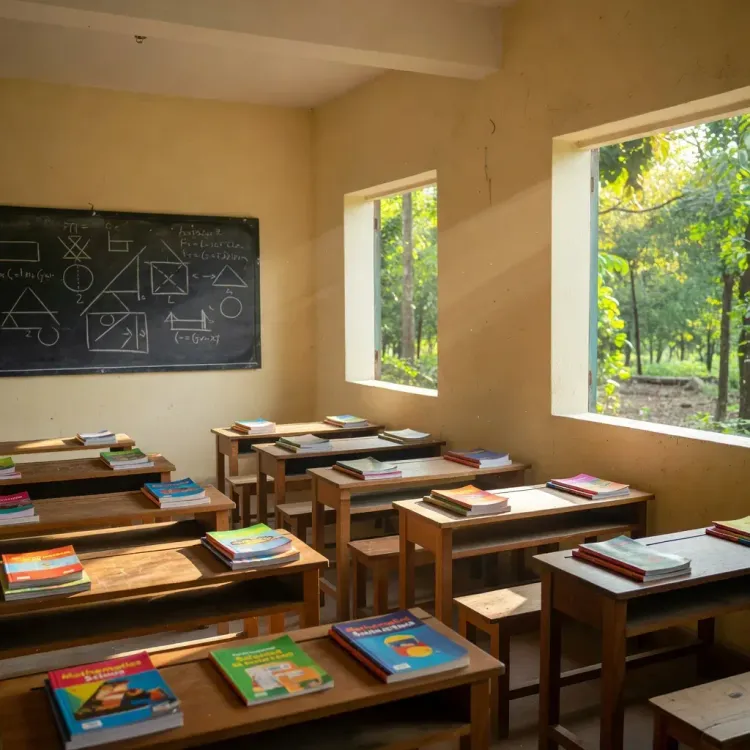
Where armed personnel once kept watch, children now open textbooks. The Chief Minister's Office of Chhattisgarh announced on Sunday, 25 October 2026, that former security camps in Narayanpur district, deep inside the Bastar division, are being converted into residential education centres for tribal children — a tangible pivot from conflict infrastructure to opportunity.
Camps that kept vigil now host classrooms
The transformation is striking in its symbolism and its practicality. Bastar, a region that spent decades at the sharp end of India's conflict with left-wing extremism, accumulated a dense network of security camps during intensified counter-insurgency operations in the 2000s and 2010s. Those structures — built for surveillance and control — are now being handed over to tribal students as residential learning spaces. The CMO's post put it plainly: 'Spaces once associated with security are now opening doors to education, opportunity and new dreams.'
The choice of Narayanpur is pointed. One of Bastar's more remote districts, it has historically had among the lowest literacy indicators in Chhattisgarh and was a flashpoint during peak Naxal activity. A residential model matters here precisely because long distances, forest terrain, and economic vulnerability keep tribal children — especially girls — out of school. A building already standing, already wired, already connected to supply lines, removes one of the biggest barriers to getting a school functional fast.
Development as the second track of Bastar's transformation
State governments in left-wing extremism-affected districts have long argued that security operations and human development must run in parallel — that one without the other eventually fails. The repurposing of camp infrastructure is the most concrete expression yet of that doctrine in Bastar. When a security camp becomes a school, the signal to local communities is unambiguous: the state is staying, but in a different role.
The broader frame the CMO invoked — Viksit Chhattisgarh (Developed Chhattisgarh) — ties the Narayanpur initiative to the state government's wider development narrative. Tribal education, in particular, has been a declared priority under multiple national and state schemes, from Eklavya Model Residential Schools to the PM SHRI programme. Residential centres in conflict-affected zones sit at the intersection of those commitments and post-conflict stabilisation.
The numbers to watch now are enrolment and retention — how many children actually enter these new centres, and how many stay. Infrastructure converted is a start; learning outcomes sustained is the finish line.
Point of View
Simultaneously.' For the ruling BJP government in Chhattisgarh, it offers a powerful visual for the Viksit Chhattisgarh brand ahead of future electoral cycles. The real test, however, will come not from the conversion of bricks and walls, but from whether tribal student enrolment and retention numbers in Narayanpur actually rise — that data will determine whether this is transformation or optics.
NationPress
25 Oct 2026
Frequently Asked Questions
Which district in Bastar is converting security camps into schools?
Narayanpur district , located within the Bastar division of Chhattisgarh , is the district where former security camps are being converted into residential education centres for tribal children.
Why are residential schools important for tribal children in Bastar?
Bastar's forest terrain, long distances between settlements, and economic vulnerability mean that daily commuting to school is often impossible for tribal children. Residential centres allow students to live on-site, removing the distance and safety barriers that drive dropout rates.
What were these security camps used for before?
The camps were established during intensified anti-Naxal (left-wing extremist) operations across Bastar in the 2000s and 2010s , primarily to support security forces conducting counter-insurgency operations in the region.
What is Viksit Chhattisgarh?
Viksit Chhattisgarh translates as 'Developed Chhattisgarh' and is the state government's overarching development narrative, framing infrastructure, education, and welfare initiatives as part of a long-term growth agenda for the state.
How will the success of these new education centres be measured?
The key indicators will be the number of tribal children enrolled in the new residential centres and, critically, retention rates — how many students remain enrolled over time. Rollout of additional converted centres across Bastar will also signal the scale of the programme.